

All-Steel Antistatic Floor Exporter: The Key to Safe, Durable Workspaces
2026-09-03
Static electricity is the kind of problem you don't see until it's already cost you thousands in damaged equipment or a sudden shutdown. That's why all-steel antistatic flooring has become a non-negotiable for modern control rooms, server halls, and clean manufacturing spaces. But the floor is only as reliable as the exporter behind it. Lipin Floor has spent years supplying all-steel antistatic floors that combine heavy-duty strength with precise static control. In this post, we'll unpack what makes this flooring category essential—and what to look for before you commit.
Why Static Discharge Remains a Critical Risk in Modern Workspaces
Despite the shift toward wireless peripherals and low-power electronics, static discharge hasn't faded into obsolescence. Walk across a synthetic carpet in a climate-controlled office and you might build up thousands of volts without feeling a thing. That invisible charge can leap from a fingertip to a laptop's USB port or a server's exposed connector, frying sensitive components that were never designed to tolerate such spikes. Modern devices pack more transistors into smaller spaces, making them paradoxically more vulnerable than the bulky hardware of decades past.
The real danger often hides in routine habits: rolling an office chair across a polymer mat, peeling adhesive tape from a reel, or even sliding a tablet into a protective sleeve. Each motion generates a potential difference that waits for the next conductive path. Once discharge occurs, the damage may not be immediate. A circuit can degrade over weeks, causing intermittent failures that frustrate technicians and erode trust in equipment reliability. Workspaces with dry air, common in heated or air-conditioned buildings, amplify the problem because low humidity allows charges to accumulate faster and linger longer.
Ignoring static protection is a gamble that quietly inflates maintenance costs and downtime. Simple fixes like grounded floor mats, wrist straps at assembly stations, and antistatic packaging for spare parts cost far less than replacing a fried motherboard or recovering corrupted data from a dead drive. The challenge is cultural as much as technical: people assume that if they can't see or feel a spark, no risk exists. Yet the most destructive discharges are often the ones below human perception, silently compromising the tools that keep a modern workspace running.
All-Steel Antistatic Flooring: Built to Handle More Than Just Foot Traffic
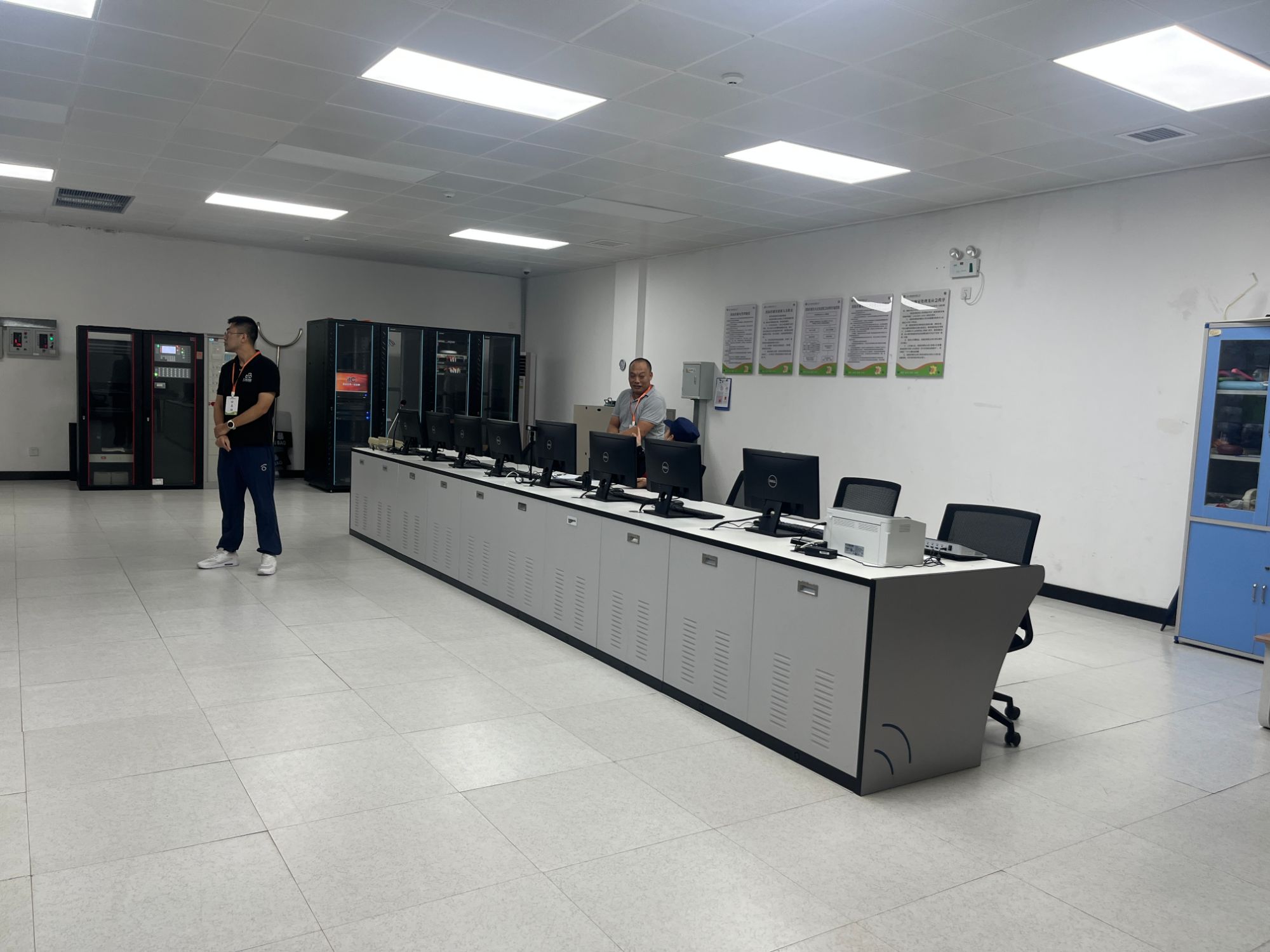
All-steel antistatic flooring earns its place in spaces where a dropped wrench or a rolling equipment cart is a daily event, not an exception. The panels are fabricated with a steel core that resists the localized pressure of server cabinets, battery racks, and heavy tool trolleys without bowing or losing their original flatness. Over time, this means fewer hollow spots and less panel rocking underfoot, even where casters have worn a visible path.
That same rigid structure also protects the antistatic surface from cracks and abrasion that would otherwise compromise the controlled path to ground. When maintenance crews move test equipment or rearrange workstation layouts, the floor absorbs the load instead of telegraphing stress into the subfloor. It is this combination of dimensional stability and static dissipation that makes the system practical for laboratories, electronics assembly lines, and telecommunications rooms where both precision and heavy handling coexist.
The Export Advantage: How Rigorous Quality Checks Travel With Every Panel
Shipping panels across borders isn't just about stacking them into a container and hoping for the best. A single hairline crack or warped corner can turn a valuable order into a pile of rejected freight. That's why our quality checks are designed to move with the product, not merely happen at the factory gate. Every panel gets a unique batch code before it leaves the line, and that code follows it through packing, port handling, and final delivery. If a problem surfaces in Hamburg or Singapore, we can trace it back to the exact roll of raw material used that morning.
The real test happens during transit. Humidity inside a sea container can swing from 15% to 90% in a day, and rough seas shake cargo more than most people realize. Our inspection points are set up at the loading dock, not just at the end of production. A trained checker verifies moisture content, edge alignment, and surface finish right before the panels are sealed. Those readings are logged against the batch code and shipped alongside the physical goods. It's not a one-time stamp of approval; it's a moving set of eyes that catches drift before it becomes damage.
Buyers in distant markets don't just want a certificate saying the panels were good when they left. They want to know the panels will still be good when they arrive. By folding quality verification into every step of the export journey, we remove the usual gamble. The advantage isn't just fewer claims or faster customs clearance. It's that a contractor in Rotterdam can open a crate and trust the dimensions without re-measuring every sheet. That kind of confidence travels further than any shipping container ever could.
Choosing Between Steel Core and Hollow Panels Without Guesswork
Steel core panels and hollow panels look identical from the outside, but their performance diverges sharply once load, sound, or fire enters the picture. A steel core adds substantial weight and rigidity, which translates into better impact resistance and a higher ability to hold heavy fixtures without additional reinforcement. Hollow panels, by contrast, are much lighter and easier to cut on site, but they demand strategic blocking behind the wall for anything heavier than a picture frame. The first step is to map every mounting point and acoustic requirement before you even compare prices.
Temperature swings reveal another hidden difference. Steel conducts heat far faster than the air trapped inside a hollow panel, so in exterior or unconditioned spaces, the steel core can become a thermal bridge that invites condensation. However, in interior partitions where sound isolation matters more than thermal performance, the added mass of a steel core often outperforms hollow panels by several decibels—especially in the low-frequency range that hollow panels tend to let through. Ask for lab-tested STC ratings, not just manufacturer claims, because the same thickness can yield wildly different results depending on core material.
Finally, think about handling and installation time. A steel core panel weighs two to three times more than a hollow panel of the same dimensions, which slows down crews and may require lifting equipment in tight corridors. But if the project demands long spans, minimal deflection, or resistance to vandalism, that extra weight pays for itself. Hollow panels shine in temporary partitions, ceiling details, or anywhere frequent reconfiguration is expected. Match the panel core to the actual abuse the wall will face—not to the lowest bid.
Keeping Server Rooms Safe: Load Ratings and Grounding Explained Simply
Server rooms pack a surprising amount of electrical demand into a small space. Load ratings tell you how much current a circuit or power distribution unit can handle before things get dangerous. Exceeding those limits doesn't just trip a breaker—it can overheat wiring, damage sensitive equipment, or even start a fire. Before plugging in another rack of servers, check the nameplate ratings on your PDUs and breakers, and leave a safety margin of at least 20 percent below the maximum.
Grounding is the silent guardian of a server room. It gives stray or fault current a direct path to earth, preventing it from wandering through your hardware or, worse, through a person. A proper ground system bonds all metal enclosures, racks, and conduit together so there are no voltage differences between them. Loose or corroded ground connections are a common cause of mysterious glitches and occasional shocks. Make grounding checks part of routine maintenance, especially after any equipment move or cable change.
Putting it together: respect the numbers, verify the ground. A quick visual inspection of power strips for signs of heat discoloration, plus a simple outlet tester to confirm correct wiring and ground presence, can catch most issues before they escalate. If you're adding high-density blade servers or GPU clusters, recalculate the total load rather than assuming the room has spare capacity. When in doubt, consult a licensed electrician who understands data center environments—your uptime and your team's safety are worth that extra step.
Custom Finishes That Don't Compromise Antistatic Performance
Achieving a custom visual identity on antistatic surfaces has traditionally forced a trade-off: either you get the exact color, texture, or logo you want, or you preserve the controlled dissipation of electrostatic charge. Many coatings and films that offer rich custom finishes rely on conductive additives that change under heavy pigmentation, or they create an insulating barrier that traps charge. The result is often a product that looks right but fails in environments where a stray spark can destroy sensitive electronics or ignite flammable vapors.
The key lies in material formulations that separate the visual layer from the functional layer without stacking resistance. Instead of embedding the entire finish with carbon or metal fibers, manufacturers now use a thin, transparent antistatic topcoat over a fully customizable base layer. The base layer can carry any color, print, or texture, while the topcoat maintains a surface resistivity in the dissipative range—typically 10^6 to 10^9 ohms per square. This dual-layer approach allows logos, gradients, and even simulated metal or wood grains to be applied without altering charge decay rates.
Testing confirms that these custom finishes meet the same antistatic standards as plain industrial surfaces. For cleanrooms, electronics assembly lines, and explosive atmosphere zones, the finish can be tailored per project while still passing IEC 61340-5-1 or ANSI/ESD S20.20 requirements. The practical benefit is significant: a workstation mat, enclosure panel, or equipment housing no longer has to look generic to remain safe. Designers can specify brand colors, warning markings, or decorative patterns, and the end user gets a surface that both looks intentional and performs reliably under static control audits.
FAQ
The core difference lies in the construction and electrical behavior. All-steel panels are welded or bonded into a sealed steel shell, often filled with cement or calcium sulphate for weight and deadening. The surface is treated with a conductive or static-dissipative coating that routes charges to a grounding point. Standard raised flooring usually relies on laminate or vinyl coverings that wear down or lift over time, compromising both durability and conductivity. The all-steel approach keeps the conductive path intact even after years of foot traffic and rolling loads.
In spaces packed with servers, switches, and sensitive electronics, a sudden electrostatic discharge can corrupt data or destroy components. An all-steel antistatic floor provides a controlled path for static electricity to drain away before it builds up on personnel or equipment. The steel panels, combined with grounding pedestals, create a Faraday-like plane underfoot, reducing the risk of sparks that could also ignite dust or vapors in adjacent industrial areas. The result is fewer unexplained hardware failures and a safer environment for people working around high-voltage equipment.
Steel resists impact, abrasion, and moisture far better than wood-core or lightweight aluminum alternatives. A properly coated all-steel panel can support loads exceeding 1,000 kilograms per square meter without deforming or losing its shape. Unlike composite materials, steel does not warp when exposed to humidity changes or temperature swings, which is common in factories and warehouses. That stability keeps the floor level and the grounding system reliable, reducing the risk of tripping hazards and equipment misalignment over years of use.
A dependable exporter should provide clear documentation of load ratings, surface resistance ranges, and fire performance—not just glossy brochures. Insist on seeing third-party test reports for conductivity and rolling load endurance. Ask about their packing methods: steel panels shipped without edge protection or moisture barriers can arrive with scratches or hidden corrosion that compromises performance. A good exporter will also guide you through customs requirements and offer layout drawings or installation support, rather than just selling panels as a commodity.
Yes, that is one of its main strengths. All-steel panels can be lifted and reconfigured hundreds of times without edge chipping or loss of conductivity, provided the locking mechanism and grounding contacts are intact. The steel surface resists scratches from cable pulls and tool drops, unlike laminate finishes that peel. Many designs use a patented corner-lock system that keeps panels perfectly aligned and bonded to the grounding grid, so after swapping server racks or adding new machines, the floor remains level and the static-dissipative path stays continuous.
Regular cleaning with a pH-neutral, non-insulating cleaner is essential—wax, oil, or silicone-based polishes can create an insulating film that blocks static drainage. Use a damp mop with a conductive cleaner and check the grounding connections at least twice a year. Inspect panel edges and pedestal heads for corrosion or loosening, especially in humid or coastal environments. If a panel is heavily scratched or dented, replace it promptly rather than trying to recoat it in the field, because the steel shell's integrity is what keeps the entire floor safe and conductive.
Absolutely, with the right surface finish. For cleanrooms, a seamless or gasketed panel edge prevents particle entrapment, while the non-shedding steel surface is easy to sterilize and does not generate dust. In laboratories where flammable solvents may be present, the all-steel construction adds an extra layer of spark suppression because there is no wood or plastic to ignite. Just confirm with the exporter that the panels meet the required ISO cleanliness class and have a low-outgassing coating if vacuum environments are involved.
The best exporters do not rely on spot inspections alone. They maintain in-house testing rigs that simulate years of rolling loads, point loads, and humidity cycles on production samples. Each batch should be traceable to its steel coil and coating lot, so if a conductivity issue appears in one shipment, the source can be isolated quickly. Many also send pre-shipment samples to the client for independent verification and include detailed packing lists with serial numbers for every panel, making it easier to track and replace any faulty unit without delaying the entire project.
Conclusion
Static discharge is not a minor nuisance—it can corrupt data, fry sensitive components, and create unsafe conditions in labs, data centers, and manufacturing floors. All-steel antistatic flooring emerged as the go-to solution because it handles far more than foot traffic. The steel core provides a continuous conductive path that safely drains electrostatic charges to ground, while the load-bearing capacity and resistance to impact, moisture, and fire make it suitable for heavy equipment and rolling loads. Exporters specializing in these floors do not just ship panels; they ship confidence. Every panel undergoes rigorous quality checks—weld integrity, powder coating adhesion, conductivity, and dimensional tolerance—so that when a client in another country installs the floor, it performs exactly as specified. This consistency matters because a single faulty panel can compromise the entire grounding network.
Choosing between steel core and hollow panels often confuses buyers, but the logic is simple: steel core panels offer higher load ratings and better vibration dampening for server racks and precision equipment, while hollow panels reduce weight and cable routing complexity in lighter-duty areas. Grounding is equally straightforward—each panel connects to a copper strip or grounding grid, and the system’s resistance must stay below industry thresholds to protect personnel and hardware. Custom finishes like HPL, vinyl, or epoxy can match any aesthetic, yet the antistatic performance remains intact because the conductive steel substrate remains unchanged. In the end, an experienced all-steel antistatic floor exporter becomes more than a supplier—they are the key to workspaces that stay safe, durable, and free from the hidden threats of static electricity.
Contact Us
Contact Person: yuki
Email: [email protected]
Tel/WhatsApp: +86 18664390732
Website: https://www.lipinfloor.com/