

Bespoke Batch Off Cooling Line for Enhanced Manufacturing Efficiency
2026-11-16
When production lines slow down, the culprit is often found in the cooling stage. Standard batch off cooling lines rarely align with the unique demands of modern manufacturing. At AUGU AUTOMATION, we've reimagined this critical process with bespoke solutions that don't just cool materials—they accelerate your entire operation. Discover how our custom-engineered batch off cooling lines are turning efficiency bottlenecks into competitive advantages.
Tailored cooling architecture that moves with your line
Cooling that follows the contour of your production line isn't just an upgrade—it's a shift in how thermal control integrates with motion. Each zone is mapped to the actual heat load at that point, not a generic blueprint. As your line accelerates, bends, or pauses, the cooling profile rebalances on the fly, matching the pace of the material rather than imposing a fixed rhythm. This means no overcooled dead spots or hotspots hiding behind mechanical joints.
The architecture itself flexes: modular cooling blocks slide along gantry rails, repositioning with the tooling instead of waiting for the tooling to return. Temperature sensors embedded in the moving components feed adjustments back in microseconds, so the thermal response feels anticipatory rather than reactive. Whether you're running thin-gauge profiles or heavy extrusions, the system shifts its output distribution like a living system adjusting to breath.
What sets this apart isn't one clever component, but the refusal to treat cooling as a static overlay. The line becomes an environment where thermal gradients are part of the choreography—guiding, supporting, and never fighting the movement. Operators stop compensating for cooling lag and start trusting that the system already knows where the heat will be next.
Cutting cycle times without cutting corners
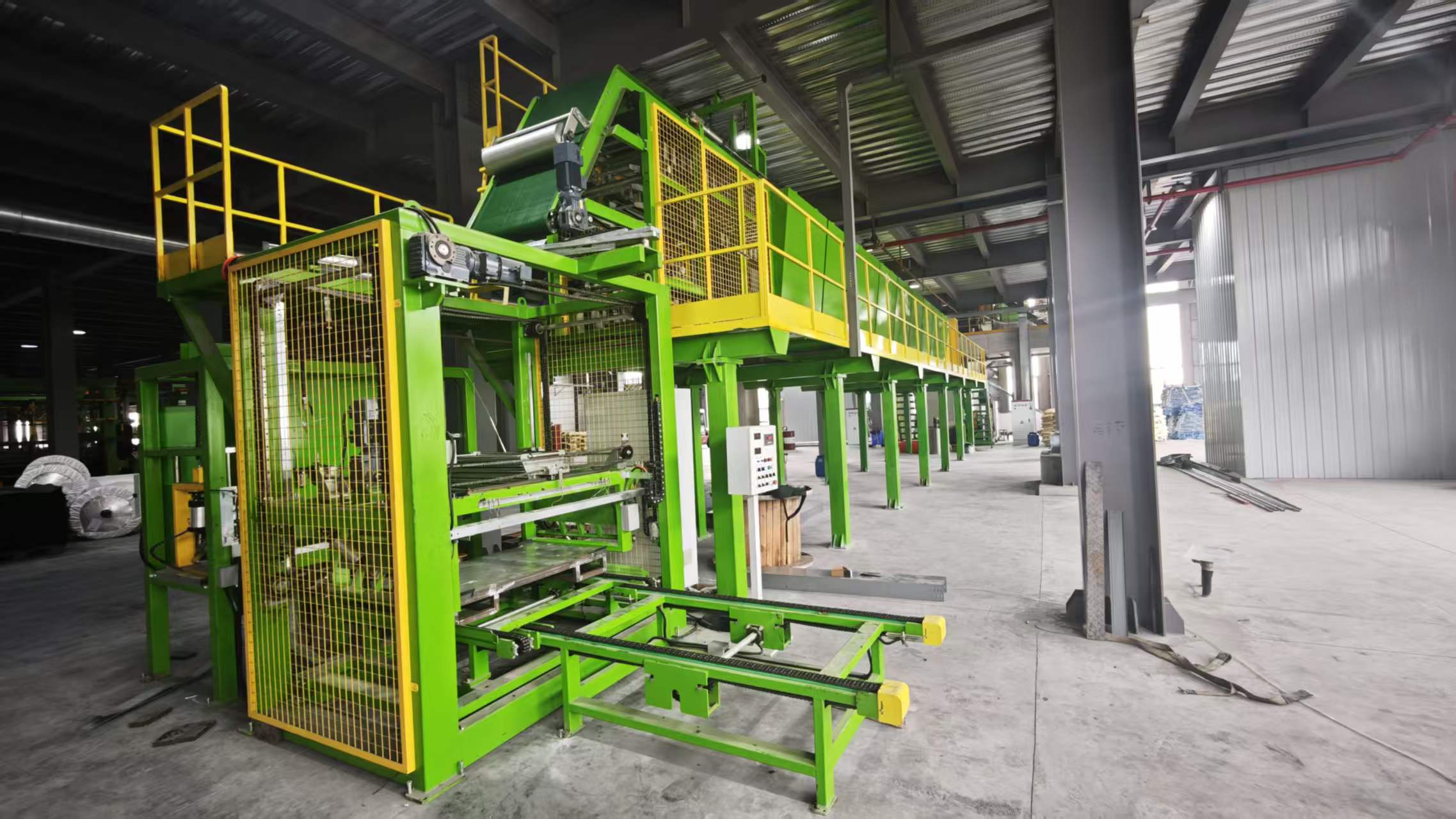
Shortening cycle times rarely comes from pushing machines harder. It comes from removing the pauses that nobody notices—waiting for a fixture to cool, shuffling parts between stations, or re-clamping a piece that’s already been located once. When you chase those small delays, you often find that the biggest bottleneck isn’t a slow spindle but a slow decision.
One practical route is to overlap setup with machining. A machine that’s waiting for a tool change is still a machine that isn’t cutting. Simple changes like pre-setting tools offline, staging raw material within arm’s reach, and standardizing clamp locations can drop minutes from every cycle without touching feed rates. The key is to treat cycle time as a system metric, not just a cutting parameter.
Even so, speed has a way of exposing weak spots. If you cut a minute from a cycle but scrap rate climbs, you haven’t saved anything. The only cycle time worth reducing is the one that holds dimension, finish, and repeatability. So before you crank the override, look at the clock from the operator’s end—most of the time, the waste is in the in-between, not the in-cut.
Thermal uniformity as a competitive edge
In precision-driven fields like additive manufacturing, semiconductor processing, and high-end culinary equipment, the ability to maintain a consistent temperature across an entire work surface is rarely discussed in marketing brochures, yet it quietly separates the exceptional from the merely adequate. A chamber that heats evenly prevents warping in metal parts, avoids hot-spot defects in wafer fabrication, and lets a chef sear six steaks with identical crust development. When your tool delivers that kind of predictability, you stop competing on raw wattage or cycle time alone—you start competing on repeatable outcomes that customers can actually measure in their own workflows.
Most thermal systems are marketed with a single number: maximum temperature or time-to-heat. But those figures hide the real story. A unit that reaches 350°C in four minutes might still have a 28°C spread across its plate, forcing users to rotate parts, slow down production, or accept scrap. The competitive shift happens when a design team invests in multi-zone control, tuned insulation, or advanced airflow modeling to bring that spread down to 2–3°C. The result isn't just a better spec sheet—it's a quieter machine, less energy waste, and a user who no longer has to babysit the process. That trust is difficult to quantify but impossible to outmarket.
From a business perspective, thermal uniformity becomes a moat because it requires compounding engineering choices rather than a single component upgrade. A competitor can swap in a more powerful heater or a faster fan. But matching a well-executed thermal field demands rethinking sensor placement, material selection, firmware PID loops, and even the geometry of the heating element. That's a multi-year effort, not a quick revision. So when procurement teams evaluate bids side by side, the vendor who can show real thermal maps instead of vague "even heat distribution" claims wins the deal—and keeps winning it, because the process itself becomes inseparable from the tool that enabled it.
Modular design for unpredictable production schedules
Unpredictable production schedules rarely come from one clean source. A key customer pushes an order forward, a supplier misses a delivery window, or a machine goes down right before a shift change. Fixed lines handle these moments poorly because every station is bolted into a sequence. Modular design breaks that sequence into movable, reconfigurable units — a filling module, a capping station, a labeler — each sitting on a standard base with quick-release connections.
The real advantage shows up when schedules shift day to day. Instead of running the whole line at partial speed or leaving workers idle, a modular setup lets you add or remove stations in minutes. Tooling swaps are reduced to docking a different end-effector and loading the matching parameter set. Some facilities keep duplicate modules ready in a staging area, so a sudden increase in demand for one product variant doesn't force a full retooling of the line.
Maintenance follows the same logic. If a sealing unit drifts out of tolerance, it gets rolled to the side and a spare module takes its place while the first is repaired offline. Production continues at a slightly reduced rate instead of stopping entirely. Over time, this turns capital equipment into a pool of interchangeable assets rather than a single fragile chain, making unpredictable production schedules less of a fire drill and more of a scheduling exercise.
Energy recovery that pays back in months
The warm air leaving your building through exhaust vents isn't just a byproduct—it's an untapped revenue stream disguised as waste. Most facilities treat that stream as a disposal problem, yet it carries enough recoverable heat to offset a major slice of your annual space heating load. A compact cross-flow or rotary heat exchanger installed in the ventilation path starts returning that energy to incoming fresh air within days, not quarters.
Consider a typical compressed air system: over 90% of the electrical input becomes heat, and almost all of it gets dumped outdoors or into the plant ceiling. Redirecting that heat into a water loop for pre-heating boiler feedwater or warming dock areas requires no exotic components—just a plate exchanger, a pump, and some insulated pipe. The installation cost is often recovered in four to six months purely from avoided fuel purchases.
Even smaller exhaust streams from ovens, dryers, or paint booths can deliver payback under a year when paired with run-around coils. The trick is to stop viewing energy recovery as a capital project and start treating it as an operating expense reduction with a built-in deadline. Once the first few utility bills arrive after commissioning, the business case closes itself.
From first sketch to full-scale integration
Every build starts with a rough mark on a whiteboard—a half-formed loop, a couple of boxes, maybe an arrow pointing nowhere yet. That first sketch rarely looks like much. It's just enough to pin down intent before the details rush in. The value isn't in accuracy; it's in having something physical enough to argue with.
From there, the sketch gets pulled into wireframes or low-fidelity screens. Edges sharpen, flows get reordered, and the uncomfortable parts you ignored at the whiteboard start demanding attention. Small pieces get coded as standalone experiments, not because they're final, but because seeing them move reveals what static drawings can't. This is where the design starts negotiating with the constraints of a real system.
Integration stops being a step and becomes the main work. Each component, once tested in isolation, now has to share state, handle failure gracefully, and fit the rhythm of the larger platform. The rough sketch hasn't disappeared; it's just been translated—line by line—into something that runs in production without needing a manual.
FAQ
It means you don’t have to adapt your process to a catalog machine. We start with your batch weight, target cooling window, and any handling constraints—like delicate surfaces or stacked trays—and configure the cooling chamber, airflow direction, and conveyor speed around those numbers. The result is a line that fits your floor plan and your throughput targets, not the other way around.
Efficiency gains come from three specific places: shorter cooling cycles for the same batch, fewer rejected parts from thermal stress or moisture condensation, and less manual handling when the line is set up to feed directly into packaging or the next operation. One client cut their cooling step from 38 minutes to 11 by switching from ambient rack cooling to a forced-air bespoke tunnel matched to their container size.
Anything where batch identity matters and cooling has to be uniform across the whole batch. Think food products like baked goods or extruded snacks, rubber compounds after mixing, small metal castings, plastic parts straight from molding, or even heat-treated components. If your product comes off a batch mixer, oven, or autoclave in trays, bins, or on racks, a bespoke line can usually remove that heat faster and more predictably than floor fans or ambient cooling rooms.
We run a heat-load calculation based on product mass, starting temperature, target discharge temperature, and the time you want to hit. Then we consider airflow pattern—vertical, horizontal, or crossflow—and whether you need staged cooling to avoid cracking or warping. The final specs come out of that calculation plus your available utilities and ceiling height. It’s not guesswork; it’s a simple energy balance.
The usual bottlenecks are uneven cooling within a tray or rack, long waits for the core temperature to drop, condensation on cold surfaces, and labor needed to move product in and out of a shared cooling room. A bespoke line controls air temperature and velocity per zone, so the center of the batch cools at nearly the same rate as the edges. That removes the need for manual restacking or waiting for the slowest section.
Most installations can be phased in around planned maintenance windows. Because the cooling line is often separate from the main conveyor or batch process, you can run the old cooling method while the new line is being assembled, then switch over during a weekend or a short shutdown. We also design the line with modular panels and quick-connect electrical and ductwork so future moves or expansions don’t require a full rebuild.
It’s generally lower than you’d expect. The main items are cleaning or replacing inlet filters, checking fan belt tension or bearing lubrication every few months, and inspecting the temperature sensors for drift. If you opt for a PLC with remote access, we can spot most issues before they cause downtime. Operators typically just load the batch and press start—the system handles the rest.
The initial price will be higher than an off-the-shelf fan or a simple chilled room, but the payback usually comes from three areas: reduced cooling time per batch, lower scrap or rework from thermal defects, and reduced energy use because you’re not overcooling an entire room. Many operations see the investment returned in 12 to 24 months when they track those three costs together. After that, the line keeps paying for itself.
Conclusion
A bespoke batch off cooling line does more than move parts from hot to cold—it reshapes how a production floor breathes. The cooling architecture is laid out to follow your existing line geometry, so you are not forcing your process into a standard footprint. That tailored fit means less transfer time, fewer bottlenecks, and a cooler handoff that lets operators keep pace without waiting on racks to stabilize. Cycle time drops not by rushing the physics but by removing idle minutes between stations. And because the airflow and water temperature are tuned to the specific part geometry, every unit in the batch sees the same thermal history. That uniformity is what turns a cooling step from a quality risk into a competitive edge, especially when downstream machining or assembly cannot tolerate warpage or residual stress.
Production schedules rarely stay flat, so the line is broken into modular segments that can be added, moved, or bypassed as demand shifts. If a new product family comes in with a different thermal mass, you adjust the cooling zones instead of rebuilding the line. Energy recovery is designed into the loop from day one—waste heat from the cooling process feeds back into facility heating or preheating, which means the investment often pays for itself within a few months, not years. From initial layout sketches to the final PLC integration, the whole system is engineered as one continuous upgrade rather than a collection of off-the-shelf components. That is why manufacturers treat this not as a utility expense but as a throughput multiplier.
Contact Us
Contact Person: Lareina
Email: [email protected]
Tel/WhatsApp: +86 17561696737
Website: https://www.auguauto.com/