

Calcium Chloride 77% Prills Supplier: Essential Guide for Industrial Buyers
2026-11-16
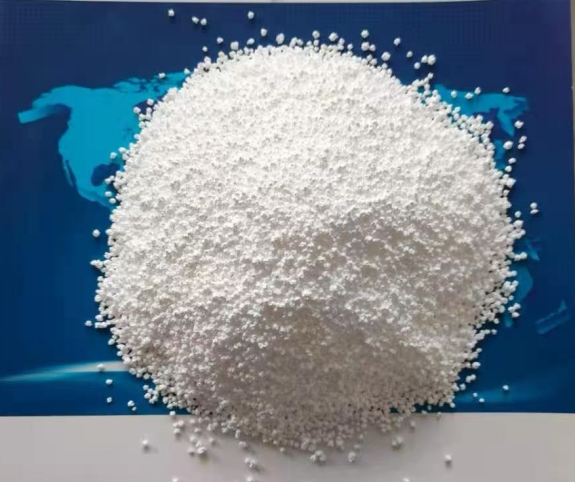
If you’ve ever dealt with inconsistent calcium chloride shipments—clumping prills, vague purity claims, or delivery delays that stall your production line—you know the frustration. For industrial buyers, sourcing calcium chloride 77% prills isn’t just about price per ton; it’s about predictable quality, reliable logistics, and a supplier who actually understands your process. This guide cuts through the noise to cover what really matters: key specifications, hidden pitfalls, and how to evaluate vendors without wasting weeks. Along the way, you’ll meet Shouguang Golden Chemical, a name that’s earned attention for consistency in this space. Whether you’re topping up de-icing stock or feeding a large-scale chemical operation, here’s how to buy smarter.
Why 77% Purity Can Still Vary Between Batches
A label that reads 77% purity is best understood as a midpoint, not a guarantee. Most suppliers set a specification window—often ±2% or ±3% around the claimed value—because the raw material itself shifts from harvest to harvest. Soil chemistry, rainfall, harvest timing, and post-harvest handling all nudge the concentration of the target compound before any extraction happens.
Testing method choice adds another layer. HPLC with UV detection, HPLC with ELSD, and qNMR can give different absolute numbers for the same sample due to how they respond to impurities, moisture, and salt forms. A batch that reads 77.1% on one instrument might read 75.8% on another, even though the actual chemical profile is nearly identical.
Processing decisions also play a role. Crystallization temperature, drying time, and blending of several production lots can all shift the final assay by a point or two. A manufacturer may intentionally target the lower end of the spec for one batch and the upper end for the next to balance yield against purity, which is why two containers marked 77% can perform slightly differently in a formulation.
Questions That Reveal a Supplier's True Capabilities
Most capability assessments fail because they rely on the same tired checklist: years in business, number of employees, a few client references. Those data points tell you almost nothing about how a supplier behaves when a project goes sideways. What you need are questions that force them to show their reasoning, not just their resume.
Ask about a time they missed a deadline or delivered work that didn't meet the original spec. Don't let them off the hook with a polished success story—push for the messy details. What did they notice first? How did they communicate the problem to the client? What trade-offs did they make? A supplier who can walk through that process without blaming the customer or hiding behind vague language is one who actually understands their own limits.
Also pay attention to whether they ask you questions in return. A supplier that probes your production constraints, your end-user behavior, or your tolerance for risk is trying to map the full problem space. That's a far stronger signal than a glossy capabilities deck. Real capability shows up in curiosity, in the way they frame uncertainty, and in their willingness to say "we don't know yet, but here's how we'd find out."
Matching Prill Size to Your Industrial Process
A prill size that works well for direct soil application may be completely wrong for a dissolving tank or a fluidized bed reactor. Smaller prills dissolve faster because they offer more surface area per unit mass, but if the distribution includes too many fines, you end up with dust at transfer points and uneven wetting in downstream equipment. Larger prills flow more freely and are easier to handle, yet they can take noticeably longer to melt or react.
The real issue is usually not just the average diameter but the whole size spread. A broad distribution tends to segregate during storage and conveying, so your process sees changing properties from one hour to the next. In melt-based systems, oversized prills can bridge in hoppers or pass unmelted through screws, while undersized ones may sinter or form clumps under modest heat. Matching the prill size to the process means identifying the range your equipment actually tolerates, not aiming for a single ideal number.
Prill size is set mainly at the prilling tower or granulator by nozzle design, melt viscosity, and cooling air flow. If you need a tighter cut, adjusting nozzle vibration or adding a controlled cooling section often helps more than changing the chemistry. Start by screening your current product and mapping each fraction to a specific problem or benefit in your line. That gives you a practical target range, and you can then dial in the process variables to stay inside it without overcomplicating the operation.
Storage and Handling Without Downtime Surprises
Unexpected stoppages in storage and retrieval operations rarely come from a single dramatic failure. They build up through small oversights—worn guide rails, misaligned sensors, or a conveyor belt that runs a fraction too hot. Our approach removes these risks at the source. Every load-bearing component is spec'd with a safety margin that accounts for real-world abuse, not just ideal lab conditions. The result is a system that keeps moving through peak seasons, shift changes, and the occasional operator error without grinding to a halt.
Continuous condition monitoring runs quietly in the background, tracking vibration patterns, motor current draw, and thermal drift across all moving parts. When a bearing starts to degrade or a drive unit drifts outside its normal envelope, the system flags it during the next scheduled maintenance window—not during a 2 a.m. order rush. This predictive layer means spare parts arrive before failure, technicians show up with the right tools, and the storage floor never has to explain a blank conveyor to a frustrated shift supervisor.
Redundancy is built into the paths that matter most. Dual access points on high-turnover racks, backup power routing for critical lift mechanisms, and manual override options that let a trained operator keep product flowing even if the central controller reboots. Downtime surprises almost always come from single points of failure. We design those out early, so the only surprise left is how uneventful a year of operation can look.
The Real Cost of Calcium Chloride Beyond Price per Ton
When buyers fixate on price per ton, they often overlook the hidden expenses that surface long after the purchase order is signed. Calcium chloride arrives in different forms—flake, pellet, or liquid—each with its own handling, storage, and equipment demands. A cheaper flake product may clump badly in humid conditions, forcing crews to spend extra hours breaking it apart or unclogging spreaders. Those labor hours and maintenance costs quickly eat away any upfront savings. Similarly, low-grade material can contain higher levels of impurities that accelerate corrosion on trucks, tanks, and application machinery, leading to premature replacement of expensive equipment.
Beyond equipment wear, there is the issue of effectiveness per application. Lower-purity calcium chloride often requires a higher application rate to achieve the same ice-melting or dust-control result. That means more product is used per lane mile or per square yard, which can negate the lower price per ton altogether. Some operators discover that a product priced 20 percent less actually ends up costing more per season because they need 30 percent more of it to get the job done. When you factor in fuel for extra trips, additional storage space, and more frequent reapplication cycles, the true cost per ton becomes far less relevant than the cost per outcome.
Logistics also play a quiet but significant role. A supplier offering rock-bottom pricing may be located far from your operation, pushing freight charges higher and increasing the risk of delivery delays during peak demand. If a winter storm hits and your order is still on a railcar hundreds of miles away, the cheap price means nothing. Reliable local supply, consistent granule size, and low moisture content often justify a higher invoice price because they reduce waste, downtime, and emergency reordering. The real cost of calcium chloride is not what you pay per ton—it is what you pay per season of trouble-free performance.
Building a Supplier Partnership That Survives Market Shifts
The supplier relationships that hold when material prices jump or order volumes swing are rarely the ones built on annual contracts alone. They usually start with a frank conversation about failure: who absorbs a missed shipment, which cost indexes trigger a price review, and how much buffer stock each side agrees to carry. Writing those answers into a one-page joint operating guide, then revisiting it every six months, keeps the arrangement useful instead of decorative.
Honest data flow matters more than formal integration. A customer that shares rolling 12-week production forecasts and a supplier that shares live capacity constraints can spot a shortfall early enough to reroute or substitute. This doesn't require a heavy IT project; a shared worksheet updated twice a week and a fifteen-minute call on Fridays can surface issues that quarterly slide decks bury.
Leave room for surprises. If a supplier agrees to keep a small portion of capacity unbooked for your spikes in exchange for a guaranteed base volume, they are more likely to pick up your urgent call when the market tightens. Pair that with two-way performance reviews that treat misses as problems to solve rather than blame to assign, and the relationship becomes harder to walk away from.
FAQ
Consistency of particle size distribution. Many buyers focus on assay alone, but prills that vary widely can bridge, clog conveying systems, and throw off metering equipment. Ask for sieve analysis data from multiple production batches rather than a single certificate of analysis.
The 77% grade offers a practical balance between calcium chloride content and handling ease. Flakes dissolve faster but clump badly in humid air, while high-strength pellets often cost more without delivering proportional performance for routine road treatment or dust suppression. Prills stay free-flowing and spread evenly.
You'll find them in winter road maintenance, oilfield drilling fluids, concrete acceleration, and tire weighting. They also show up in industrial drying and as a set accelerator in cold-weather construction. The common thread is needing a fast-acting, hygroscopic salt that doesn't degrade equipment as aggressively as some alternatives.
At minimum, ask for calcium chloride assay, total alkali metal chlorides, magnesium and sulfate content, water-insoluble matter, and pH. Depending on your process, you may also want trace heavy metals and a sieve analysis. A reputable supplier should provide these without hesitation and update them annually or per lot.
Keep them indoors in a dry, well-ventilated area, away from direct contact with concrete floors unless they're sealed from moisture. Use original bags or supersacks and reseal partial containers immediately. Even short exposure to humid air can start surface moisture uptake, which leads to crusting and clumping.
Most suppliers offer 25 kg or 50 lb moisture-resistant bags, 1,000–1,250 kg supersacks, and bulk hopper trucks or railcars for large-volume users. If you need smaller repackaging for distribution, some suppliers provide 10 lb jugs or pails, though lead times can differ.
Vague answers about raw material sourcing, inconsistent lot-to-lot color or odor, missing documentation like SDS or REACH statements, and unusually long lead times during peak season. Strong suppliers usually have multiple production lines or regional warehouses and can share third-party audit results.
Conclusion
Industrial buyers often overlook that even a stated 77% purity for calcium chloride prills can fluctuate subtly between production lots, influenced by raw material sources or drying conditions. Instead of accepting a certificate of analysis at face value, smart procurement teams ask pointed questions: How does the supplier track batch-to-batch consistency? Can they provide real-time particle size distribution data rather than a single average? The right prill diameter—whether fine for rapid dissolution in de-icing or coarser for controlled release in dust control—matters more than most spec sheets admit. A supplier who openly discusses these variables, and who can adjust screening processes on demand, demonstrates far more capability than one who simply quotes a low price.
Beyond the purchase price, total cost of ownership includes freight moisture, caking during storage, and the labor wasted clearing clogged hoppers. Facilities that lack proper humidity controls will see prills degrade into a sticky mass, causing downtime no one budgeted for. A reliable partner offers guidance on silo ventilation, unloading procedures, and turnover rates, not just a delivery ticket. Market shifts—raw material shortages, logistics spikes, seasonal demand—separate transactional vendors from true allies. Buyers who lock in flexible volume agreements and transparent indexing mechanisms, while also requesting quarterly quality audits, build relationships that absorb shocks instead of passing them downstream. That kind of partnership, not a spec sheet alone, is what keeps operations running when supply chains strain.
Contact Us
Contact Person: Tom Cui
Email: [email protected]
Tel/WhatsApp: +8618663670626
Website: https://www.jinjigoldenchem.com