

China 5G Core Network Advancements Driving Next-Generation Connectivity
2026-08-31
While 5G radio headlines often focus on speed, the real story in China is happening deeper in the network. The country’s three major operators have already moved millions of 5G subscribers onto standalone (SA) cores—architectures designed from scratch for cloud-native agility, network slicing, and service-based interfaces. This quiet migration is unlocking capabilities that 4G-era cores could never deliver, from deterministic latency for factory robots to isolated slices for emergency services. IPLOOK is among the vendors turning these core-network advancements into deployable reality, helping operators and enterprises build the backbone for next-generation connectivity. Here’s what’s changing—and why it matters beyond China’s borders.
From Monolithic to Microservices: China’s 5G Core Rewrites the Blueprint
The shift away from monolithic architectures in China’s 5G core networks is not just a technical upgrade—it is a fundamental rethinking of how mobile infrastructure should behave under real-world pressure. Traditional core systems were designed as tightly integrated blocks, where a single update or failure could ripple across the entire network. Microservices break that dependency. Each function, from session management to user authentication, runs as an independent service that can be scaled, patched, or restarted without dragging down the rest of the stack. This granular control matters more in China than almost anywhere else, given the sheer density of users and the aggressive rollout of standalone 5G across urban and industrial zones.
What makes the Chinese approach different is the emphasis on operational resilience at every layer. Instead of treating microservices as a mere containerization exercise, operators have re-architected the core around stateless processing, service mesh observability, and cloud-native orchestration. That means a network function can be moved between edge data centers and central clouds without interrupting ongoing sessions. For industries relying on ultra-reliable low-latency communication—like autonomous ports or remote surgery pilots—this flexibility is not optional. It is the only way to meet service-level agreements while still pushing frequent feature updates. The blueprint being written here is not a copy of Western deployments; it reflects local demands for massive concurrency, strict data residency, and tight integration with existing industrial control systems.
The transition also forces a rethink of how telecom vendors and operators collaborate. Instead of buying a monolithic core as a finished product, Chinese operators now assemble their cores from best-of-breed microservices, often mixing in-house components with third-party innovations. This modularity shortens the path from lab to live network, but it also raises the bar for testing and interoperability. Teams that once specialized in single-vendor integration now need to master continuous delivery pipelines, chaos engineering, and automated rollback. The result is a core network that behaves less like a fixed appliance and more like a living platform—one that can absorb new radio standards, slicing requirements, and AI-driven traffic predictions without another decade-long overhaul.
Slicing Reality: How Chinese Operators Tailor Connectivity for Vertical Industries
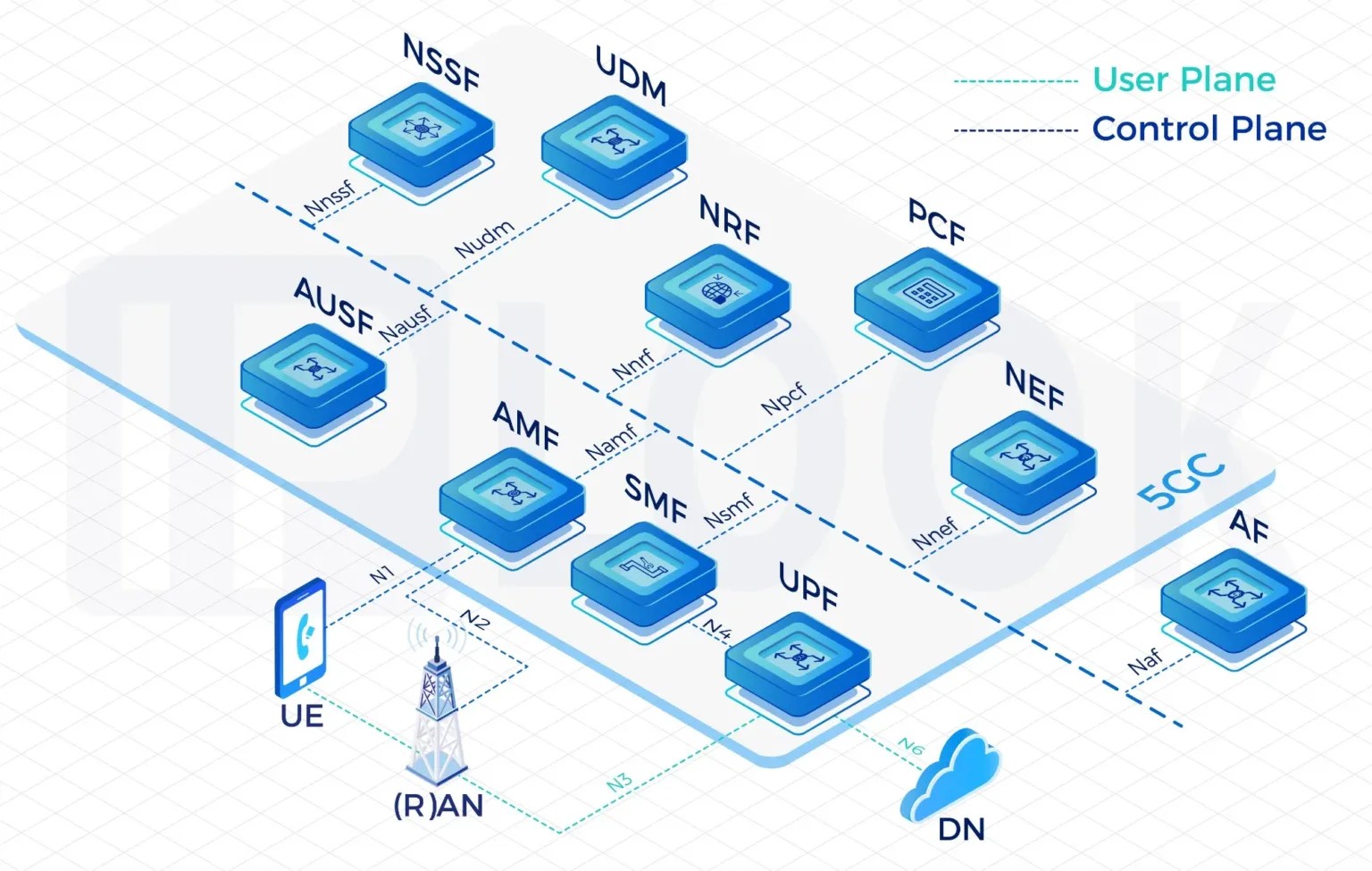
Network slicing has moved beyond the lab in China, becoming a practical tool that lets operators carve out dedicated virtual corridors for industries that refuse to settle for one-size-fits-all bandwidth. A port in Ningbo handles automated cranes with latency measured in milliseconds, while a smart factory outside Shenzhen keeps its robotic welders on a slice untouched by consumer video traffic. These aren't experiments—they're billing line items.
The real craft lies in matching slice attributes to unglamorous operational demands. A power grid needs deterministic jitter for protective relays, not raw speed. A hospital's remote ultrasound suite wants guaranteed uplink for haptic feedback, while a coal mine's underground sensors prioritize energy efficiency over throughput. Chinese operators have learned to listen for these distinctions, translating them into template-based slices that can be ordered through a portal and activated in under an hour. The sales pitch rarely mentions "5G" anymore; it's about uptime, safety, and the cost of a conveyor belt stopping unexpectedly.
What sets this apart from earlier QoS tricks is the isolation that actually holds under load. When a music festival saturates a nearby macro cell, the port's slice doesn't flinch. When a steel mill runs a 4K defect-inspection feed alongside thousands of IoT sensors, neither steals airtime from the other. This quiet reliability, rather than headline speeds, is why verticals are signing multi-year contracts that treat connectivity like a utility—metered, managed, and mercifully boring.
The Latency Equation: Edge and Core Collaboration in China’s 5G Rollout
China's 5G build-out runs into a stubborn arithmetic: every millisecond lost between a device and a faraway core stack chips away at factory automation, autonomous driving, and remote surgery. The fix isn't a single magic box; it's splitting intelligence across layers. Small edge sites near base stations handle real-time tasks, while the regional and national core manages session control, authentication, and heavier data flows. That division is what keeps latency from blowing past budgets on dense urban networks and sprawling industrial parks.
Operators have leaned on multi-access edge computing to shorten the physical path. In provinces like Guangdong and Jiangsu, edge nodes sit inside carrier facilities or on enterprise campuses, often only a few kilometers from end users. But placing compute closer isn't enough if backhaul congestion or poor peering still forces traffic through distant gateways. The real engineering work is negotiated routing, pre-cached container images, and careful QoS marking so the edge and core don't fight over the same control plane.
That shared responsibility changes how latency gets measured and managed. Instead of quoting a single "5G latency" figure, China Mobile, China Telecom, and China Unicom now talk about segment budgets: air interface, fronthaul, edge processing, and core round-trip. In many industrial deployments, the edge portion stays under a few milliseconds, while core-dependent functions are allowed a looser envelope. It's a quieter form of collaboration—no single vendor owns the whole path—but it's what lets a 10 ms target survive contact with real-world packet loss, handovers, and software updates.
Zero-Trust at the Core: Security Overhaul for Next-Gen Networks
The old model of trusting everything inside the corporate firewall is long dead. Next-generation networks are distributed across clouds, edge nodes, and remote devices, so there is no single perimeter left to defend. Zero trust flips that assumption: no user, no device, no packet gets a free pass just because it already made it past a firewall. Every request, from a login attempt to an API call between microservices, must prove its legitimacy every time.
But zero trust is not just about adding more authentication prompts. A real overhaul means breaking the network into smaller, isolated segments and enforcing strict least-privilege policies on each one. Instead of one big trust zone, you get dozens or hundreds of micro-perimeters. If an attacker compromises one container or one employee laptop, they cannot wander freely across the data center. The damage stays contained because the next hop requires a fresh set of credentials and context checks.
Pulling this off at scale requires automation and continuous monitoring. Network teams have to integrate identity signals from endpoint agents, cloud access brokers, and workload telemetry into a single policy engine. It is messy work, and the first deployments often feel like they are slowing everyone down. But the payoff is a network that can adapt to new threats without waiting for a perimeter redesign. For next-gen networks, zero trust is less a product than a fundamental shift in how we think about connectivity itself.
Self-Optimizing Networks: AI Steps Into the 5G Core
The 5G core has become too intricate for manual tuning alone. Network functions are distributed, slices come and go on demand, and traffic patterns shift in minutes. AI changes the equation by watching real-time telemetry from the control plane and user plane, then nudging resource allocations, rerouting flows, or spinning up additional instances of a network function before congestion hits. It is less about replacing engineers and more about giving the core a nervous system that reacts faster than any dashboard alert.
A practical example sits in slice management. A cloud gaming slice might need 20 ms latency, while an IoT slice tolerates seconds. Static thresholds fail when both spike at once. Machine learning models trained on historical traffic can forecast the collision and shift user plane function capacity or adjust QoS profiles automatically. The network no longer waits for a trouble ticket. It tunes itself against the service-level objective, turning business intent into continuous parameter adjustments.
Yet moving AI into the core demands caution. Closed loops can amplify a bad decision if the model misreads an anomaly. That is why operators are adopting guardrails: policy constraints, shadow mode deployments, and human approval for high-risk changes. The goal is not a black box that overrides everything, but a self-optimizing system that learns the rhythm of the network and keeps it within safe bounds while freeing engineers to handle the exceptions that actually need creativity.
Beyond Consumer Speed: Standalone 5G Core Enables Industrial-Grade Reliability
Industrial operations rarely forgive a dropped connection. While consumer networks chase peak download rates, manufacturing floors, ports, and energy grids demand something far harder to deliver: the certainty that a critical command will arrive within a bounded time window, every single time. Standalone 5G Core architecture abandons the legacy reliance on 4G packet cores and instead builds a service-based fabric where network functions talk directly to each other. This shift unlocks ultra-reliable low-latency communication, not as a marketing checkbox but as a measurable engineering property—one where a robotic arm can stop in milliseconds, not seconds, because the control plane itself prioritizes deterministic behavior over raw throughput.
The difference shows up in how failures are handled. A conventional network might reroute traffic when a node goes down, causing a brief but unpredictable hiccup. A Standalone 5G Core, by contrast, can reserve dedicated network slices with isolated resources and redundant control paths. For an automated guided vehicle in a warehouse, that means the difference between a seamless handover between access points and a sudden stop that ripples through the entire logistics chain. Network exposure functions allow plant operators to program reliability directly into their applications, setting latency budgets and error rates that the network actively enforces rather than merely hopes for.
None of this requires exotic hardware. The core runs as cloud-native software on standard servers, yet it delivers the kind of predictability previously reserved for wired industrial buses. Time-sensitive networking integration bridges the gap between Ethernet-based factory systems and wireless endpoints without translation delays. The result is not merely a faster cellular link—it is a dependable control fabric that lets industrial engineers treat wireless connectivity the way they treat a safety relay: something that simply works, cycle after cycle, with no drama.
FAQ
The standalone core decouples control and user planes natively, allowing operators to run true network slicing and ultra-reliable low-latency services without relying on 4G anchors. China's large industrial base made that shift commercially sensible from the start.
It turns core functions into modular services that can scale independently and communicate through HTTP/2 APIs. That flexibility shortens the time from new service concept to live network feature, which Chinese operators have leveraged for rapid rollout of vertical solutions.
They are rebuilding core functions as containerized microservices and distributing them across multiple data centers. This supports hitless upgrades and more efficient resource use, especially in dense urban areas where traffic shifts unpredictably.
A single physical core can be partitioned into isolated virtual networks with different latency, throughput, and reliability profiles. Factories, ports, and hospitals get dedicated slices rather than competing for best-effort capacity.
User plane functions can be moved closer to data sources, cutting round-trip time and backhaul load. That placement matters for autonomous vehicles and smart manufacturing, where milliseconds determine outcomes.
Companies like Huawei and ZTE have contributed heavily to 3GPP standards and operate large-scale core networks domestically. Those deployments act as a proving ground for features that later reach other regions.
Security is embedded in the service-based architecture with mutual authentication, encrypted signaling, and strict control over network function access. Operators also run continuous monitoring across distributed core nodes to catch anomalies early.
Conclusion
China's 5G core network is undergoing a profound transformation that goes far beyond faster downloads. The shift from monolithic architectures to microservices has rewritten the operational blueprint, enabling operators to deploy and update network functions with unprecedented agility. This architectural change underpins network slicing, allowing carriers to carve out dedicated virtual networks for vertical industries—factories get deterministic low-latency slices for robotic control, hospitals receive ultra-reliable links for remote surgery, and ports use massive IoT slices for container tracking. Crucially, the latency equation is being solved by pushing intelligence to the edge: edge nodes and the 5G core now collaborate in a distributed manner, so time-critical data no longer needs to traverse to a distant central cloud. China's operators are not just adding capacity; they are re-architecting the core to treat connectivity as a programmable resource tailored to each industry's exacting needs.
Security has been rethought from the ground up with a zero-trust model at the core, meaning no device, user, or network function is trusted by default even inside the perimeter. AI has stepped into the 5G core as a self-optimizing force, continuously adjusting resource allocation, predicting traffic surges, and healing faults before they impact services. Meanwhile, the move to standalone 5G core networks—decoupled entirely from 4G—has unlocked industrial-grade reliability: sub-10-millisecond latency, ultra-high availability, and time-sensitive networking capabilities that consumer speed tests never capture. These advancements collectively position China's 5G core as the backbone for next-generation connectivity, where factories, cities, and vehicles rely on a network that is sliced, secured, edge-aware, and self-correcting by design.
Contact Us
Contact Person: Shimmy
Email: [email protected]
Tel/WhatsApp: 85253392231
Website: https://www.iplook.com