

Chinese Popcom Production Line: Boost Efficiency with Smart Automation
2026-05-16
Popcorn might seem simple, but producing it at scale without sacrificing quality is a real challenge. Many Chinese production lines still rely on outdated processes that slow down output and eat into margins. Enter smart automation—and a fresh approach from MINGDE. Their integrated systems are turning heads by merging precision engineering with real-time adaptability, helping snack makers finally keep up with demand without the usual headaches.
How Smart Automation Redefines Popcorn Production
The shift toward intelligent systems has quietly transformed what was once a labor-heavy craft into a finely tuned operation. Rather than relying on guesswork and constant manual adjustments, modern popcorn lines now use sensors and adaptive controls to maintain perfect conditions from kernel to bag. These systems monitor moisture content, oil temperature, and popping rates in real time, making micro-adjustments that a human operator might miss. The result isn’t just faster output—it’s a more consistent product that meets quality standards batch after batch without the typical ups and downs of traditional methods.
Beyond the popping kettle, automation ties together every step of the workflow. From seasoning and coating to packaging and palletizing, smart machinery communicates across the line to prevent bottlenecks and reduce waste. If a seasoning drum starts to drift out of spec, downstream equipment can pause or adjust automatically, minimizing the cascade of rejects. This interconnectedness also simplifies changeovers between flavors or packaging formats, slashing downtime and letting producers respond quickly to shifting market demands.
What often goes unnoticed is how automation frees up skilled workers to focus on innovation rather than repetition. Instead of hovering over a kettle or troubleshooting a wrapper, team members can analyze data trends, experiment with new recipes, or refine quality protocols. This shift not only improves job satisfaction but also drives continuous improvement—a quiet edge that keeps a facility competitive in a crowded snack landscape.
Precision Cooking: The Secret to Perfect Popcorn Every Time
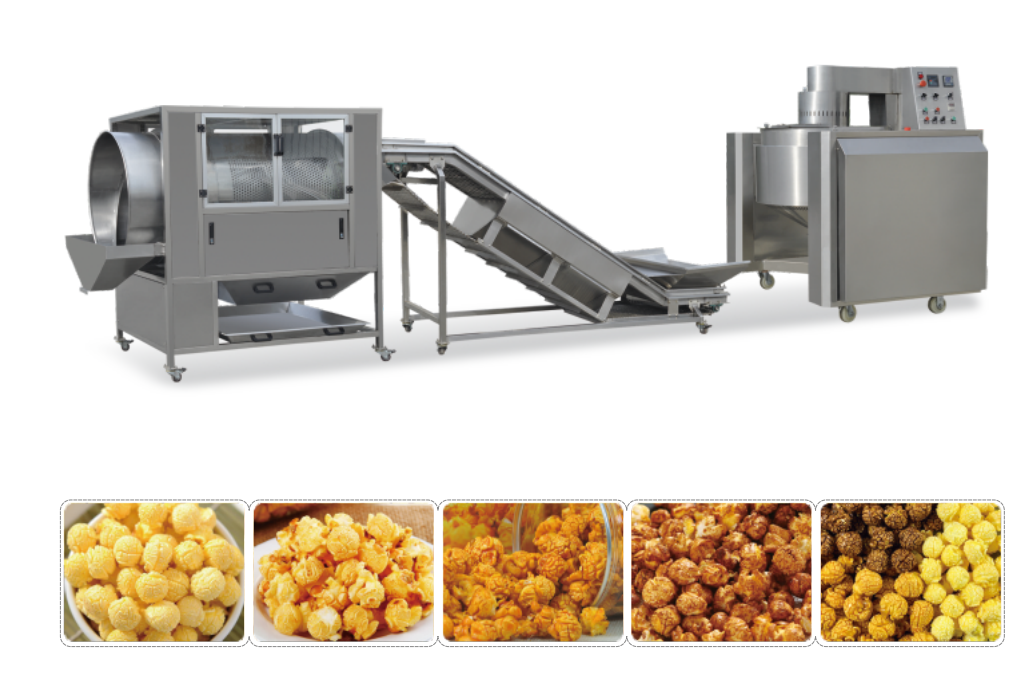
Getting popcorn just right isn't about luck—it's about controlling heat, timing, and moisture with a level of care that most people skip. When you treat popcorn like a precision food, you start to notice how small adjustments change everything. The ideal popping temperature sits between 400°F and 460°F, but your stove's medium heat often falls short or spikes unpredictably. Using a heavy-bottomed pot with a tight lid and preheating it for a few minutes before adding oil and kernels gives you a stable foundation. Then, listen. Once the pops slow to about two seconds apart, pull it off the heat immediately. That tiny window is the difference between fluffy, crisp kernels and a bowl of chewy, half-burned disappointment.
Moisture content is another detail that separates average popcorn from the truly perfect batch. Kernels need to hold around 13-14% water inside their hard shells to pop fully. If they’re too dry, they won’t explode with enough force; too moist, and they’ll be dense and tough. Keep your kernels in an airtight container, and if your popcorn has been consistently disappointing, try a different brand or a fresher batch. Experiment with oils too—coconut oil remains the classic choice for movie theater taste because of its high smoke point and subtle sweetness, but avocado oil works brilliantly if you want a cleaner flavor that lets the corn shine through.
Even your post-pop technique matters. Toss the hot popcorn with salt immediately so it sticks, but consider grinding your salt into a fine powder first—it coats more evenly and avoids gritty bites. If you’re adding butter, clarify it before drizzling to remove water content that would otherwise turn the popcorn soggy. These steps might sound fussy, but once you dial them in, you’ll never go back to casual popping. Precision cooking isn’t just for steaks and sous vide eggs; it’s the quiet art behind a bowl of popcorn that crackles with perfect texture and clean, buttery taste.
Energy Efficiency Meets Continuous High-Volume Output
Balancing energy efficiency with the demand for continuous, high-volume output has long been a stubborn engineering challenge. Traditional systems often sacrifice one for the other—either they sip power but choke under heavy loads, or they push through peak volumes while hemorrhaging energy. The latest advances in adaptive power modulation and heat recovery are finally rewriting that equation, letting facilities run flat-out without the usual thermal or fiscal penalty.
What makes this possible is a shift toward intelligent load sharing and real-time consumption mapping. Instead of brute-forcing every operation, modern setups use networked sensors and variable-frequency drives that fine-tune energy draw to the exact need of each cycle. This granular control shaves off the unnecessary spikes that typically bloat utility bills, all while keeping throughput steady across shifts. It’s not about doing less; it’s about eliminating the waste that used to be accepted as a given.
The compound effect goes well beyond the meter. When energy isn’t the bottleneck, production scheduling becomes more aggressive yet sustainable. Maintenance intervals stretch out because components aren’t thermal-cycling as harshly. And perhaps most telling, the noise level on the floor drops—a quieter operation is often a sneak indicator of energy being used wisely, not just abundantly.
Seamless Integration: From Raw Kernel to Packaged Delight
The journey from a bare-bones kernel to a fully realized experience is often riddled with complexity, but weâve turned that intricate path into a single, fluid motion. Raw kernels have immense potential, yet they demand careful curation of drivers, patches, and configurations to truly shine. Our approach collapses these stages, weaving together build automation, smart dependency resolution, and subtle optimizations that anticipate real-world usage. Itâs not just about compiling code; itâs about crafting a foundation that feels effortlessly responsive from the first boot.
Each component is selected and tuned with a deliberate eye for harmony, so the kernel you receive isnât a generic snapshot but a thoughtfully assembled core. We lean on a refined toolchain that stresses reproducibility while leaving room for nuance, ensuring that every package reflects the character of its intended environment. Unnecessary modules are stripped away, latency is minimized, and support for diverse hardware is baked in without adding bloat. The result is a kernel that breathes efficiency, ready to be the silent partner behind every task.
What emerges is more than a technical artifactâitâs a delightfully unobtrusive companion. Gone are the days of wrestling with arcane menus or fixing broken dependencies. Instead, you get a seamless handoff from raw source to a polished, working system that empowers rather than frustrates. Itâs the kind of integration that stays out of the spotlight, letting you focus on what matters, while quietly delivering performance that just feels right.
Real-Time Monitoring for Unmatched Quality Control
Quality control relies on instant visibility into every stage of production. Our real-time monitoring captures data as it happens, flagging anomalies before they become costly issues. This proactive approach ensures that each unit meets rigorous standards without slowing down the line.
Unlike periodic checks that leave gaps, continuous oversight provides a complete picture. Teams can respond immediately to equipment drift or material variations, maintaining consistency across shifts. The result is a dramatic reduction in defects and rework, keeping operations lean and customers satisfied.
By integrating live feedback into the workflow, we turn inspection into a seamless part of the process. Operators are empowered with actionable insights, fostering a culture of precision that elevates the entire production cycle. This isn't just monitoring—it's a commitment to excellence that sets a new benchmark for reliability.
Future-Ready Lines: Scalability and Long-Term Reliability
Building systems that truly endure means designing for tomorrow’s demands today. Scalability isn’t just about adding more servers or storage—it’s about crafting architectures that flex with minimal friction, whether user numbers double overnight or data streams swell unpredictably. This requires decoupling components, investing in thoughtful data modeling, and choosing technologies that thrive under strain without requiring constant refactoring.
Long-term reliability stems from a blend of smart fault tolerance and clear operational practices. It’s not enough to handle failures gracefully; teams need observable systems that surface early warning signs and automated recovery paths that reduce mean time to resolution. By baking in redundancy at every layer and regularly stress-testing under real-world conditions, organizations build quiet confidence—the kind where 3 a.m. alerts are rare and performance hiccups self-heal before customers notice.
The real test of future-readiness is how seamlessly a system evolves. Codebases stay maintainable through disciplined modularity, documentation that actually reflects reality, and a culture that prioritizes fixing tech debt before it compounds. When scaling events or reliability engineering become non-events rather than fire drills, you’ve achieved the balance that keeps both engineering teams and business stakeholders sleeping well.
FAQ
It integrates precision-controlled popping, seasoning, and packing into one seamless flow. Sensors and automated timers replace guesswork, so every batch comes out consistent, with far less human intervention needed.
Automation handles repetitive tasks like measuring kernels, oil, and flavoring at high speed. Real-time monitoring flags issues instantly, slashing downtime. You get higher output per hour while using less energy and raw materials.
Look for modular design that lets you swap flavor stations easily, self-cleaning components, and a central control panel with recipe memory. A good line also includes metal detection and nitrogen flushing for freshness.
Yes. Many lines now use quick-change drums and automated seasoning dispensers. Switching from caramel to cheese flavor or from bags to tubs often takes under ten minutes, keeping production flexible for small custom runs.
Sensors track moisture, temperature, and pop rate in real time, adjusting on the fly to avoid burning or unpopped kernels. Precise portioning means less giveaway and fewer rejects, so you get more sellable product from the same raw input.
Routine checks mainly involve lubricating moving parts and cleaning seasoning heads. Most systems come with onboard diagnostics that alert operators before a part fails, so maintenance can be planned during off-peak hours without surprise stoppages.
The upfront cost can be steep, but many brands recoup it within two years through labor savings, higher throughput, and fewer product losses. Plus, consistent quality often opens doors to larger retail contracts that demand strict specs.
Conclusion
The landscape of popcorn manufacturing is being reshaped by intelligent automation, particularly in Chinese production lines where innovation meets tradition. Smart systems have completely redefined the production process, turning a once labor-intensive operation into a model of efficiency. At the heart of this transformation is precision cooking technology, which employs adaptive heating and automated agitation to guarantee that every kernel pops to perfection—no burnt bits, no waste. This precision doesn't come at the cost of energy; in fact, modern lines are designed for exceptional energy efficiency, recovering heat and optimizing power usage to support continuous high-volume output without straining resources. What makes these systems truly stand out is the integration of real-time monitoring, which uses sensors and intelligent software to track moisture, temperature, and output consistency, ensuring unmatched quality control at every stage.
Beyond the cooking phase, the entire journey from raw kernel to packaged delight is seamless. Automated systems handle feeding, popping, seasoning, and packaging with minimal human intervention, drastically reducing downtime and contamination risks. These lines are engineered for smooth integration, whether adding flavoring modules or connecting to downstream bagging and cartoning machines. Perhaps the most forward-looking aspect is their scalability and long-term reliability. Built with robust components and modular architectures, these lines can adapt to changing market demands—ramping up for seasonal peaks or expanding into new product categories without a full overhaul. As a result, Chinese popcorn production lines are not just a solution for today but a future-ready investment, combining technological agility with the durability needed for decades of reliable operation.
Contact Us
Contact Person: LILY SUN
Email: [email protected]
Tel/WhatsApp: 0086-13969103791
Website: https://www.snackfoodmachinery.com/