

Compact Substation Factory: Engineering Reliable Power Distribution for Modern Infrastructure
2026-08-18
Modern infrastructure demands power distribution systems that are both compact and uncompromisingly reliable. Behind every efficient urban grid and industrial network lies a crucial component often overlooked: the compact substation. At Chang Song, engineering these vital hubs is not just a process—it's a commitment to keeping the world's energy flowing seamlessly. This post takes you inside the factory floor where precision meets practicality, revealing how we design and build compact substations that quietly power the spaces we live and work in every day.
The Anatomy of a Compact Substation Build
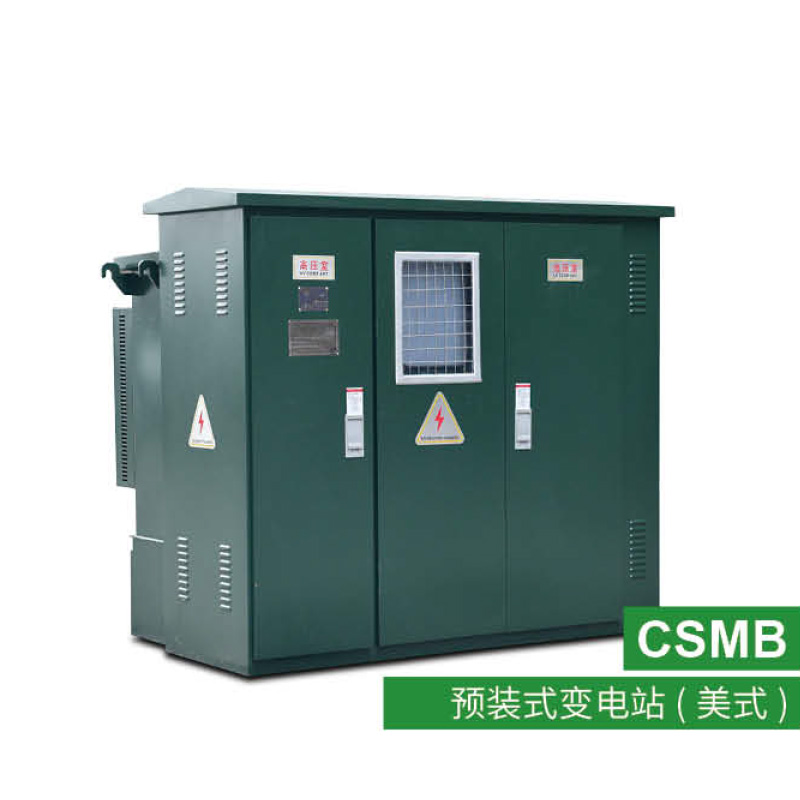
Compact substation is more than a steel box with a transformer. It's a carefully layered assembly where every element competes for space. The enclosure itself usually forms the first line of defense, often with ventilation louvres positioned to avoid direct rain ingress while still allowing heat to escape. Inside, the medium-voltage switchgear, transformer, and low-voltage distribution board are arranged not just for cable routing but for maintainability under confined working conditions. A common mistake is treating this as a miniature version of a conventional substation; in practice, thermal behaviour, arc fault containment, and access clearances have to be rethought from scratch.
The busbar connections between compartments deserve more attention than they usually get. Because the distances are short, mechanical stress from thermal expansion can be significant, especially in areas with wide daily temperature swings. Designers often introduce flexible links or sliding supports to prevent cracked insulation or loosened terminations. Earthing is another subtle part of the anatomy: a single buried earth mat may not be feasible for a transportable skid, so bonding of all metallic parts, plus a dedicated earth bar with multiple external test points, becomes essential. Without that, even routine maintenance carries an avoidable risk.
Protection and monitoring are often bundled into a small RTU or protection relay panel mounted on the door. In a well-planned compact substation, this panel doesn't just collect alarms; it gives the operator enough information to distinguish a transient overload from an actual fault condition. That distinction can change the urgency of a site visit. Cables entering from below via gland plates should be sealed against vermin and moisture, but still allow future cable additions without cutting new holes. It's this interplay of heat, access, mechanical stress, and protection that defines the anatomy of a compact substation build, far beyond a simple parts list.
Design Choices That Shrink Footprints Without Cutting Corners
The easiest wins often come from what you don’t see. Swapping virgin hardwoods for reclaimed or FSC-certified timber costs little in aesthetics but avoids the hidden carbon toll of logging and long-haul freight. Similarly, specifying low-cement concrete mixes or rammed earth for interior feature walls cuts embodied energy without forcing a visual compromise. These decisions read as intentional texture rather than sacrifice.
Detailing matters just as much as material choice. A well-placed brise-soleil or deep eave can drop cooling loads enough that mechanical systems shrink by a third—and smaller systems mean less copper, less refrigerant, and quieter interiors. Interior layouts that borrow daylight through clerestory windows or glass partitions reduce reliance on artificial lighting during the day, which also makes spaces feel larger than their square footage suggests.
Longevity is the quiet multiplier. Choosing solid wood joinery over veneered particleboard, or stainless steel hardware over plated zinc, extends replacement cycles from years to decades. When a project is designed for disassembly—with screws instead of adhesives and standardized connection points—end-of-life becomes a supply chain for the next build instead of a landfill stat. None of this requires a smaller window or a thinner wall; it just asks for smarter sequencing.
Factory Testing That Mimics Years of Grid Abuse
Replicating decades of real-world stress inside a controlled factory environment starts with a deep dive into failure modes that rarely show up in standard lab tests. We feed inverters with synthetic grid profiles built from actual field data—voltage sags, frequency swings, harmonic distortion, and rapid thermal cycling—all run in accelerated sequences that compress years of abuse into weeks. The goal is not just to see if a unit survives, but to catch the slow-burn degradation patterns that eventually kill power electronics in the field.
One of the trickiest parts is mimicking the cumulative effect of micro-arcing on connectors and the gradual loosening of internal busbars under repeated thermal expansion. Instead of relying on generic vibration tables, we use load profiles derived from utility-scale sites where morning ramp-ups and evening drop-offs create mechanical stress you’ll never see in a steady-state burn-in. Every test run generates a fingerprint of resistance drift, leakage current, and temperature rise, which we compare against known end-of-life signatures from retired fleet units.
This approach turns factory testing from a pass/fail gate into a predictive filter. By recreating the messy, irregular nature of actual grid abuse—voltage transients from nearby lightning strikes, back-feed from motor loads, even salt-spray corrosion followed by high humidity—we identify weak boards and marginal solder joints before they ever leave the loading dock. The result is a failure rate curve that matches field data within single-digit percentages, giving installers confidence that what survives the factory floor will keep running when the grid gets ugly.
Modular by Design: Scaling Power for Growing Cities
Cities rarely expand in a straight line. A new district sparks demand, an industrial corridor doubles its load, and suddenly the old grid is straining at the seams. Modular power design treats that growth not as a crisis but as a rhythm—one you can match with blocks of capacity that click in when the need becomes real. Instead of overbuilding a single massive plant and hoping the future agrees with your forecast, you lay down a spine of switchgear, controls, and connection points that accept new units like drawers in a cabinet. Each module arrives pre-tested, wired for integration, and ready to be stacked alongside the last.
The advantage isn't just technical; it's financial and civic. A growing city doesn't have to tie up capital in idle megawatts or wait a decade for a mega-project to clear permitting. You scale in steps—add a gas turbine here, a battery block there, a solar canopy over a parking lot—and each one starts earning its keep within months. That kind of incrementalism lets planners follow actual usage patterns rather than guesswork, and it turns blackouts from a systemic risk into a localized, fixable event. If one module needs maintenance or fails, the rest keep humming, because the design assumes no single point of dependence.
What makes this work is an obsession with interfaces. Every connection, every control protocol, every voltage step has to be standardized so that a module from one vendor can sit next to one from another without a custom engineering miracle. That standardization isn't glamorous, but it's the difference between a true modular plant and a collection of mismatched parts. When a city has that core discipline, scaling power becomes less like surgery and more like adding cars to a train—each one pulls its weight, and the whole thing leaves the station on time.
Quietly Powering Data Centers and Transit Hubs
Inside a data center, the real workhorse often sits unnoticed behind steel doors and concrete walls. Fuel cells and advanced battery systems hum at a frequency too low to register, yet they carry the full weight of uptime guarantees and continuous transaction processing. Unlike the roaring diesel generators that only kick in during outages, these quiet power sources maintain a constant, clean supply—absorbing grid fluctuations, smoothing voltage sags, and stepping in within milliseconds when the main feed falters.
Transit hubs rely on the same invisible backbone. Train control rooms, platform lighting, ventilation shafts, and ticketing systems all depend on a power stream that cannot stutter, even for a heartbeat. Modern installations pair lithium-iron-phosphate battery racks with solid-oxide fuel cells that convert natural gas or hydrogen directly into electricity without combustion. The result is a near-silent, low-emission buffer that operates 24/7, handling peak loads during rush hours and bridging the gap between grid failure and generator startup.
What sets these systems apart is not raw output, but how gracefully they manage it. Traditional backup infrastructure announces itself with noise, exhaust, and periodic test runs. The newer approach hides in plain sight—modular cabinets tucked beside cooling units, wall-mounted inverters that look like ordinary electrical panels. Maintenance crews can swap out a faulty cell while the rest of the array keeps delivering power, and remote monitoring flags degradation long before it affects performance. For facility managers, the appeal is simple: a power source that never interrupts, never complains, and never demands attention.
Material Selection for Harsh Environments and Long Service Life
Selecting materials for harsh environments demands a careful balance between immediate performance and long-term degradation resistance. Factors like temperature extremes, corrosive chemicals, abrasive particles, and constant moisture exposure often work together, accelerating wear in ways that single-variable testing fails to predict. Engineers who rely solely on standard datasheets can miss subtle interactions—such as chloride stress corrosion cracking in stainless steels or UV-induced embrittlement in polymers—that only emerge after years of field service.
Long service life introduces another layer of complexity: maintenance intervals, inspection access, and the cost of unplanned downtime all hinge on material choices made decades earlier. For example, marine structures benefit from duplex stainless steels or titanium alloys, whose passive oxide layers resist pitting even in oxygen-depleted crevices. In chemical processing, high-nickel alloys like Hastelloy C-276 withstand both reducing acids and oxidizing salts, avoiding the rapid perforation seen with conventional austenitic grades.
Beyond metallic options, advanced ceramics and fluoropolymers offer tailored solutions where metals fall short. Silicon carbide exhibits near-zero corrosion in boiling sulfuric acid, while PTFE linings handle aggressive halogens at elevated temperatures. However, each choice carries trade-offs in thermal shock resistance, mechanical strength, or fabrication cost. Successful material selection therefore integrates historical failure data, accelerated life testing, and a clear understanding of the operating environment’s microclimates—ensuring that longevity is designed in from the start rather than discovered through costly replacement cycles.
FAQ
It builds prefabricated, fully enclosed substations that step voltage down from transmission levels to distribution levels. The factory integrates switchgear, transformers, and protection systems into a single transportable enclosure, so utilities can deploy full substations without months of on-site assembly.
Because all components are assembled and tested under controlled factory conditions, wiring errors and environmental contamination are reduced before the unit reaches the field. Sealed enclosures also shield live parts from dust, moisture, and wildlife, which cuts the frequency of flashovers and unplanned outages.
Urban residential towers, data centers, transit systems, and renewable energy plants all make heavy use of them. Their small footprint fits tight urban plots, while the modular design allows quick expansion as load demand grows in a district or industrial park.
The main challenge is packing high-voltage clearances, cooling paths, and operator access into a limited space without creating hot spots. Engineers use gas-insulated switchgear, directional airflow, and heat-resistant barriers to maintain dielectric strength and thermal performance in the same enclosure.
Yes, most factories offer modular configurations where the transformer rating, protection relays, and cable entry positions are chosen per order. A manufacturer might deliver a 33/0.4 kV unit with side cable boxes for one site and an 11/0.415 kV unit with top entry for another, all within the same enclosure family.
Every unit undergoes routine tests such as insulation resistance measurement, power frequency withstand, and transformer ratio checks. Complete substations also get functional tests on interlocks, alarms, and trip circuits, and many factories do a partial discharge test on the switchgear to catch hidden dielectric weaknesses.
Natural ventilation is often enough for lower ratings, but larger units use forced air cooling or heat exchangers. The enclosure is divided into separate compartments for transformer, high-voltage, and low-voltage sections, so heat from one area does not reduce the cooling capacity of another.
They arrive on a flatbed truck as a complete, pretested unit and can be lifted onto a prepared pad in a single day. Since no separate control building or overhead gantry is required, utilities can energize a new feeder much faster than with site-built substations, which matters when a neighborhood or industrial zone needs power urgently.
Conclusion
A compact substation factory does more than assemble steel enclosures—it engineers a balance between spatial constraints and uncompromising electrical performance. The build starts with a tightly integrated anatomy: switchgear, transformers, and protection relays are arranged so that every cubic meter earns its place. Design choices like gas-insulated switchgear, cast-resin transformers, and folded busbar layouts shrink footprints without sacrificing clearance or accessibility. Before any unit leaves the floor, it undergoes factory testing that replicates years of grid abuse—thermal cycling, short-circuit withstand, partial discharge monitoring, and mechanical endurance—so the equipment arrives ready for decades of service, not just a commissioning check.
That same factory mindset supports modular scaling for growing cities: pre-engineered bays and plug-in connections let utilities add capacity in days rather than months. In noise-sensitive settings such as data centers and transit hubs, these substations operate quietly thanks to low-loss cores, damped enclosures, and passive cooling paths that avoid fan drone. Material selection further extends service life—marine-grade aluminum, stainless fasteners, epoxy-coated busbars, and UV-stable gaskets resist salt spray, humidity, thermal shock, and industrial pollutants. The result is a power distribution backbone that disappears into the built environment while quietly holding the grid together.
Contact Us
Contact Person: Tonglun Chen
Email: [email protected]
Tel/WhatsApp: 8618906642555
Website: https://www.cncsele.com