

Custom Temporary Protective Film Manufacturer: Expert Tips for Tailored Surface Protection
2026-05-15
Surface protection isn't just about guarding against scratches—it's about precision, adhesion control, and compatibility with your exact material and environment. Generic films often fall short, leading to costly rework or damage. That’s why more professionals are turning to custom solutions from manufacturers like Shire. In this blog, we’ll share expert tips for tailored surface protection, helping you navigate material choices, application challenges, and performance optimization. Get ready to discover how a bespoke approach can eliminate guesswork and keep your surfaces flawless from manufacturing to installation.
Understanding Your Surface: Matching Film to Material
Every surface tells a story—its texture, porosity, and chemical makeup determine how well a film will adhere and perform over time. Before peeling off that backing paper, take a moment to assess what you’re working with. Is it smooth glass, rough concrete, painted drywall, or perhaps a low-energy plastic like polypropylene? Each material demands a specific adhesive technology and film type to ensure a bond that won’t fail when temperature or humidity shifts. Skipping this step is the most common reason graphics bubble, peel, or slide, turning a promising installation into a costly redo.
Start by identifying the surface energy of your substrate. High-energy surfaces—think clean metals, glass, and ceramics—readily accept most pressure-sensitive adhesives, giving you flexibility in film choice. Low-energy surfaces, such as powder-coated paints or untreated plastics, repel many standard adhesives, requiring films with enhanced grip or primers. Porous materials like unfinished wood or concrete add another layer of complexity; they need adhesives with high initial tack that can flow into microscopic crevices. When in doubt, a simple water droplet test can be revealing: if the water beads up, your surface likely has low energy and you’ll need a more aggressive adhesive.
Don’t overlook the long-term conditions your film will face. Outdoor installations under direct sun or in damp environments call for films with UV inhibitors and moisture-resistant adhesives, while indoor decals might prioritize repositionability and clean removal. The thickness and flexibility of the film itself also matter—rigid materials suit flat panels, but curved or textured surfaces beg for a conformable cast vinyl that can hug every contour without lifting edges. Matching film to material isn’t just about stickiness; it’s a conversation between surface science, environmental demands, and the lifespan you expect from the graphic.
The Role of Adhesive Strength in Temporary Protection
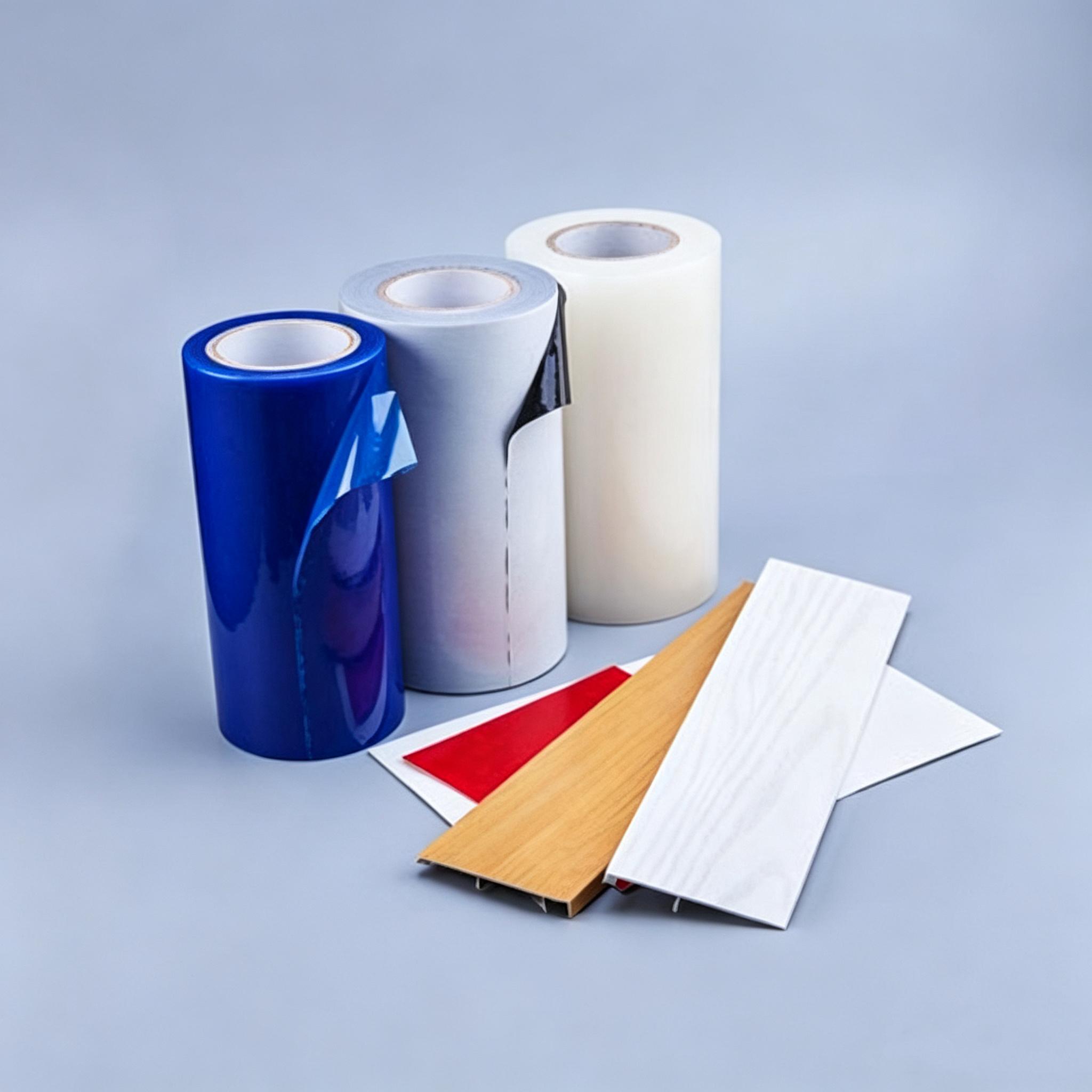
Getting adhesive strength right in temporary protection is a balancing act that relies more on context than on raw sticking power. A film that clings too aggressively might tear away paint or leave a stubborn residue, while one that barely hangs on will curl at the edges, letting in dust and moisture. The real job of the adhesive isn’t to form a permanent bond, but to create a stable, low-stress attachment that lasts exactly as long as needed—whether that’s a few hours on a factory floor or weeks out in the elements.
This demands a careful match between the adhesive’s formula and the surface, as well as an understanding of the conditions it’ll face. Textured plastics, smooth glass, and powder-coated metals each interact differently; humidity, temperature swings, and UV exposure can either weaken the grip prematurely or make removal a battle. Some of the most practical solutions today rely on viscoelastic properties—where the adhesive gently flows into surface pores for hold, yet releases cleanly when pulled at a specific angle or speed—turning what could be a simple sticky layer into a smart, almost responsive shield.
Custom Sizing: Why One-Size-Fits-All Falls Short
Most clothing brands stick to a handful of sizes, assuming that a certain set of measurements will fit a broad range of people. But bodies don’t work that way—shoulders slope differently, torsos vary in length, and waistlines sit at unique points. When a garment is designed for a generic shape, it often ends up pulling in the wrong places, gaping unexpectedly, or simply feeling off. That’s the fundamental flaw of one-size-fits-all thinking; it ignores the beautiful variety of human proportion.
Custom sizing steps away from this guesswork by starting with your actual dimensions. Instead of hoping a “medium” aligns with your arms and chest, every piece is cut to match the specific contours you provide. This means no more rolling up sleeves that are too long or settling for a fit that’s almost right. The result is clothing that moves with you, rather than against you, making daily wear noticeably more comfortable and confident.
Beyond comfort, there’s a quiet confidence that comes from wearing something made for your body. It changes how you stand, how you interact, because you’re not fighting your clothes. Off-the-rack options might save time initially, but they rarely deliver that seamless fit. Choosing custom isn’t just about measurements—it’s about acknowledging that your shape deserves more than a compromise.
Environmental Factors That Impact Film Performance
From the moment a film is manufactured, it enters a silent battle with its surroundings. Temperature and humidity rarely act alone—they creep into the polymer matrix, coaxing molecules apart and inviting brittleness or unwanted softness. A film that performs flawlessly in an air-conditioned lab can turn hazy, warp, or lose its tear resistance after a few months of real-world exposure, not because it was defective, but because the environment never stops negotiating with its chemistry.
Light, often overlooked outside of archival discussions, isn't just a threat to photos and artwork. Ultraviolet and even visible wavelengths can trigger oxidation chains that unravel plasticizers and stabilizers, leaving behind a film that looks intact but has quietly surrendered its flexibility. Outdoor signage, greenhouse covers, and automotive laminates all carry the scars of this slow degradation—yellowing, microcracking, or a chalky surface that signals the material is being consumed by the very sunlight it was meant to withstand.
Chemical exposure adds another layer of unpredictability. It's not only about obvious solvents or corrosive agents; everyday pollutants, aerosolized oils, and even the acids in human skin can accelerate film breakdown. In industrial settings, a protective film might fail early because nobody accounts for the cumulative effect of airborne sulfides or cleaning agent residues that settle into microscopic surface flaws. The performance of any film, then, is less a fixed quality and more a continuous conversation with the conditions it actually lives in.
Application Techniques for Flawless Coverage
Achieving truly flawless coverage starts long before you pick up a foundation brush. The canvas matters just as much as the paint, so spend a few minutes properly prepping your skin. A gentle exfoliation the night before smooths away texture, while a hydrating toner and lightweight moisturizer applied right before makeup plump up the surface and create a supple, even base. Finish with a primer that suits your skin type—mattifying for oily zones, illuminating for dull patches—and you’ll grasp why professionals insist that the secret to an airbrushed finish is in the skincare.
When it comes to actually applying foundation, ditch the “one tool fits all” mindset. Different formulas respond better to specific techniques. Dense buffing brushes work product into the skin in thin, buildable layers that mimic natural texture, while damp sponges press and blend for a seamless, soft-focus effect. If you are after the most undetectable coverage, nothing beats clean fingertips. The warmth of your hands melts liquid and stick foundations into a second-skin finish, especially around the nose and under the eyes. Switch between tools depending on the area to finesse the look—precision brushes for the hairline, a fluffy blender for the jawline—so the coverage stays imperceptible from every angle.
Even the most meticulously applied base can look artificial if powdered without thought. Instead of dusting loose powder all over, take a selective approach. Use a velour puff to press a translucent formula only where shine creeps in—the center of the forehead, the sides of the nose, the chin. Let the rest of the face retain its natural luminosity. Then, finish with a few spritzes of a setting spray that mimics the skin’s own moisture barrier. This not only melds the layers together into one seamless veil but also reactivates any over-powdered areas, leaving behind coverage that moves with your expressions rather than sitting stiffly on top.
Balancing Cost and Quality in Protective Film Selection
When choosing protective films, the tension between upfront price and long-term performance often feels like a trade-off you can’t escape. But it’s not really about cheap versus expensive—it’s about matching the film’s properties to the actual demands of your application. A film that costs a bit more but lasts twice as long or prevents a single production stoppage can easily pay for itself.
Quality isn’t just a spec sheet number. It shows up in how evenly the adhesive wets out, how the film handles UV exposure over months, or whether it peels cleanly without leaving residue. These details affect rework rates and customer perception more than the purchase price does. On the cost side, you have to weigh bulk discounts against the risk of buying too much inventory of a film that might not age well in storage.
A practical way to balance these factors is to run side-by-side trials with your actual product and process. That way, you see which film truly maintains clarity and adhesion under your conditions, not just an ideal testing environment. Locking in the right supplier relationship also helps—shared forecasts let you manage cash flow while the supplier gains stability to produce consistently. In the end, balance comes from knowing your cost of failure and refusing to pay for over-engineered protection you don’t really need.
FAQ
It's a peelable, pressure-sensitive film applied to surfaces to shield them from scratches, dust, moisture, and UV damage during manufacturing, transport, or installation. The film adheres firmly but removes cleanly without leaving residue when the job is done.
Standard films rarely match unique shapes, sizes, or performance needs precisely. With a custom solution, you get exact dimensions, specialized adhesive levels, and material properties like anti-glare or high-temperature resistance—essential for protecting delicate or irregularly shaped components.
The most common are polyethylene (PE), polypropylene (PP), and polyurethane (PU). PE is cost-effective and flexible, PP offers higher stiffness and clarity, while PU provides superior scratch and impact resistance. Your choice depends on the surface sensitivity and the stress it'll encounter.
It's a balancing act. High adhesion ensures film stays put during rough handling, but too much force during removal could damage paints or coatings. A reputable manufacturer will test peel strength on your actual surface and recommend an adhesive that holds firm yet peels cleanly.
Absolutely—this is where customization shines. For deep curves, the film can be formulated with enhanced stretch and conformability. For textured surfaces, adhesives are designed to flow into the tiny recesses without air entrapment, ensuring full coverage and lasting hold.
It varies, but most projects move from sample approval to full delivery within 3–4 weeks. Rush services can cut that to 10–14 days if needed. The key is early collaboration on specifications and testing to avoid delays from redesigns.
Ask for aging and weather-resistance test reports that simulate your environmental conditions. A quality manufacturer will guarantee clean removal within a specified period. Also, always do a trial application on a test panel to confirm long-term compatibility before scaling up.
Electronics, automotive, aerospace, building materials, and luxury goods lead the way. Basically, any sector where surface integrity is critical—from smartphone screens and car panels to architectural glass and high-end furniture—can gain from a precisely engineered film that prevents costly rework or customer returns.
Conclusion
Selecting the right temporary protective film starts with a deep understanding of the surface you're safeguarding. Delicate finishes like polished metals or high-gloss plastics demand low-tack, residue-free adhesives, while tougher substrates can handle a firmer grip. The adhesion level is not just about sticking power—it affects cleanup, repositioning, and long-term surface integrity. Equally critical is a precise fit. Standard off-the-shelf films rarely cover irregular shapes or large sheets without wasteful overlaps or exposed edges. Custom sizing eliminates these gaps, ensuring complete coverage and reducing material waste. When a manufacturer tailors the dimensions to your exact specs, you avoid the compromises that one-size-fits-all solutions impose.
Beyond material match and size, real-world conditions heavily influence film performance. Temperature fluctuations, UV exposure, and humidity can weaken adhesives or cause films to degrade prematurely. A knowledgeable manufacturer considers these factors, recommending UV-stabilized or weather-resistant options when needed. Application methods also matter; air pockets and misalignment compromise protection the moment the film is laid down. Expert guidance on squeegee techniques or professional installation can make the difference between flawless coverage and costly rework. Finally, balancing cost against quality is a strategic decision. Cheaper films might save money upfront but lead to surface damage or frequent replacements. Investing in a film precisely engineered for your scenario pays off in reduced liability and extended surface life. Working with a specialist who can customize the film’s properties, size, and installation instructions ensures that temporary protection is anything but temporary in its effectiveness.
Contact Us
Contact Person: Jack Xu
Email: [email protected]
Tel/WhatsApp: 8615257328825
Website: https://www.temporaryprotectivefilm.com/