

Dry-Type Transformer Recommendations for Efficient Power Management
2026-10-08
Effective power management starts with the right equipment, and dry-type transformers are often the unsung heroes behind stable, efficient systems. But with so many options on the market, how do you choose the best one for your needs? In this guide, we break down practical recommendations to help you optimize energy use, reduce losses, and extend equipment life. And when reliability matters, many engineers turn to Chang Song for solutions that consistently deliver performance without compromise. Read on to discover key selection criteria and expert tips you won't find in generic datasheets.
Map Actual Load Cycles Before Sizing a Dry-Type Unit
Dry-type transformers rarely run at full nameplate capacity around the clock. Instead, they breathe with the building—cooling down overnight, spiking during morning startups, idling through weekends, then straining again when production ramps up. Before picking a kVA rating, you need to trace that rhythm over a full week, not just a single worst-case snapshot. Look at how long each load level persists: a 30-minute inrush is very different from a six-hour continuous near-overload. Recording actual current draws at the transformer’s secondary, or using existing power monitors, gives you the true pattern rather than an assumed one.
Once you have the load profile, break it into operating cycles. Identify repeatable blocks—such as a two-shift factory schedule, a data center’s evening backup tests, or a chiller plant that stages compressors based on outdoor temperature. For each block, note the average load, the peak load, and the duration. Then compare those cycles against the transformer’s thermal time constant. Dry-type units handle short overloads well if they get a chance to cool afterward, but sustained cycling near the insulation temperature limit will age the windings prematurely. A unit sized purely to the absolute peak may run cool and inefficient most of the time; one sized to the average may trip on hot days.
The goal is to match the transformer’s thermal inertia to your real operating rhythm. If you see a predictable pattern of high load for two hours then low load for two hours, a smaller unit with proper ventilation might ride through the peaks without exceeding winding temperature limits. But if the load cycle is erratic—long idle periods followed by abrupt, sustained demand—then you need extra margin or forced-air cooling. Map those cycles on a timeline, calculate the root-mean-square load over the worst repeating window, and let that number guide your sizing choice rather than the nameplate guesswork of “add 20% for future.”
Airflow and Enclosure Choices Often Decide Efficiency
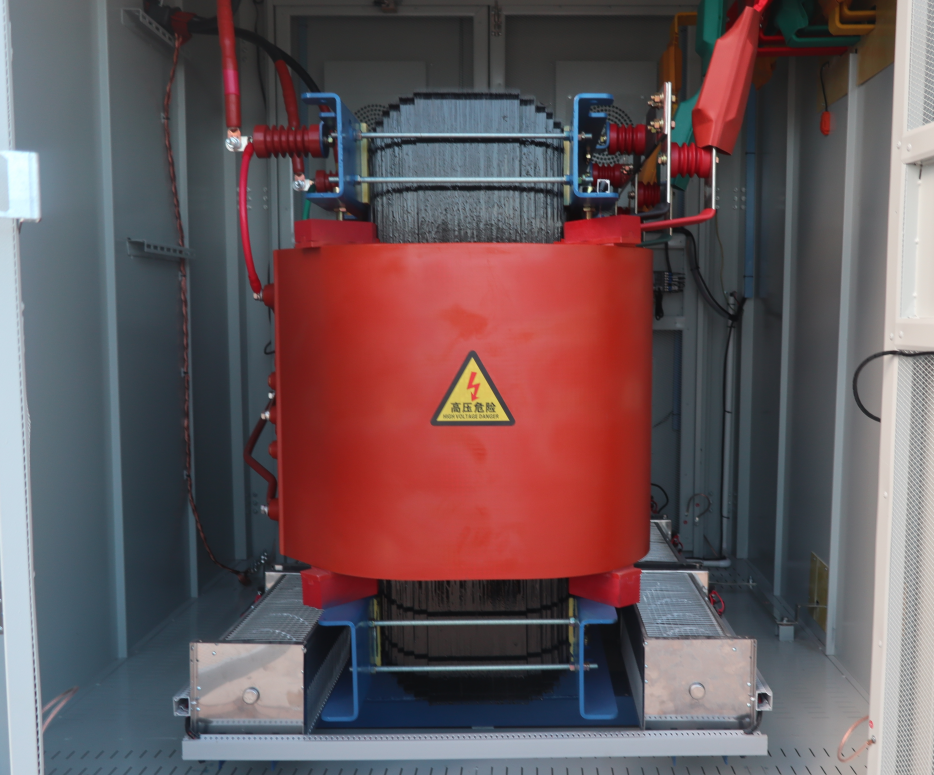
Thermal performance rarely hinges on fan count alone. A chassis with three well-placed 120 mm intakes and a single rear exhaust can outperform a flashier setup with six uncoordinated fans. The goal is to avoid stagnant zones: air should move in one deliberate path across the components that actually generate heat, not swirl around dead corners or leak through unfiltered gaps.
Enclosure shape and vent patterns matter just as much as raw airflow. Solid front panels with narrow side slits force fans to work harder for less actual cooling, while mesh or perforated fronts lower static pressure demands. If the case is too restrictive, even high-static-pressure fans will spin faster to compensate, raising noise without a proportional drop in temperatures. Pay attention to the ratio of intake area to exhaust area; a slightly positive internal pressure keeps dust from settling in every seam without choking the airflow.
Small changes in cable routing and drive cage placement can also reroute air badly. A bundle of cables sitting directly in front of an intake fan creates turbulence and blocks the smooth stream that would otherwise reach the CPU cooler or GPU. Before adding more fans or upgrading to larger models, test the current layout with a smoke pencil or tissue strip. Often the most efficient fix is not another fan but a cleaner path for the air you already have.
Harmonic Distortion Quietly Raises Operating Costs
Harmonic currents don't announce themselves with a bang; instead, they circulate through conductors and transformer windings, generating extra heat that never shows up as useful work. Over a billing cycle, that wasted energy accumulates into a noticeable increase in consumption, even when production levels stay the same.
Beyond the meter, the real expense often comes from accelerated wear. Capacitors age faster, motors run hotter, and protective devices may trip without an obvious cause. Each of these effects forces maintenance teams to spend more time troubleshooting and replacing components, quietly inflating the total cost of keeping a facility running.
Voltage Selection Has a Long Tail in Power Management
When engineers think about power rails, the usual suspects come to mind first: 5V, 3.3V, 1.8V, and maybe 1.2V for core logic. But real board designs rarely stop there. The long tail of voltage selection shows up as soon as you move beyond a basic microcontroller. Specialty memories, sensors, analog front ends, RF modules, and even different process nodes within the same SoC can all demand slightly different supply levels. Some need 2.5V for DDR termination, others want 1.0V for low-power cores, and a handful might run at 1.35V or 1.5V depending on speed binning. This tail is not a minor footnote; it drives how many rails you have to generate, sequence, and monitor.
The practical impact lands on power management IC choices. A fixed-output buck or LDO works fine for the popular voltages, but the long tail forces designers toward programmable or adjustable regulators. DAC-controlled feedback, resistor dividers that can be swapped on the fly, and PMICs with configurable output ranges become necessary simply because no vendor can stock every single voltage variant. Even then, margin testing often reveals that the so-called standard 1.8V rail actually needs to be 1.75V for a certain batch of sensors, or 0.9V instead of 0.85V for stability at cold temperatures. That slight shift is exactly the kind of long-tail demand that separates a robust design from a fragile one.
Ignoring this long tail creates subtle problems downstream. A board that works in the lab may fail in production when a different memory vendor specifies 1.35V instead of 1.5V, or when a new revision of an FPGA changes its auxiliary rail requirement. The cost is not just redesign; it is also the extra validation time, the need for more power sequencing states, and the increased bill of materials from adding extra regulators or load switches. Smart teams plan for the tail by building in programmable output voltages and flexible power trees from the start, even if they only expect to use a few common rails initially.
Thermal Scanning Reveals Losses Before They Escalate
A routine thermal survey caught a failing connection in a motor control center weeks before it would have tripped the line. The hotspot measured 87°C against an ambient 31°C — not yet dangerous, but clearly drifting upward from the previous quarter's baseline. That early warning let the maintenance team schedule a thirty-minute repair during a planned shutdown, avoiding what could have been a six-hour unscheduled outage.
The real value of thermal scanning isn't finding the obvious failures; those announce themselves with smoke or a tripped breaker. It's the subtle anomalies that matter: a lug loosening by a few thousandths of an inch, a cooling vent partially blocked by dust, a slight phase imbalance that hasn't yet pushed the insulation past its thermal class. Scanning regularly turns these silent trends into data points, and data points into decisions.
One facility reduced its electrical-related downtime by forty percent over two years after implementing a quarterly scan-and-track program. They didn't buy new equipment or hire extra staff — they simply started looking at heat before heat looked back. The scans cost less than a single hour of lost production, which means the program paid for itself the first time it flagged a loose termination on a critical pump feeder.
Right-Size from Duty Cycles, Not Worst-Case Nameplate
Most sizing spreadsheets start with the motor or drive nameplate and then add a safety factor. That habit quietly builds waste into the system. The nameplate rating is a ceiling, not a map of how the equipment actually runs. A pump that spends 80% of its time below half load doesn't need a drive picked for the 20% peak if that peak is brief and rare.
Pulling real duty cycle data changes the conversation. Log starts per hour, average torque, peak duration, idle time, and ambient conditions. Often the true thermal stress is far lower than the worst-case number would suggest. Right-sizing to that envelope lets you choose a smaller frame, reduce electrical and mechanical losses, and avoid the short-cycling and cooling problems that come from running an oversized unit too gently.
The goal isn't to shave every margin away. It's to stop using the nameplate as a substitute for the load profile. When you match the component to the duty cycle the machine actually lives in, you get better part-load efficiency, less maintenance, and a layout that doesn't carry dead weight for a condition that happens once a month.
FAQ
Don't just match the nameplate kVA to total connected load. Map actual demand peaks over a week, account for motor inrush and future expansion, then pick a unit that runs between 60 and 75 percent load at peak. Oversizing beyond that wastes energy through core losses and drives up ambient heat. If harmonics are present, derate accordingly; a K-factor rating or separate neutral sizing may be necessary.
Standard units are typically rated for 40°C average ambient over 24 hours with a 30°C average. If the installation area runs hotter—say near furnaces or rooftop enclosures—the insulation life shortens unless you derate. A rule of thumb: reduce load capability by about 1% for every degree Celsius above rated ambient, or specify a higher insulation class like 220°C.
Most manufacturers call for at least 150 mm (6 inches) clearance on all sides for air flow, but that assumes unobstructed room ventilation. In a confined electrical closet, you need forced air or larger openings. Ensure cool air enters near the bottom and warm air exits at the top; avoid mounting two units back-to-back without a baffle, because they can recirculate hot exhaust.
Not automatically. Copper has lower resistivity and often better thermal performance, so it can be smaller and lighter for the same kVA. But aluminum windings with proper design and terminations can be reliable and less expensive. Evaluate total cost of ownership: if the transformer runs heavily loaded in a tight space, copper's lower losses may pay back; for lightly loaded, well-ventilated applications, aluminum is often sufficient.
At minimum, do a visual and thermal inspection every six months. Look for dust accumulation on coils, discoloration from overheating, cracked insulation, and loose connections. Use an infrared camera to check termination temperatures while energized; a temperature rise beyond 10°C above ambient at connections signals trouble. Vacuum the enclosure, never use compressed air that can drive dust deeper, and torque connections to manufacturer specs annually.
It depends on the harmonic spectrum. Third and triplen harmonics cause circulating currents and overheating. If the total harmonic distortion exceeds 5% at full load, specify a K-factor rated transformer—K-13 covers most VFD and data center loads. Standard units may need a 20–30% derate. Also, double the neutral conductor if large single-phase nonlinear loads are present.
Modern designs use lower-loss core steel, such as laser-scribed grain-oriented silicon, and better coil geometry to reduce eddy currents. Under 35% load, losses can be cut nearly in half compared to 1980s-era units. Look for units meeting DOE 2016 or EU EcoDesign Tier 2 standards; the efficiency gains come mostly from reduced no-load core losses, which dominate at partial load.
Yes, but only if the enclosure is rated for the environment—NEMA 3R or 4X in corrosive areas—and you account for solar gain. Direct sun can push internal temperatures 10–15°C above outdoor ambient, forcing a derate. Ensure the shield doesn't block ventilation; insect screens should be cleaned regularly, and space heaters are recommended to prevent condensation in humid climates when the transformer is de-energized.
Conclusion
Efficient dry-type transformer management starts well before procurement. Rather than relying on worst-case nameplate ratings, plant teams who map actual load cycles often uncover that a smaller unit handles continuous duty without excessive temperature rise, while occasional peaks can be absorbed within thermal time constants. Enclosure and airflow decisions become the next lever: a ventilated design that channels cool inlet air across the windings and avoids recirculation can lower average winding temperature more effectively than adding kVA capacity. Conversely, a sealed or restrictive enclosure may force derating and shorten insulation life even if the transformer is never overloaded in the traditional sense. This approach also avoids the common trap of oversizing, which can increase no-load losses and capital expense without improving reliability.
On the electrical side, harmonic distortion has a way of inflating losses that do not appear on standard utility meters. Filtering or specifying a transformer with a lower impedance plus a suitable K-factor can keep eddy current and stray losses from quietly raising operating costs. Voltage selection also deserves a long view, because a nominal tap choice influences core losses and downstream regulation for years. Finally, periodic thermal scanning of terminations, core joints, and winding surfaces reveals early hot spots from loose connections or blocked ventilation, allowing maintenance to address uneven heating before it escalates into insulation damage. Together, these practices shift the conversation from buying a bigger box to managing heat, harmonics, and duty cycles as an integrated system, and they typically pay back through lower energy bills and longer service intervals.
Contact Us
Contact Person: Tonglun Chen
Email: [email protected]
Tel/WhatsApp: 8618906642555
Website: https://www.cncsele.com