

Export Calcium Chloride 94% Granules: Key Benefits and Global Market Insights
2026-11-02
When you think of calcium chloride exports, most suppliers hand you a spec sheet and a price. But the 94% granules market is shifting—buyers are now weighing purity consistency, moisture control, and logistics resilience more than ever. In this post, we unpack what actually drives value in today's global trade, from de-icing and dust control to oilfield applications. Along the way, you'll see why Shouguang Golden Chemical has become a name worth watching for buyers who need more than just a commodity.
Why Buyers Prefer 94% Calcium Chloride Granules for Export
Buyers who regularly source de-icing and dust-control materials often settle on 94% calcium chloride granules for one practical reason: the purity level hits a sweet spot between performance and landed cost. At 94%, the product delivers fast moisture absorption and reliable ice-melting action without the premium pricing tied to higher assay material. Granules are easier to handle than powder and dissolve more predictably than flakes, which reduces equipment clogging at ports and during bulk transfer.
Export shipments also favor the granular form because it resists caking in humid conditions better than finer grades. The uniform particle size means less segregation during ocean freight, so buyers receive a consistent product at their destination. This consistency matters when the material is repackaged or blended downstream; fewer fines translate into cleaner working conditions and lower loss in storage.
Finally, many international buyers value the straightforward regulatory profile that comes with a widely traded industrial grade. Since 94% calcium chloride granules are already well documented in major markets, customs clearance tends to be smoother, and repeat orders face fewer surprises. For procurement teams managing tight seasonal demand, that predictability can be just as important as the chemistry itself.
Key Advantages Behind Steady Global Demand
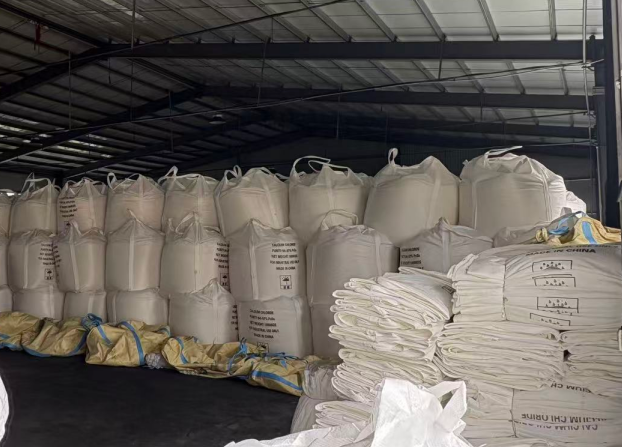
Demand doesn't persist by accident. It survives because certain fundamentals quietly outwork the competition. In this sector, the first edge is material consistency—buyers from different continents receive the same dimensional tolerances and surface finish batch after batch. That reliability removes costly inspection bottlenecks and lets downstream processes run without constant recalibration.
The second advantage is a rare balance between unit economics and adaptability. Rather than chasing the lowest price, global clients prioritize vendors who can adjust specifications mid-cycle without disrupting lead times. This flexibility stems from modular production lines and buffer inventory strategies that absorb demand spikes without inflating overhead. As a result, long-term contracts renew even when cheaper spot offers appear elsewhere.
Finally, there's the underappreciated role of after-sales engineering support. When a component underperforms in a new application, rapid failure analysis and joint redesign keep production lines moving. That collaborative troubleshooting turns a simple supplier into a problem-solving partner—and that's what keeps procurement managers loyal across volatile market cycles.
Top Import Markets and Regional Preferences
The biggest import markets rarely surprise anyone who follows trade flows. The United States, China, and Germany consistently sit at the top, driven by massive consumer bases and deep industrial supply chains. But the mix of what they bring in tells a sharper story—America leans heavily on machinery, electronics, and vehicles, while China’s imports skew toward raw materials, semiconductors, and agricultural goods to feed its factories and growing middle class.
Regional preferences get trickier once you move past headline numbers. Northern Europe shows a clear bias toward high-quality Scandinavian design and energy-efficient equipment, while Southern Europe imports more processed foods and textile machinery. Across Southeast Asia, demand for affordable consumer electronics and auto parts has surged, shaped by young populations and rapid urbanization. Latin America, on the other hand, often prioritizes capital goods and chemicals to support its agricultural and mining sectors.
What trips up many exporters is assuming a one-size-fits-all approach will work. A product that flies off shelves in Japan might sit untouched in Brazil, not because of quality but because of local tastes, voltage standards, or even color preferences. Smart companies spend time on the ground, watching how buyers actually use products, then tweak packaging, sizing, and support channels to match each region’s habits. That kind of granular adaptation is what separates steady import growth from expensive trial and error.
Handling and Storage Benefits of Granular 94% Calcium Chloride
Granular 94% calcium chloride offers a clear advantage during routine handling because its uniform particle size generates far less dust than flake or powder alternatives. This cuts down on cleanup time, reduces respiratory irritation for workers, and keeps loading areas noticeably cleaner. The granules hold their shape under normal transfer conditions, which means fewer fines accumulate in hoppers or conveyors over time.
In storage, the granular form resists caking and bridging far better than finer grades. Even when ambient humidity fluctuates, the product remains free-flowing and easy to discharge from silos, supersacks, or small bins. Operators rarely need to break up hardened material, and the consistent particle size supports reliable metering and blending without unexpected clogging.
From a packaging and equipment perspective, the dense, rounded granules slide smoothly through chutes, augers, and feeders. They tend not to stick to metal surfaces or form crusty layers on equipment, which lowers maintenance frequency and extends the life of transfer components. This predictable flow behavior also simplifies inventory rotation and reduces waste from partially emptied containers.
Pricing Trends and Supply Chain Considerations
Raw material costs have swung sharply over the past eighteen months, with resin and specialty alloy prices reflecting both energy market shifts and uneven demand across industrial sectors. Buyers who locked in annual contracts at 2023 rates are now revisiting those terms as spot prices for certain grades have dropped nearly 12 percent, while lead times for corrosion-resistant tubing have stretched by three to five weeks. This divergence means procurement teams cannot rely on a single index or historical average; they are increasingly blending quarterly fixed pricing with indexed adjustments tied to specific commodity benchmarks.
On the supply side, regional bottlenecks at key ports and rail hubs continue to disrupt just-in-time delivery models. Several manufacturers have shifted from single-source suppliers to a dual or regional sourcing strategy, accepting slightly higher unit costs in exchange for buffer stock and shorter recovery windows. Freight surcharges, though lower than their 2022 peak, remain unpredictable, and customs clearance delays for imported fittings are pushing some projects toward domestically produced alternatives. Forward-looking teams are building pricing models that weight both landed cost and lead-time variability, not just the invoice price per kilogram.
What International Buyers Look for in Reliable Suppliers
When an overseas buyer starts vetting a factory, the first thing that separates a shortlist candidate from a quick rejection is not price alone. They look for evidence that the supplier can hold a spec over repeat orders—batch-to-batch color matching, consistent packaging weights, and tolerance ranges that don't drift once the initial sample is approved. A supplier that quietly swaps a raw material or changes a production step without asking is often crossed off the list, even if the first shipment looks fine.
Beyond the product itself, buyers pay close attention to how problems surface. A reliable supplier flags a delay before it becomes a missed deadline, sends photos of a defect instead of hiding it, and answers a technical question without needing three follow-up emails. Paperwork matters too: complete mill certificates, clearly marked cartons, and export documents that match the packing list exactly. Buyers also notice when a factory remembers their previous order history or suggests a cheaper way to pack a container—that kind of initiative builds trust faster than any audit score.
FAQ
The 94% purity level ensures a high concentration of active calcium chloride, which lowers the freezing point of water more aggressively than lower grades. In granular form, it releases heat upon contact with moisture and penetrates ice or compacted surfaces quickly. For dust control, the granules draw moisture from the air to keep road surfaces damp and bind fine particles, reducing the need for frequent reapplication.
Granules resist caking better than powder and generate less dust during transfer, which reduces product loss and respiratory irritation for workers. Their uniform size also allows consistent spreading with standard equipment, whether for road maintenance or industrial dosing. Flakes tend to clump under humid conditions, while powder can blow away or form lumps that clog machinery.
Northern Europe, Russia, Canada, and parts of the United States show steady demand because of harsh winters and extensive road networks. The Middle East imports granules mainly for dust control on unpaved industrial sites and oilfield access roads. Southeast Asia and Latin America are growing markets, driven by construction, waste water treatment, and food-grade applications, though import volumes depend on local production capacity and freight costs.
Most exporters offer 25 kg or 50 kg woven polypropylene bags with an inner moisture barrier liner, or 500 kg to 1,000 kg supersacks for bulk handling. Some buyers request palletized and shrink-wrapped loads to simplify unloading. Moisture protection is critical because calcium chloride is hygroscopic, so liners and sealed containers help preserve free-flowing granules during long ocean transit.
A reputable supplier should provide a certificate of analysis from an independent lab showing calcium chloride content, moisture level, and levels of impurities like magnesium, sodium, and insoluble matter. Buyers can also request a pre-shipment inspection or send a sample to a third-party lab. Physical checks on arrival should verify that granules are hard, dry, and uniform, with no excessive fines or caked lumps.
The granules are used in oil and gas drilling fluids to control density and stabilize shale, in concrete to accelerate setting in cold weather, and in waste water treatment to remove fluorides and phosphates. Food processing plants use high-purity grades for firming canned vegetables and making cheese, while the chemical industry uses it as a drying agent for gases and organic liquids.
Energy costs for production, availability of limestone and hydrochloric acid feedstocks, and shipping rates all play a role. Seasonal demand spikes before winter raise prices, while oversupply from domestic producers in China or India can push them down. Buyers should also account for import duties, port handling fees, and currency fluctuations when comparing offers.
Conclusion
Granular 94% calcium chloride has become a staple for export markets where performance and logistics matter more than the premium liquid or flake alternatives. Buyers repeatedly choose this specification because the high purity leaves little room for moisture pickup during transit, and the uniform granule size prevents the caking that plagues smaller particle blends. In North America and Northern Europe, the product is valued heavily for dust control on unpaved industrial roads and for accelerating concrete curing in cold weather. Across the Middle East and parts of Asia, demand leans toward oilfield drilling and dehydration processes, where consistent dissolution rates save time on site. This regional split shows that the same granule grade can serve very different operational needs without requiring reformulation.
On the supply side, granular form brings practical advantages in handling and storage. The free-flowing beads load faster into bulk bags or supersacks, reduce dust exposure for port workers, and remain stable in humid coastal warehouses longer than powder forms. Pricing over the past two years has tracked energy and container costs more closely than raw limestone availability, so buyers increasingly contract with suppliers who hold buffer stock near key ports. Seasonality also plays a role: European buyers often lock in volumes before winter de-icing demand peaks, while Middle Eastern procurement runs steadier year-round. Experienced importers look beyond the certificate of analysis and ask about particle size distribution, moisture content at the time of shipment, and the supplier's track record with customs documentation. A dependable exporter will offer third-party inspection, flexible packaging options, and clear lead times, because delays at origin quickly erase the margin gained from a low unit price. Ultimately, the combination of product consistency, regional fit, and supply chain predictability is what keeps 94% calcium chloride granules moving steadily through global trade channels.
Contact Us
Contact Person: Tom Cui
Email: [email protected]
Tel/WhatsApp: +8618663670626
Website: https://www.jinjigoldenchem.com