

Gear Turbo Air Compressor Factory Insights Into Advanced Production and Reliability
2026-07-23
Step inside a world where advanced machining meets relentless quality control—the very foundation of every gear turbo air compressor that earns its place on the factory floor. At Seize Air, we don’t just assemble machines; we engineer reliability into every bolt and bearing. From precision-ground rotors to stress-tested housings, our production secrets are about to challenge everything you thought you knew about compressor longevity. Ready to see what keeps our units running strong years after the competition stalls?
Precision Machining in Gear Turbo Compressor Manufacturing
In the production of gear turbo compressors, precision machining stands as the cornerstone of performance and longevity. Every tooth on the drive and driven gears must be shaped to micron-level accuracy to ensure seamless meshing under extreme rotational speeds and loads. Advanced CNC hobbing and grinding machines are employed, using vitrified bonded CBN wheels to achieve surface finishes below 0.4 Ra, which directly impacts noise reduction and transmission efficiency. The process often integrates in-line laser measurement systems that provide real-time feedback, allowing for adaptive corrections during manufacturing.
Beyond gears, the compressor housing and impeller demand equally exacting tolerances. The complex, three-dimensional contours of the impeller are typically machined on 5-axis milling centers from high-strength aluminum or titanium alloys. The interplay between the impeller blades and the housing's inner profile defines the compressor's efficiency map; even a deviation of a few micrometers can create turbulent airflow pockets, degrading performance. Machinists rely on dynamic balancing machines and coordinate measuring machines (CMM) to verify every surface against CAD models, ensuring that the rotating assembly operates within a vibration limit often measured in millimeters per second.
Thermal management during machining is another critical factor often overlooked in less demanding applications. For turbo compressor parts, cutting strategies are optimized to minimize heat distortion through high-pressure coolant delivery and cryogenic cooling in difficult-to-machine materials. The alignment of bearing bores and seal surfaces receives particular attention, as these areas dictate oil film stability and leakage. By combining single-setup machining philosophies on multi-tasking machines, manufacturers prevent the accumulation of positional errors, yielding components that assemble with predictable, print-to-part precision and deliver the boost pressures required in modern industrial and automotive systems.
Automated Assembly Lines with Integrated Quality Checks
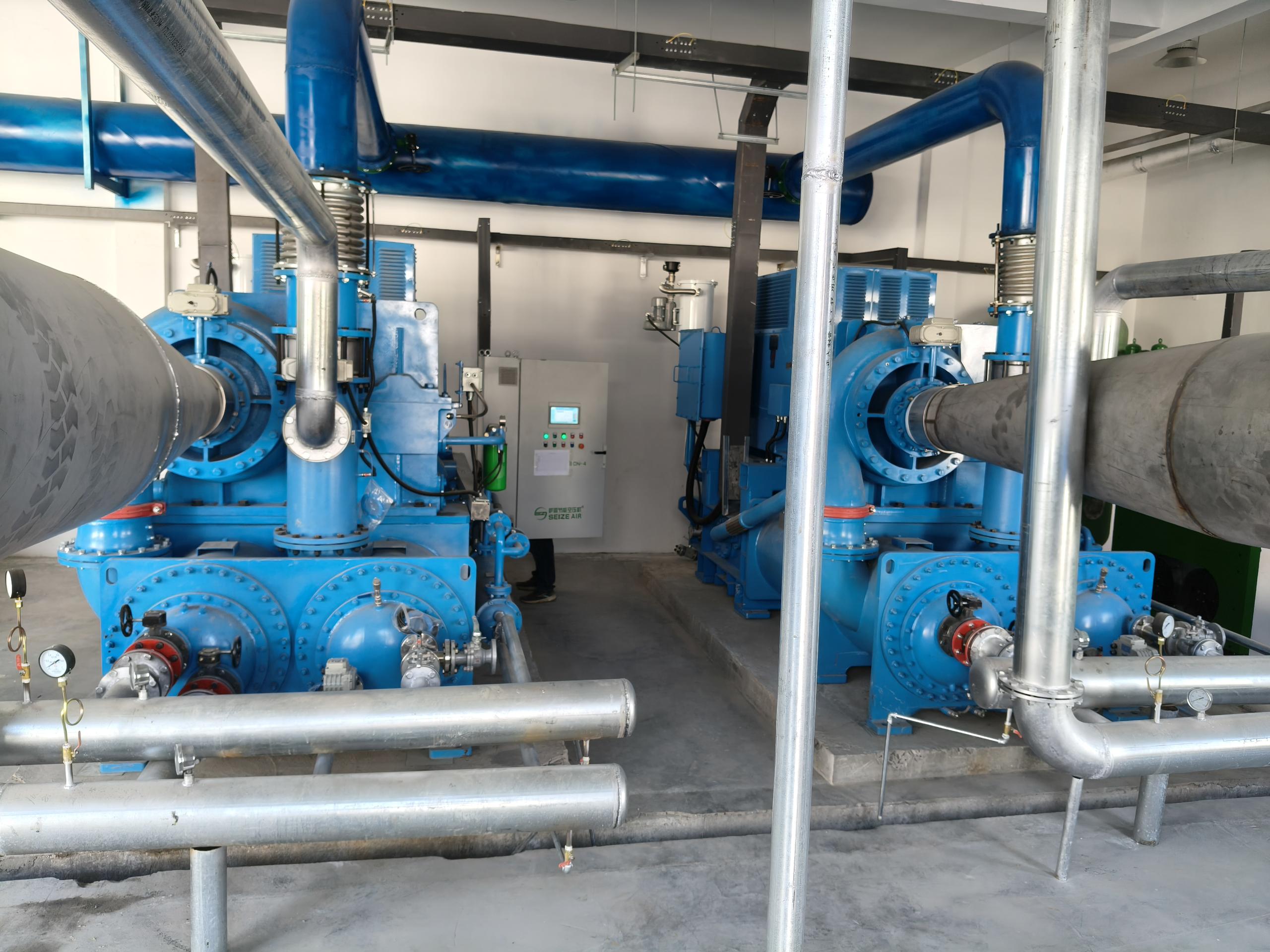
Automated assembly lines have evolved to incorporate sophisticated quality checks at critical stages. By embedding inspection systems directly into the production flow, manufacturers can detect and address defects in real-time, significantly reducing waste and rework. This integration ensures that only products meeting strict specifications proceed along the line, maintaining consistency without sacrificing speed.
The technology behind these systems often includes high-resolution cameras, laser sensors, and AI-driven analysis. These tools monitor everything from dimensional accuracy to surface finish, comparing each unit against a digital twin or predefined parameters. When a discrepancy is caught, the line can automatically divert the faulty item for manual review, while data is logged for process improvement. This closed-loop feedback mechanism turns quality assurance from a final checkpoint into a continuous, proactive part of production.
Beyond defect prevention, integrated quality checks also enable traceability and compliance. Each product can be serialized and its inspection history stored, facilitating audits and warranty management. As industries pivot toward smart manufacturing, such lines become essential for achieving the agility and reliability demanded by modern markets.
Material Innovations Driving Extended Service Life
Modern engineering has seen a quiet revolution in material science, where incremental improvements in alloys and composites are yielding disproportionately large gains in longevity. Rather than relying on traditional steel or basic polymers, industries are now leveraging micro-alloyed metals with finely tuned grain structures that resist fatigue cracking, and thermoplastic composites that shrug off environmental degradation. These materials aren't just tougher—they intelligently distribute stress, self-heal minor damage, and form protective oxide layers that stay intact even under cyclic loading. The result is infrastructure and machinery that stay in service for decades longer than their predecessors, with fewer interventions.
One of the most impactful innovations has been the shift toward nano-engineered coatings that bond at a molecular level, effectively becoming part of the substrate rather than a sacrificial outer skin. These ultra-thin layers, sometimes only a few micrometers thick, can repel water, resist UV breakdown, and even prevent bacterial growth without leaching toxic compounds. Applied to bridges, pipelines, or surgical tools, they dramatically slow the corrosion and wear that once dictated frequent replacement. Paired with smart additives that activate upon exposure to air or moisture, these coatings offer a dynamic defense—remaining dormant until needed, then sealing micro-cracks before they can propagate.
Beyond coatings and alloys, the exacting control of porosity in ceramics and concrete has redefined what we consider durable. By engineering void networks at the microscale, materials can now wick away harmful fluids, accommodate thermal expansion without spalling, and even capture aggressive ions before they reach reinforcing steel. Meanwhile, fiber-reinforced polymers with multiaxial weaves mimic natural materials like bone, offering resilience where monolithic products would shatter. Such biomimetic approaches, combined with data-driven material design, allow manufacturers to tailor microstructures for specific failure modes—turning what used to be accepted lifespan limits into engineering challenges that are increasingly solvable.
Rigorous Endurance Testing Under Real-World Loads
We subject every prototype to the same chaotic, unfiltered stress it would encounter in daily use—whether that’s a decade of door slams, constant vibration on a factory floor, or salt spray from a coastal commute. There are no shortcuts here; we track degradation as it happens, not after the fact.
Our setups deliberately amplify randomness. Instead of neat, predictable cycles, we throw in unexpected spikes, pauses, and overloads that mirror how people actually misuse products. This exposes weak points that lab-perfect tests miss entirely.
Only after surviving these brutal, months-long trials do we sign off. The final result isn’t a pass/fail checkbox—it’s a deep, granular map of what will break first, and when. That knowledge lets our engineers reinforce precisely where it matters, long before anything reaches a customer’s hands.
Real-Time Data Analytics for Process Optimization
Modern production floors and supply chains generate massive volumes of data every second—from machine sensors, quality checks, and environmental monitors. Real-time analytics sifts through this stream instantly, flagging deviations before they snowball into defects or downtime. Instead of relying on end-of-shift reports, teams get live dashboards that highlight subtle shifts in temperature, pressure, or cycle times. This immediate feedback loop lets operators nudge processes back on track without halting production, turning raw data into a continuous improvement engine.
Beyond damage control, the technology uncovers patterns that traditional retrospective analysis often misses. By correlating real-time readings with output quality, companies can fine-tune parameters on the fly—adjusting a mixer’s speed because vibration data hints at an impending bearing wear, or tweaking a furnace profile to save energy without compromising strength. It’s not about replacing human judgment; it’s about giving engineers and line managers a sharper, second-by-second lens. Over time, these small, informed adjustments compound into significantly higher yields, reduced waste, and more consistent output—all without massive capital overhauls.
Energy-Efficient Production Without Compromising Performance
Modern manufacturing demands a delicate balance between reducing energy consumption and maintaining peak output. By integrating intelligent automation and real-time monitoring, facilities can identify inefficiencies instantly and adjust operations on the fly. Advanced motor systems and heat recovery units further cut waste without slowing down production lines, proving that sustainability and speed can coexist.
Material selection and process optimization play equally vital roles. Lightweight composites and precision molding techniques require less power while preserving structural integrity. When combined with adaptive scheduling that aligns energy-intensive tasks with off-peak grid times, factories achieve significant savings—all while meeting the same rigorous quality standards that customers expect.
FAQ
The factory integrates precision CNC machining with automated assembly lines, ensuring each component meets exact specifications. Real-time monitoring systems further reduce errors.
Every unit undergoes rigorous multi-stage testing, including high-temperature endurance trials and vibration analysis, before being approved for shipment.
One standout method is their dynamic balancing process for rotors, performed in a controlled environment to eliminate even microscopic imbalances, which significantly extends compressor life.
They utilize high-grade alloy steels and advanced surface treatments such as nitriding and ceramic coatings on critical parts to resist wear and corrosion.
The engineering team continuously analyzes field data and customer feedback to refine designs and manufacturing processes, directly linking real-world use to ongoing innovation.
A standardized quality management system, paired with in-line inspections at key production stages, ensures every model meets the same stringent standards regardless of its configuration.
Yes, the factory has adopted energy-efficient machinery and a closed-loop cooling system that minimizes water waste, aligning with global sustainability goals.
Flexible manufacturing cells allow for quick changeovers between product variants, enabling custom configurations while maintaining the efficiency of the main production flow.
Conclusion
At the heart of gear turbo air compressor manufacturing lies a relentless commitment to precision machining, where micron-level tolerances are achieved through advanced CNC systems and in-process laser measurement. This exacting approach shapes every rotor lobe and housing bore, directly impacting volumetric efficiency and long-term reliability. Automated assembly lines then take over, seamlessly integrating vision-guided robots that align components while simultaneous electronic torque monitoring and helium leak detection validate every joint. Operators interact with augmented reality interfaces that overlay assembly sequences, reducing human error to near zero. Behind the scenes, intensive material science drives longevity—specialty duplex stainless steels and proprietary polymer coatings combat corrosion and wear, allowing compressors to thrive in harsh industrial environments without frequent overhauls.
Before any machine leaves the plant, it endures rigorous real-world endurance tests: engines run at full load for thousands of hours, cycling through temperature extremes and pressure spikes that mirror actual customer operations. Throughout, a dense sensor network streams vibration, thermal, and acoustic data into a real-time analytics platform where machine-learning algorithms detect subtle deviations and predict maintenance needs, enabling process tweaks that continuously refine quality. This digital loop feeds back into production, optimizing tool paths and energy use. In fact, the entire factory runs on an energy-efficient model—recovering heat from compressed air systems, using regenerative braking on assembly conveyors, and scheduling high-power processes during off-peak grid periods—proving that cutting energy consumption need not sacrifice the blazing performance these gear turbo compressors deliver day after day.
Contact Us
Contact Person: Mia
Email: [email protected]
Tel/WhatsApp: +86 19821985894
Website: https://www.seize-air.com