

High Quality Twin Screw Extruder: Essential Features and Advantages
2026-08-07
In modern food production, a high-quality twin screw extruder is more than just a machine—it's the heartbeat of efficient processing and consistent product quality. But with so many options on the market, what truly sets an exceptional extruder apart? Whether you're aiming to boost capacity, improve texture, or achieve precise control over your recipes, understanding the essential features and advantages is key. At MINGDE, we've engineered our extruders to meet these demands head-on, combining robust design with innovative technology. Let's explore what makes a twin screw extruder a standout investment for your production line.
Inside the Engineering of a Top-Tier Twin Screw Extruder
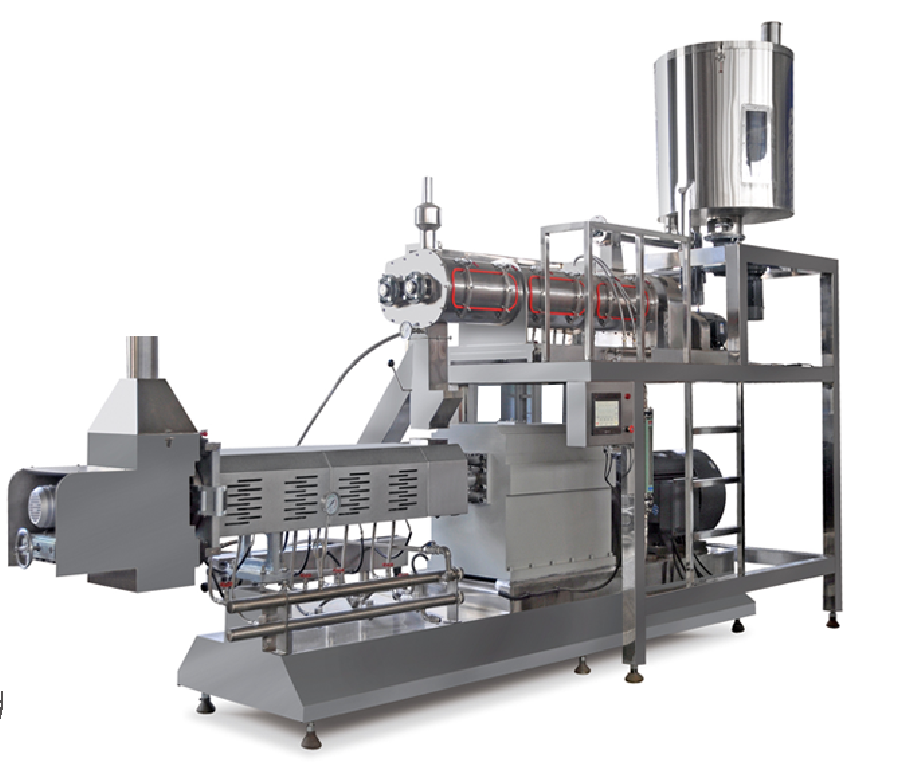
At the heart of every high-performance compounding line lies a meticulously engineered twin screw extruder, where precision meets durability. The screws themselves are not just generic conveyors; they are modular assemblies crafted from hardened tool steels and often coated with wear-resistant treatments to withstand abrasive fillers and corrosive polymers. Each element—from conveying flights to kneading blocks—is designed with specific geometries to optimize melting, mixing, and devolatilization, allowing engineers to tailor the process for everything from fragile biopolymers to heavily filled engineering resins.
Beyond the screws, the barrel design plays an equally critical role. Segmented barrels with independently controlled heating and cooling zones enable precise temperature management, essential for heat-sensitive formulations. Advanced liner materials, such as bimetallic alloys or powder metallurgy steels, combat wear in high-stress zones, while specialized venting ports facilitate efficient removal of volatile compounds. The integration of side feeders and liquid injection nozzles further expands the machine’s capability, transforming a simple compounding step into a continuous reactor capable of reactive extrusion or inline blending of multiple phases.
What sets a top-tier machine apart is the harmony between mechanical design and control intelligence. Real-time monitoring of torque, pressure, and melt temperature feeds into adaptive algorithms that adjust screw speed and feed rates instantaneously, ensuring consistent product quality despite fluctuations in raw material properties. The drive system, often a high-torque direct-drive motor coupled with a robust gearbox, delivers the necessary power with minimal energy loss. Meanwhile, quick-clamp barrel sections and modular screw elements slash changeover times, making such extruders not only engineering marvels but also pragmatic workhorses in fast-paced manufacturing environments.
The Role of Screw Geometry in Consistent Mixing
The way material moves through an extruder is profoundly shaped by the screw's design. Flight depth, pitch, and the presence of mixing elements determine whether the melt experiences gentle laminar flow or intense shear. A shallow channel, for instance, can generate higher shear rates that help break down agglomerates, while a deeper channel may allow more material to pass through but with less dispersive action. The balance between these factors is what transforms a simple conveying device into a precision mixing tool.
Distributive and dispersive mixing are both influenced by how the screw geometry rearranges fluid layers. Barriers, pins, or slotted flights can repeatedly split and reorient the melt stream, evening out temperature and additive distribution without excessively raising local temperatures. Meanwhile, tighter clearances in certain zones force materials through high-stress regions, effectively rupturing particle clusters. The length and position of these zones along the screw axis create a tailored mixing history that can be optimized for specific polymers or filler types.
Even subtle details like the radius at the flight root or the transition slope in a compression section alter residence time distribution. A broader residence time spectrum might accommodate more thorough blending but risks thermal degradation, whereas a narrower distribution promotes consistency but could leave some portions undermixed. Screw designers often rely on computational flow simulations to visualize how modifications in geometry affect velocity profiles and stress exposure, linking a screw's physical contours directly to the quality and stability of the final melt.
How Precision Temperature Control Prevents Material Degradation
Maintaining exact temperature ranges is crucial because even minor fluctuations can accelerate chemical reactions that break down material structures. When heat isn’t managed precisely, polymers may lose elasticity, metals can suffer from thermal fatigue, and composites risk delamination. By holding temperatures within narrow tolerances, the molecular integrity of sensitive materials remains stable, effectively slowing the degradation process and preserving original performance characteristics.
In practical applications, responsive control systems continuously adjust heating or cooling output based on real-time feedback. This dynamic regulation prevents the overheating spikes and cold spots that cause uneven expansion and contraction—a common precursor to micro-cracking and warping. Instead of crude on/off cycling, precision algorithms anticipate thermal loads, ensuring a gentle, consistent environment that keeps materials from crossing critical thresholds where irreversible damage begins.
The long-term benefits go beyond immediate quality, extending the usable life of components and reducing waste. Whether in semiconductor fabrication, food processing, or pharmaceutical storage, the difference between average and precise temperature control often determines if a product remains viable or becomes compromised. It’s a subtle but powerful safeguard—turning what could be a slow, invisible deterioration into predictable, controlled stability.
Maximizing Throughput Without Sacrificing Quality
Boosting throughput often gets tangled up with the idea of cutting corners, but the two don’t have to exist in the same sentence. High output paired with rock-solid quality isn’t magic—it’s about designing workflows that catch problems early instead of letting them snowball into costly fixes later. When teams measure what actually matters, like cycle time for completed, releasable work rather than raw task counts, they start seeing where friction really lives.
One shift that quietly changes the game is embedding quality checks directly into the daily rhythm. Rather than treating testing and review as separate phases that happen after “real work,” they become part of every commit and deployment. Automated safeguards that run in seconds, paired with disciplined peer reviews that don’t bottleneck, mean defects surface while the code is still fresh in a developer’s mind. This keeps the pipeline humming without the late-stage heroics that drain morale and introduce new risks.
Even the best tooling falls flat without the right mindset across the team. Sustainable throughput thrives when everyone feels responsible for the outcome, not just their piece of it. That means writing clear specifications together, sharing knowledge openly, and agreeing on what “done” really looks like before work begins. When quality becomes a shared habit instead of a gatekeeper’s checklist, the whole system moves faster because there’s simply less to redo.
Adapting to Diverse Recipes with Quick Changeover Features
In a fast-paced food production environment, the ability to switch between recipes without lengthy delays is a game changer. Our equipment is designed with quick changeover features that allow operators to transition from one product to another in minutes, not hours. Tool-less adjustments and intuitive controls mean minimal downtime, so you can keep up with shifting consumer demands and produce small batches of specialty items alongside your mainstays without missing a beat.
The real advantage lies in how seamlessly the system handles variations in ingredients and consistencies. From thick batters to airy doughs, the machine automatically adapts its mixing, portioning, and baking parameters based on preloaded recipe profiles. This flexibility ensures consistent quality across your entire range, whether you're crafting gluten-free options, high-protein snacks, or indulgent treats. There's no need for manual recalibration or guesswork—just select the recipe, and the system does the rest.
We've also focused on hygienic design to speed up changeovers. All product-contact parts are accessible without tools and can be quickly removed for cleaning or swapping between allergen-sensitive runs. This not only reduces the risk of cross-contamination but also cuts sanitation time dramatically. The combination of smart automation and easy maintenance means you can confidently take on diverse contracts and seasonal offerings without sacrificing efficiency or product integrity.
Built to Last: Durability and Maintenance Advantages
When we talk about products that truly stand the test of time, durability isn't just a buzzword—it’s a promise. It’s about the materials chosen not because they’re cheap, but because they refuse to quit. We’re talking about stainless steel that shrugs off rust, reinforced joints that don’t loosen after years of use, and surfaces that still look fresh long after the competition has faded. What often gets overlooked is how this stubborn resilience directly cuts down on the never-ending cycle of fixes and replacements. Instead of patching things up every season, you simply keep going.
Maintenance, then, becomes less of a chore and more of an afterthought. There’s a quiet confidence in knowing that a quick wipe-down is all it takes to keep things in shape—no special treatments, no finicky routines. It’s designed to handle real life: spills that don’t stain, edges that don’t chip, and components that don’t demand constant attention. In fact, the biggest advantage might be how much time it gives back. By removing the dread of lengthy upkeep, you’re free to focus on what you actually want to do, rather than babysitting your belongings.
Over time, this combination of ruggedness and effortless care reshapes the cost conversation entirely. While others are tallying up receipts for replacements, repairs, and specialized cleaning products, you’re sitting with the same reliable item, still going strong. It’s not just about lasting longer—it’s about lasting better, with fewer interruptions and no hidden fees. That’s the real durability story: not measured in years alone, but in the peace of mind and simplicity that come along with it.
FAQ
A high-quality twin screw extruder stands out through precise screw geometry, robust temperature control, and uniform torque distribution. These elements ensure consistent melt quality, reduce material degradation, and maximize throughput, directly boosting overall production efficiency.
Essential features like modular screw design, segmented barrels, and advanced feeding systems allow compounders to rapidly switch between formulations and easily scale processes. This flexibility reduces downtime, lowers development costs, and enables production of highly specialized materials with minimal waste.
Screw configuration is the heart of the process—customized combinations of conveying, kneading, and mixing elements control the shear, residence time, and distributive mixing. A well-designed setup can break down agglomerates to a micron level while preserving sensitive additives, giving a significant edge over standard designs.
High torque density allows processing of high-viscosity materials at lower screw speeds, minimizing heat generation and energy consumption. It expands the processing window, enabling the handling of challenging formulations that would otherwise require excessive temperatures and risk polymer breakdown.
They integrate optimized barrel heating/cooling systems, direct drive motors, and venting designs that recover energy from devolatilization. Combined with precise process control, these features reduce specific energy consumption and support the processing of recycled or bio-based materials, aligning with sustainability goals.
Features like split-barrel design, quick-release screw elements, and corrosion-resistant coatings simplify cleaning and component replacement. This reduces machine downtime, extends service life, and ensures consistent product quality without requiring specialized tools or lengthy procedures.
Multi-zone, high-response heating and cooling circuits maintain tight tolerance across the barrel, preventing hot spots that could degrade thermally sensitive materials. This becomes critical in pharmaceutical or food applications where active ingredients must remain stable, ultimately preserving efficacy and texture.
While single screw extruders excel in simple melting and pumping, twin screw machines offer unmatched versatility due to their positive conveying action and segmented design. They easily handle powder feeds, reinforce with fibers, and strip volatiles, making them the go-to choice for high-value, complex formulations without sacrificing throughput.
Conclusion
A top-quality twin screw extruder distinguishes itself through meticulous engineering that starts deep inside its construction. The machine’s architecture is built around an optimized screw geometry that ensures every ingredient is sheared, distributed, and mixed with exact uniformity. This geometric precision is paired with a highly responsive temperature control system, which constantly adjusts barrel zones to prevent hotspots and protect heat-sensitive materials from degradation. Such refined thermal regulation allows operators to push throughput rates higher without the typical trade-off in product quality, because the material spends just the right amount of time under controlled stress, preserving its intended properties even at aggressive production speeds.
Beyond processing performance, these extruders are designed for real-world production demands. Quick changeover mechanisms allow a single line to switch between vastly different recipes in minutes, supporting flexible manufacturing with minimal downtime. This adaptability is underpinned by robust construction: wear-resistant barrel liners, hardened screw elements, and thoughtfully simplified access points for cleaning and inspection. As a result, maintenance intervals extend further, and total cost of ownership drops. Ultimately, a high-quality twin screw extruder is not just a mixing tool but a reliable production partner that combines precision, durability, and versatility to consistently meet the highest standards of modern compounding.
Contact Us
Contact Person: LILY SUN
Email: [email protected]
Tel/WhatsApp: 0086-13969103791
Website: https://www.snackfoodmachinery.com/