

HVLS Fan Original Manufacturer Selection Tips for Industrial Facilities
2026-10-16
You can spot the difference between a well-cooled factory and one that bought the wrong HVLS fan within about ten seconds. The real problem usually isn't the fan itself—it's the original manufacturer behind it. Too many facilities buy from resellers who know nothing about blade geometry, motor torque, or airflow coverage. That leads to dead spots, soaring energy bills, and premature failure. This guide shares the selection criteria we've refined at VINDUSFAN after years of engineering HVLS fans for demanding industrial environments. Read on to learn what to check before you sign the purchase order.
Why the Best HVLS Fans Start with a Factory Walkthrough
A spec sheet can only tell you so much about blade diameter or motor wattage. Walk through the plant and you start noticing the details that actually shape performance—how the aluminum is poured, whether the hub is machined in-house, and how many times a blade gets checked before it leaves the floor.
That kind of visit often reveals what marketing pages hide. You might see a balance stand running nonstop, operators measuring runout with dial indicators, or a test bay where every fan spins for hours under full load before packing. These aren't glamorous steps, but they separate a fan that will hum quietly for a decade from one that wobbles in its second summer.
Best-in-class HVLS fans don't begin with a render or a list of features. They begin with a process you can walk through, question, and verify. When a factory opens that door, it's not just showing you equipment—it's showing you where the real warranty lives.
How to Spot a Real Manufacturer Behind the Brand Name
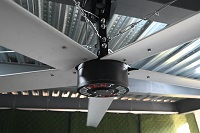
Identifying a real manufacturer isn’t always straightforward—many brands outsource production but don’t want you to know the factory name. Start with the product itself. Look at the label, the box, or the instruction sheet for phrases like “Manufactured by” or “Made in [country] for [brand].” A genuine manufacturer will usually print its own legal name and address somewhere on the packaging. If you only see the brand name with no third-party factory mentioned, or the label just says “Distributed by,” that’s a clue you’re dealing with a middleman rather than the actual producer.
Another path is to dig into public records. Import databases and customs filings often list the exact factory that shipped the goods, and these are searchable by product type or brand name. You can also contact the company directly and ask a specific question: “Which factory produced this batch, and can you share the address?” A real manufacturer or an honest brand will typically answer without hesitation. If the reply is vague or they refuse to name the facility, it usually means there’s a trading company or an agent standing between you and the source.
Finally, look for third-party certifications and audit reports. Many factories hold ISO 9001, BSCI, or industry-specific compliance documents under their own name, not the brand’s name. Ask to see a recent factory audit or request a live video tour of the production line. A real manufacturer will be able to speak confidently about mold details, minimum order quantities, and material sourcing because they handle these daily. If the answers feel rehearsed or generic, you’re probably talking to someone who has never set foot on the factory floor.
The Airflow Test Your Facility Should Demand Before Signing
You can’t verify airflow by holding a tissue near a return grille. Most acceptance checks are visual or rely on the contractor’s word, but air rarely behaves the way drawings suggest. Before you sign off, demand a quantitative test that maps pressure differentials across every barrier and measures air changes per hour in each occupied zone. This isn’t about ticking a box—it’s the only way to catch reversals, short-circuiting, or stagnant pockets that will haunt you later.
A meaningful test should inject a tracer gas or use a particle counter at doorways and pass-throughs to prove that air actually flows from cleaner to dirtier spaces. Watch for the small details: does the airflow pattern collapse when a door opens? Is there a dead spot behind a large piece of equipment? Can the system maintain negative pressure in a containment suite while the anteroom is occupied? If the testing company can’t show you real-time data from multiple points, you’re not getting the full picture.
The consequences of skipping this step show up months later—failed environmental monitoring, product contamination, or a regulator asking why your pressure gauges are green but your particle counts aren’t. Demand a written test report with pass/fail limits tied to your specific process, not generic industry averages. Only accept the facility when the numbers match your operational reality, not the contractor’s best-case scenario.
Custom Mounting Options That Standard Catalogs Never Show
Most off-the-shelf mounting kits assume a flat wall, a centered stud, and a patient installer. When the real job involves recessed panels, uneven stone cladding, or an exhaust chase that sits three inches proud of the finished surface, those assumptions collapse. The workable fixes rarely appear in any catalog: laser-cut standoff brackets with slotted backs for lateral adjustment, threaded isolator posts that let a sign float over rough brick without crushing it, and welded offset arms that shift the load path around an existing conduit run instead of forcing a relocation.
Some of the more useful custom pieces come from listening to the installer, not the spec sheet. A folded stainless cleat with a captured nut can turn a one-person install into a ten-minute job. A split collar mount with a Delrin sleeve handles thermal movement on a south-facing facade without transferring stress to the panel. None of these are exotic; they are simply designed for the actual conditions behind the cladding.
What Local Service and Spare Parts Actually Look Like After Purchase
A week after the invoice clears, the first real test begins. A hydraulic seal fails on a Tuesday morning, and you call the number on the dealer's sticker. If it rings through to a person who knows your machine's serial number without being told, you've bought more than metal. If you spend twenty minutes navigating a phone tree only to hear that the nearest technician is three states away, the purchase price suddenly feels like the cheapest part of the deal.
Spare parts, too, tell a story. The glossy catalog showed rows of gleaming components, but what sits on the shelf at the local branch is often a different matter. Common wear items like filters and belts might be in stock, but a specific valve body or control board can mean a two-week backorder from a warehouse you've never heard of. Smart operators learn to keep their own small stock of known failure points, because the downtime costs more than the part.
Some brands earn loyalty by making the after-purchase reality boring in the best way: a local van arrives within a day, the part fits without modification, and the service report explains what broke and why. Others quietly shift their support burden onto the customer, expecting you to ship components across the country for diagnosis. That difference rarely shows up in a demo or a spreadsheet, but it's exactly what you'll live with long after the initial excitement fades.
Hidden Costs That Surface When an HVLS Fan Runs Year-Round
Running an HVLS fan without a seasonal or occupancy-based schedule quietly pushes electricity bills higher. A single 24-foot unit drawing 1.4 kW adds up to over 12,000 kWh per year if left on at full speed—at commercial rates that can be more than a thousand dollars per fan. Multiply that across a warehouse or gym floor and the hidden cost becomes impossible to ignore, especially during night shifts or weekends when nobody is around to benefit from the airflow.
Maintenance demands climb faster than most facility budgets expect. Continuous operation keeps motors and gearboxes warm around the clock, which accelerates lubricant breakdown, belt stretch, and bearing wear. Dust and fibrous debris collect unevenly on the blades, creating imbalance that shows up as wobble, hum, or even stress cracks in the mounting structure. Every unplanned service call or early parts replacement chips away at the energy savings the fan was supposed to deliver.
Year-round operation can also backfire on comfort and heating costs. In winter, running the fan in reverse at too high a speed pushes cold air down along walls and creates drafty spots near workstations, prompting people to nudge the thermostat upward. In summer, constant full-speed airflow may feel great for the first hour but leads to dry eyes, fluttering papers, and a sense of fatigue that lowers overall productivity. Without careful speed and direction control, the fan adds hidden discomfort costs that never appear on the invoice.
FAQ
Ask for a factory tour or live video of production lines, check for in-house testing equipment and serial number tracing. Original makers also control blade, motor, and control panel assembly under one roof.
Demand air volume at various speeds, coverage diameter, sound pressure levels, and motor power draw at full speed. Real test reports from the manufacturer's own lab are better than marketing charts.
You get direct access to engineering staff for layout planning, faster replacement parts, and warranty claims that don't pass through a middleman. When a fan fails on a production floor, that delay matters.
Yes, true manufacturers can adjust blade pitch, motor programming, and even build custom control panels to sync with building management systems. Resellers usually only offer stock sizes.
Look for permanent magnet motors, variable frequency drives, and actual wattage at typical operating speeds. Compare annual energy cost estimates based on your ceiling height and shift patterns, not just maximum airflow.
No production facility, no test lab, incomplete warranty documentation, or inability to provide custom engineering. If they can't show you how blades are balanced or motors are wound, they likely outsource everything.
Original manufacturers send trained technicians or at least review site drawings before install. They know mounting requirements, safety factors, and electrical load limits, which prevents costly rework and keeps production running.
Conclusion
Most industrial buyers start with a shortlist of HVLS fan brands, but the real selection work happens when you ask to see the factory floor. A walkthrough quickly separates original manufacturers from trading companies that only assemble imported components under a familiar logo. Watch for in-house production of motor brackets, blade forming, and hub welding, and ask to view a live airflow test that measures velocity at the occupied level, not just blade rotation. If your facility has unusual roof geometry, low clearances, or column obstructions, request custom mounting drawings before signing. Those options rarely show up in standard catalogs, yet they often determine whether installation proceeds without expensive structural changes.
After purchase, local service and spare part availability become the real measure of the manufacturer. A company with regional inventory and trained technicians can replace a failed controller or damaged blade within a few days; a distant reseller may leave your loading dock without air movement for weeks. Also account for hidden costs that only appear when the fan runs year-round: energy draw at low and high speeds, bearing lubrication schedules, safety cable inspections, and the price of replacement parts after warranty. The lowest initial quote often misses these recurring expenses. Ask the manufacturer for a lifecycle cost breakdown and documented airflow data from similar installations, not just a glossy brochure.
Contact Us
Contact Person: Michael Danielsson
Email: [email protected]
Tel/WhatsApp: +1 951 565 7769
Website: https://www.vindusfans.com