

Leading IMS Core Network Suppliers Driving Next-Gen Communication
2026-06-12
The shift to next-gen communication isn't coming—it's already here, and the engines driving it are the IMS core networks built by a handful of elite suppliers. While giants like Ericsson and Huawei often grab headlines, a closer look reveals that agile innovators such as IPLOOK are quietly rewriting the rules. In this post, we'll peel back the layers on what makes these suppliers tick, why their approaches diverge so sharply, and how that could reshape everything from 5G voice to industrial IoT.
Pioneers of IP Multimedia Subsystem Evolution
In the early 2000s, a handful of telecom visionaries recognized that traditional circuit-switched networks were reaching their limits. They conceptualized a future where all communication—voice, video, messaging—could converge over a single IP-based infrastructure. This foresight drove the initial sketches of what would become the IP Multimedia Subsystem, a framework designed to seamlessly blend mobile and internet services. Engineers from organizations like 3GPP began stitching together protocols such as SIP and DIAMETER, creating a blueprint that allowed operators to break free from rigid, single-purpose networks. Their early prototypes, though clunky, proved that real-time multimedia sessions could ride over existing packet-switched data channels, setting the stage for a revolution in how people connect.
As the technology matured, a distinct group of pioneers emerged within network equipment labs and carrier innovation teams. They were the ones stress-testing call session control functions, refining home subscriber servers, and pushing for standardized interfaces that ensured multivendor interoperability. These architects didn’t just design for voice; they imagined a platform where presence, group communication, and rich media could coexist, enabling the app-driven ecosystem we now take for granted. Their work gained momentum during the shift from 3G to LTE, where IMS became the linchpin for VoLTE and later emergency services, proving that an all-IP core could deliver carrier-grade reliability alongside the flexibility of the web. In many ways, they were building the invisible scaffolding upon which modern unified communications would later thrive.
The long-term impact of these pioneers extends beyond the technical specs they authored. They cultivated a mindset of continuous evolution, ensuring IMS could adapt to cloud-native architectures, network slicing, and 5G standalone deployments. Rather than resting on early successes, they championed iterative refinements that made the subsystem leaner and more efficient, often stripping away complexity while preserving service quality. Today, their legacy is not just a set of 3GPP releases but a living ecosystem where over-the-top providers and telco services intersect through a common, standardized core. Their willingness to challenge entrenched assumptions and collaborate across industry boundaries turned IMS from a niche concept into the operational heartbeat of next-generation networks, demonstrating that true innovation comes from those who dare to move before the map is fully drawn.
Architects of Ultra-Reliable Low-Latency Connectivity
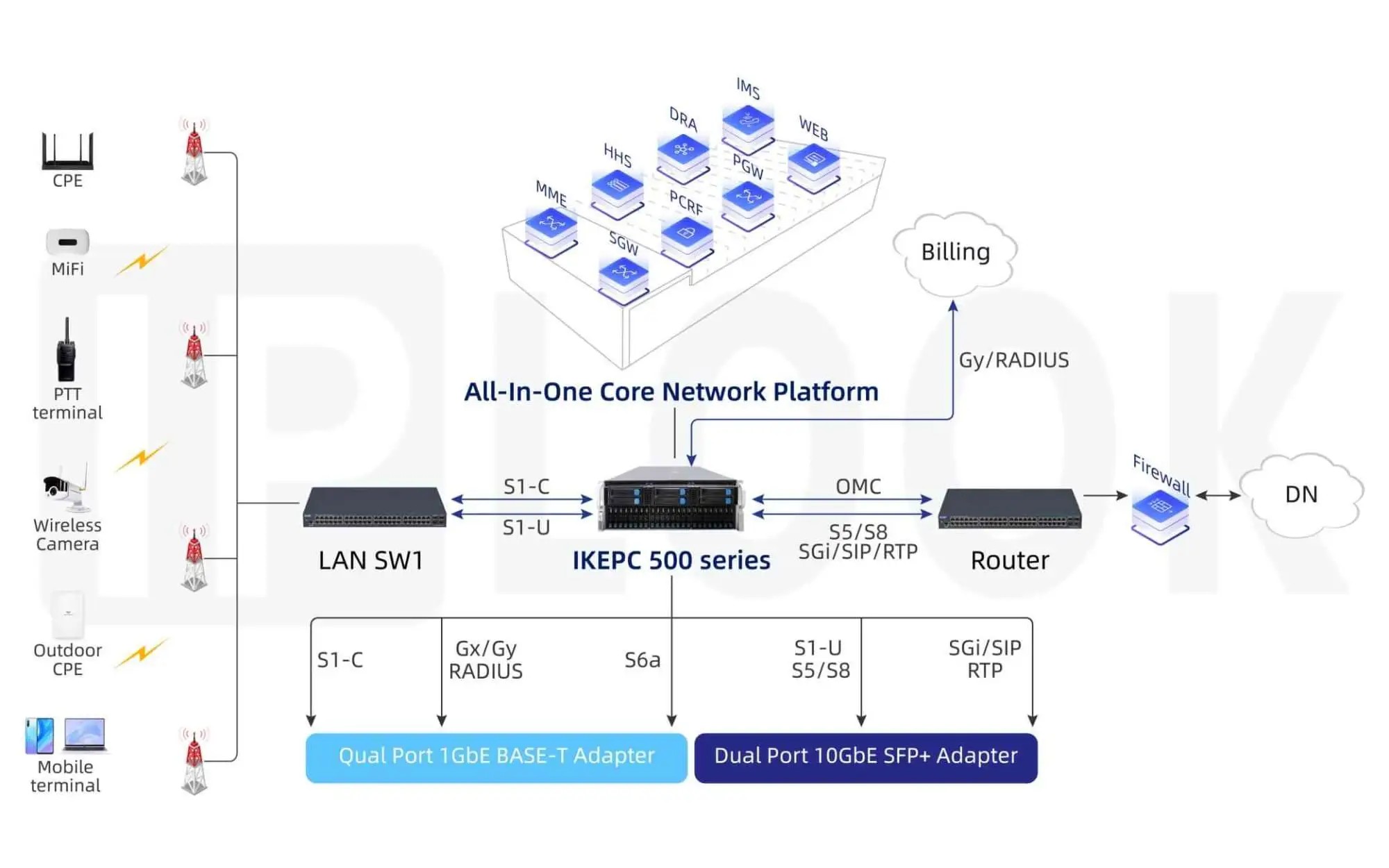
Behind every seamless video call and split-second financial transaction lies a quiet army of engineers who obsess over the tiniest delays. These professionals treat network pathways like living things that must be nurtured and hardened against collapse. Their work demands a stubborn refusal to accept “good enough,” constantly stripping away microseconds as if carving a sculpture from raw pulse. They simulate worst-case storms long before cables are buried, ensuring the digital heartbeats of hospitals and factories never skip a single beat.
It’s not just about laying pipes in the ground—these architects weave together fiber strands, radio waves, and edge-computing nodes into a fabric that feels invisible. They wrestle with the cruel math of signal degradation and the chaos of electromagnetic noise, engineering diverse routes so that a backhoe in one continent doesn’t silence a command center in another. The modern world runs on their quiet predictions, a lattice of protections designed for moments that must never become disasters.
Champions of Seamless Fixed-Mobile Convergence
Across industries, a select group of innovators has turned the promise of fixed-mobile convergence into a lived reality, erasing the boundaries between wired and wireless worlds. These champions don’t just integrate networks—they reimagine connectivity as a fluid, continuous experience that follows users from home to street without a glitch.
What sets them apart is an obsession with simplicity: one identity, one bill, and one seamless handover between Wi-Fi and 5G. By orchestrating complex backend systems into an effortless front-end, they empower businesses to embrace hybrid work, smart homes, and IoT with zero friction. Their platforms learn and adapt, ensuring that whether on a video call or streaming a movie, the transition is invisible.
These pioneers in turn inspire a broader ecosystem—from telecom operators to enterprise IT—to abandon walled gardens and embrace true convergence. Their vision sees connectivity not as a patchwork of signals but as an ambient utility, always present and perfectly tuned. In championing this philosophy, they redefine what it means to stay connected in a hyper-mobile world.
Innovators in Cloud-Native Core Deployment
In the rapidly shifting landscape of infrastructure, a quiet cadre of teams has redefined how core services are woven into the cloud. Rather than treating deployment as an afterthought, these innovators embed resilience and fluidity into the very fabric of their platforms. Their approach isn’t about chasing buzzwords—it’s a deliberate craft of automating away fragility, turning what was once a brittle chore into a seamless, self-healing rhythm.
What sets them apart is an almost obsessive focus on the developer’s lived experience. They build internal systems that anticipate failures before they cascade, using patterns like progressive delivery and drift detection that feel less like guardrails and more like a safety net woven from code. The result is a deployment pipeline that doesn’t just tolerate change—it thrives on it, absorbing updates with an elegance that makes the underlying complexity invisible.
These teams don’t just adopt tools; they reshape them. You’ll find them in the commit histories of open-source projects, quietly fixing the orchestration logic that everyone else takes for granted. Their influence ripples outward, turning proprietary challenges into shared solutions. In an era of fleeting vendor promises, they remain steadfast in a simple truth: the best deployment is the one that makes the operator forget it’s even there.
Guardians of End-to-End Service Orchestration
When every service link in a digital transaction must hold, the guardians of orchestration act not as passive monitors but as active arbiters of reliability. They parse the subtle signals between APIs, databases, and third-party endpoints, anticipating failures before they cascade. These systems breathe with the architecture, adjusting timeouts, rerouting requests, and preserving state with a quiet intensity that keeps customer experiences whole.
Behind the scenes, these guardians enforce contracts between microservices, validate payloads in real time, and flag discrepancies that static tests would never catch. They learn from past outages, evolving circuit-breaker thresholds and retry logic without human intervention. In an environment where a single stalled call can ripple into revenue loss, their vigilance is woven into the very fabric of deployment pipelines and runtime mesh, ensuring that end-to-end flows remain not just functional but resiliently human in their dependability.
Catalysts for Network Slicing and Edge Integration
The push toward network slicing and edge integration isn't happening in a vacuum—it's being driven by a collision of market demands and technological shifts. 5G rollouts have set the stage, but the real momentum comes from the need to handle ultra-low latency applications that centralized architectures simply can't serve. Industries like autonomous manufacturing and remote surgery require deterministic performance that only a combination of dedicated network partitions and localized processing can provide. Without this convergence, promises of real-time responsiveness and massive device density remain hollow.
Equally important are the advances in software-defined networking and containerized workloads, which remove many of the hardware dependencies that once made such granular resource allocation impractical. Telcos are finally embracing cloud-native approaches, allowing them to slice their infrastructure dynamically and push compute out to metro or on-premises edge nodes without rebuilding from scratch. This technical maturation, paired with open APIs and standardized orchestration layers, transforms what was once a bespoke integration project into a scalable operational model.
FAQ
The landscape is dominated by a few heavyweights: Ericsson, Nokia, Huawei, and Mavenir. Ericsson and Nokia leverage their vast telecom infrastructure experience and strong R&D to deliver highly reliable solutions. Huawei has a significant footprint globally, particularly in Asia and Europe, with feature-rich platforms. Mavenir stands out as a challenger, pushing cloud-native, software-only approaches that appeal to operators modernizing their networks.
They're the backbone of voice and communication services on 4G and 5G. Through virtualized and containerized IMS cores, suppliers enable operators to launch VoLTE and VoNR quickly, scale on demand, and integrate with other network functions. For instance, Mavenir's fully virtualized IMS lets operators deploy voice as an application, slashing time-to-market and hardware costs.
It's about blending classic voice and messaging with rich, immersive experiences. Think video calling over 5G, real-time language translation during calls, augmented reality collaboration, and seamless handover between Wi-Fi and cellular. Leading suppliers embed APIs to open up these capabilities to third-party developers, turning the network into a platform for innovation.
Absolutely. Moving from monolithic, appliance-based systems to microservices running on common compute hardware transforms how operators maintain and upgrade their networks. It enables continuous delivery, better resilience, and much lower operational costs. Mavenir and Nokia have been vocal proponents, with Ericsson also enhancing its cloud-native offerings to stay competitive.
Despite being two decades old, IMS remains the only standardized architecture for delivering multimedia services across any access network. As operators sunset 2G and 3G, IMS becomes the universal voice layer. Moreover, modern IMS integrates with IMS Data Channel (DC) for new interactive services, keeping it central to operator strategies.
There's a clear divergence. Ericsson and Nokia are infusing AI into network management and orchestration, offering self-healing and predictive analytics. Huawei touts AI-driven energy efficiency and intelligent O&M. Mavenir focuses on open APIs and AI to enable third-party innovation on top of the IMS. This reflects a broader shift from closed, monolithic systems to open, intelligent platforms.
Interoperability and openness are critical. Opt for vendors that support cloud-native deployment, open standards, and have a clear migration path from legacy systems. Also, assess their ecosystem for service innovation, like support for IMS Data Channel and network slicing. A supplier's ability to offer flexible licensing and its track record in multi-vendor environments can make or break the TCO.
Conclusion
The ecosystem of leading IMS core network suppliers is quietly reshaping how the world connects, elevating communication from simple voice and messaging into a dynamic, immersive experience. These pioneers have taken the original IP Multimedia Subsystem blueprint and coaxed it into a platform capable of ultra-reliable, low-latency interactions that feel instantaneous, no matter the access technology. Their architectural wizardry shines brightest in fixed-mobile convergence, where the boundary between home broadband and cellular networks dissolves, giving users a single, fluid identity that follows them across devices and locations. It’s a profound shift that transforms IMS from a network element into the very fabric of personal connectivity.
But the real artistry emerges in how these innovators embed the core into a cloud-native world, shedding monolithic constraints for microservices that scale on demand and heal themselves without human intervention. This agility fuels their role as guardians of end-to-end service orchestration, weaving together disparate network functions into coherent services that sense and adapt to user needs. By acting as catalysts for network slicing and edge integration, they empower operators to carve out bespoke virtual networks and push intelligence to the periphery, turning IMS into the launchpad for industry-specific use cases, from autonomous factories to augmented reality experiences. It’s not just about next-gen communication—it’s about building a nervous system for tomorrow’s digital society.
Contact Us
Contact Person: Shimmy
Email: [email protected]
Tel/WhatsApp: 85253392231
Website: https://www.iplook.com