

Lost Foam Casting Manufacturer: Why Complex Metal Components Are Turning to This Process
2026-10-14
For decades, producing complex metal components meant compromising somewhere—tolerances, surface finish, or lead time. Then lost foam casting changed the rules. Now, a select group of manufacturers is pushing this process even further, and Zhaoyuqi stands out among them. If you've struggled with intricate geometries that other casting methods can't handle, here's why lost foam casting is becoming the smart alternative—and why Zhaoyuqi is a name worth knowing.
The Geometry Freedom Traditional Casting Cannot Match
Traditional casting starts with a pattern that has to be pulled from a mold. That single fact dictates almost everything about a part's shape. Walls need draft, surfaces need to avoid re-entrant angles, and any hollow section demands a separate core that must be positioned, supported, and later removed. The result is a design language full of compromises: thickened bosses, unnecessary flanges, split lines that interrupt load paths.
This process breaks free from that language. A hydraulic manifold can route fluid through curved, branching channels that follow the contours of the housing instead of being limited to straight drilled intersections. A turbine blade can carry a cooling labyrinth that snakes beneath the surface, with cross-sections that expand and contract to manage heat exactly where it builds. Lattices and thin skins replace solid blocks, cutting mass without giving up stiffness.
Once those constraints disappear, the design conversation changes. Instead of asking what the mold will allow, teams ask what the part actually needs. That shift produces components with fewer joints, lower weight, and better thermal performance—geometries that traditional casting cannot even approximate.
Why Intricate Internal Channels No Longer Mean Assembly Nightmares
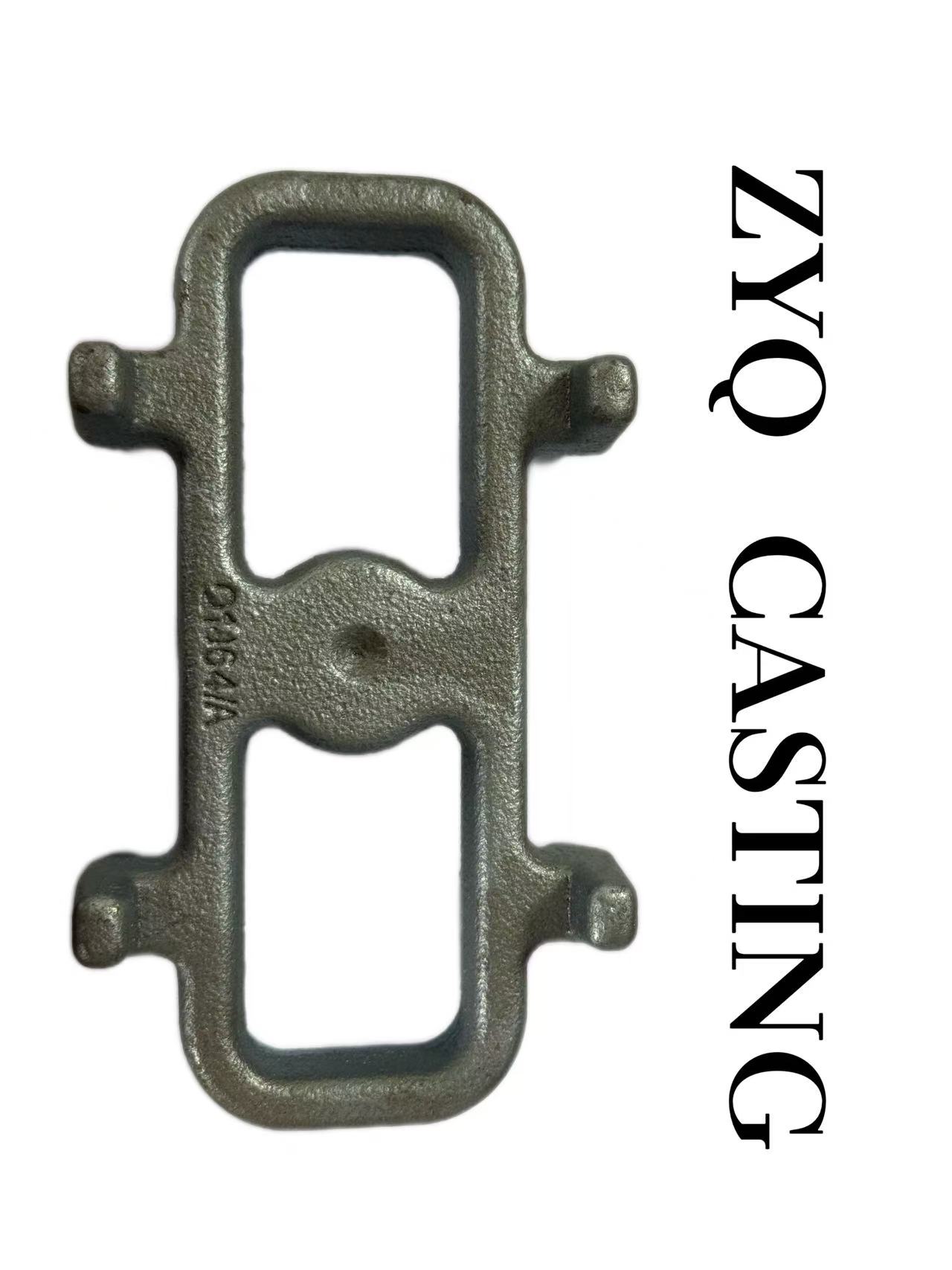
For years, complex internal channels in molded or machined parts were a red flag for production teams. Every twist, turn, or narrow passage hinted at extra tooling, longer cycle times, and a higher chance of defects during assembly. This often forced designers to simplify geometries or split components into multiple pieces just to keep manufacturing feasible. The result was heavier, bulkier, and more expensive products that still required extensive manual fitting.
That constraint has largely faded thanks to breakthroughs in additive manufacturing, precision casting, and multi-axis CNC machining. These methods now allow deep, curved, or intersecting channels to be produced in a single piece with tight tolerances. Simultaneously, advanced simulation tools let engineers validate fluid flow, heat transfer, and structural integrity before any physical part is made. What once demanded trial-and-error prototyping can now be refined digitally, slashing lead times and scrapped parts.
On the assembly floor, the shift is equally dramatic. Self-aligning features, flexible sealing elements, and snap-fit connections designed specifically for internal pathways reduce the need for specialized jigs or highly skilled labor. Automated inspection systems using computed tomography or laser scanning verify channel continuity and dimensions in seconds, catching issues that previously only appeared during leak tests. As a result, intricate internal channels are no longer a nightmare—they’re a competitive advantage that enables lighter, more efficient, and more integrated designs.
Surface Finish That Cuts Machining Hours Down to Nearly Nothing
Most shops still treat surface finish as a separate operation—rough it out, then grind, lap, or polish. A better approach starts with toolpath and insert geometry that leave a near-finished surface straight off the mill. When the finishing pass removes just the right amount and the tool nose radius matches the stepover, you get a consistent Ra well under 0.4 µm without ever touching a polishing wheel.
This isn’t about running slower. The real gains come from stable cutting conditions and specialized coatings that keep the edge sharp longer, so the same insert can finish dozens of parts without degrading the surface. Because the part arrives at inspection already within spec, downstream processes shrink to a quick deburr or none at all. In production runs, that removes hours per batch—not minutes.
Tool wear monitoring plus adaptive feed control can hold that finish across long cycles. Instead of stopping to check roughness or swapping inserts early, the machine adjusts itself and keeps cutting. The result is a predictable surface day after day, which lets you schedule jobs with almost zero allowance for rework or secondary finishing.
From Prototype to Production with One Mold and No Parting Lines
Moving from a rough prototype to a final production part usually means starting over with new tooling. But when the design and mold are built to serve both stages, you skip that entire step. The same cavity that shapes your first test shots also runs the full manufacturing batch. No redesigning for draft angles, no resizing for shrinkage—the geometry is already locked in.
The real advantage comes from eliminating the parting line. Instead of two mold halves meeting and leaving a visible seam, the part emerges as a single continuous surface. This eliminates hand trimming, sanding, and the weak points that often appear where the halves join. For products that need smooth exteriors or withstand pressure, that seamless shell makes a measurable difference in both looks and durability.
To pull this off, the mold usually relies on a flexible or collapsible core, or a process like rotational molding where the material coats the inside of a closed cavity. Once the prototype confirms the shape, production simply keeps using that same mold. It’s a practical way to slash lead times and tooling costs while keeping the end product free of parting-line flaws.
Material Flexibility That Lets Engineers Stop Settling for Second Best
Most engineers know the quiet frustration of designing around a material's limits instead of letting the material serve the design. With a wider palette of tunable polymers, hybrid composites, and additively manufactured alloys, that compromise is no longer a given. You can now specify strength, weight, thermal behavior, and even surface finish in combinations that were off the table just a few years ago.
This flexibility shows up in real workflows: a bracket can be printed with internal lattice structures for weight savings, then post-processed to achieve the wear resistance of a machined metal part. Injection molders can fine-tune flexural modulus without changing tooling, because material suppliers offer multiple grades within the same family. The result is fewer redesign loops, faster validation, and parts that actually match the original intent instead of an approximate workaround.
What makes this shift stick is that the flexibility isn't limited to exotic, high-cost applications. Everyday electrical enclosures, consumer device frames, and automotive brackets are now being rethought using materials that can be dialed in for impact, creep, and chemical exposure. Engineers can stop settling for 'close enough' and start building to the exact performance envelope the project demands.
How Lost Foam Turns Near-Impossible Designs into Everyday Deliverables
Lost foam casting starts with a polystyrene pattern that vaporizes the moment molten metal touches it, leaving behind a cavity that mirrors even the most convoluted geometry. Unlike sand casting, there is no parting line to respect and no core to assemble, which means internal passages, undercuts, and thin webs can simply exist in the pattern. That single change removes a whole category of design constraints, letting engineers collapse multiple machined parts into one cast body.
The practical payoff shows up in components like hydraulic manifolds, cylinder heads, and turbocharger housings. Where conventional methods would require drilling blind holes or brazing separate tubes, lost foam creates those channels as part of the pour. This not only cuts machining hours but also eliminates joints and leak paths, producing a part that is often lighter and structurally more coherent than its fabricated equivalent.
Once the foam tooling and coating parameters are dialed in, repeating the process becomes almost routine. Complexity stops being an extra cost driver because the pattern simply carries it. That is how a shape that once lived only in a CAD model—or in a designer's frustrated sketchbook—turns into a standard shipping item week after week.
FAQ
The main driver is the ability to cast near-net-shape parts with internal passages, thin walls, and intricate curves in a single pour. Traditional sand casting would force designers to split a component into multiple pieces or add cores, which increases cost and weak points. Lost foam eliminates those joints because the foam pattern is vaporized during pouring, letting the metal take the exact shape. Manufacturers also save on post-casting machining, which is where a lot of time and money disappears on complex parts.
Since the pattern is made of expanded polystyrene foam, it can be molded or machined to include almost any internal geometry. You don't need to pull a solid pattern out of the mold, so undercuts and blind cavities aren't a problem. The foam remains in place while the sand is compacted around it, then the molten metal burns the foam away and fills the void. That's why lost foam excels at parts like engine blocks, hydraulic manifolds, and pump housings where internal routing is critical.
Modern lost foam lines routinely hold tolerances of ±0.005 inches per inch, and sometimes tighter on controlled features. Surface finish typically lands around 125–250 RMS, which is often smooth enough to skip secondary finishing. Keep in mind that tolerance depends on foam pattern accuracy, coating thickness, and pouring temperature, so a skilled manufacturer will control those variables tightly. If you need a mirror finish, you may still need light machining, but for most functional surfaces it's ready to use as-cast.
The process works with a wide range of ferrous and non-ferrous alloys. Gray iron, ductile iron, and compacted graphite iron are common because they pour at high enough temperatures to fully vaporize the foam. Aluminum and copper-based alloys are also regularly cast, though gating and coating need adjustment to avoid residue defects. Magnesium is possible but less common due to reactivity. The key is matching the foam density and coating to the alloy's pouring temperature and fluidity.
Complex parts normally require multiple cores, mold halves, and assembly steps. Lost foam removes most of that because the foam pattern includes the entire geometry, and the sand doesn't need binders or core prints. You save on tooling for cores, reduce labor for mold assembly, and cut machining time by casting closer to final shape. Scrap rates can also drop because there are fewer parting lines and core shift defects to worry about.
One common mistake is treating it like sand casting and adding unnecessary draft or simplifying geometry. Lost foam doesn't need much draft because the foam isn't pulled from the mold, though some draft helps foam molding. You should also avoid overly thick sections next to thin ones, as uneven cooling can cause shrinkage defects. It's smart to involve the foundry early—small changes to foam density, venting, or gating can make a huge difference in fill quality.
It shines in high-volume runs because the foam patterns are cheap to mold once the die is built, but low-volume work is possible with machined foam patterns. For a handful of prototypes, you can machine the foam directly from a block, which avoids the cost of a pattern die. Some manufacturers also 3D print foam-like patterns for rapid iteration. That flexibility is one reason lost foam is gaining ground beyond automotive mass production.
Look for a foundry that controls the entire process in-house—foam molding, coating, sand handling, and pouring. Ask about their experience with your specific alloy and part size range. A good sign is whether they offer design feedback before quoting, because lost foam requires adjustments to gating and venting that affect quality. Also check their quality certifications and ask for sample parts with similar internal complexity to yours.
Conclusion
Lost foam casting has quietly reshaped what manufacturers consider possible for complex metal components. Instead of working around draft angles, cores, and parting lines, engineers now design parts with the kind of geometric freedom that traditional sand or investment casting simply cannot match. Deep undercuts, variable wall sections, and awkward transitions that once forced compromises now come out of the mold exactly as modeled. Intricate internal channels, long a source of assembly headaches, are cast in place, eliminating leak-prone joints and reducing part counts. The process replaces multi-piece fabrications with a single, near-net-shape component, which means fewer welds, less inspection, and shorter supply chains.
That same single-mold approach carries prototypes straight into production without re-tooling, since the foam pattern disappears cleanly and leaves no parting line mismatch. Surface quality is another reason teams switch: as-cast finishes are often smooth enough to skip heavy machining, trimming hours off secondary operations. Material flexibility only strengthens the case. Aluminum, iron, steel, and various alloys can all be poured into the same process, so designers stop settling for second-best metals just to fit a casting method. When a part combines all these demands—tight packaging, hidden flow paths, thin ribs, and a short timeline—lost foam casting turns what used to be a near-impossible design into an everyday deliverable.
Contact Us
Contact Person: Nico Yin
Email: [email protected]
Tel/WhatsApp: 8618561567088
Website: https://www.ductileironparts.com/