

Mobile Trailer Generator Original Manufacturer Guide to Reliable Power Solutions
2026-09-07
Not all mobile trailer generators are created equal—especially when the original manufacturer has to stand behind every weld, wire, and watt. In this guide, you'll see how DINGBO POWER approaches reliable power solutions from the factory floor up, and why that matters before you place an order.
Decoding Mobile Trailer Generator Specs Without the Jargon
Most spec sheets for mobile trailer generators lead with kilowatts or kVA, which sound like abstract physics homework. In plain terms, that number is just how many things the generator can run at once without gasping. A 20 kW unit can handle a small food truck's fridges, lights, and a couple of cooking tools together. A 100 kW unit is more like powering a whole construction trailer with welders and air compressors going full tilt. Ignore the peak wattage flash on the front page—sustained output is what keeps your equipment alive through a long shift.
Fuel tank size and runtime at partial load are the specs nobody brags about but everyone should check. A trailer generator might advertise 24 hours of runtime, but that's often at 50% load, meaning you're using only half its muscle. If you're running near full capacity, that time can drop by half or more. Diesel units tend to sip fuel slowly compared to gasoline, but they're heavier and pricier up front. For mobile setups, the real question is how often you want to refill the tank in the middle of nowhere.
Noise level is listed in decibels, a unit that feels meaningless until you anchor it to daily life. A quiet library sits around 40 dB, normal conversation is about 60 dB, and a vacuum cleaner runs near 70 dB. Many trailer generators fall between 65 and 85 dB, which can turn a wedding venue or film set into a shouting match. Look for models with a low dB rating and an enclosed, sound-dampened trailer body. Your ears—and anyone within a hundred yards—will notice the difference long before the spec sheet explains it.
Matching Output Curves to Real-World Site Demands
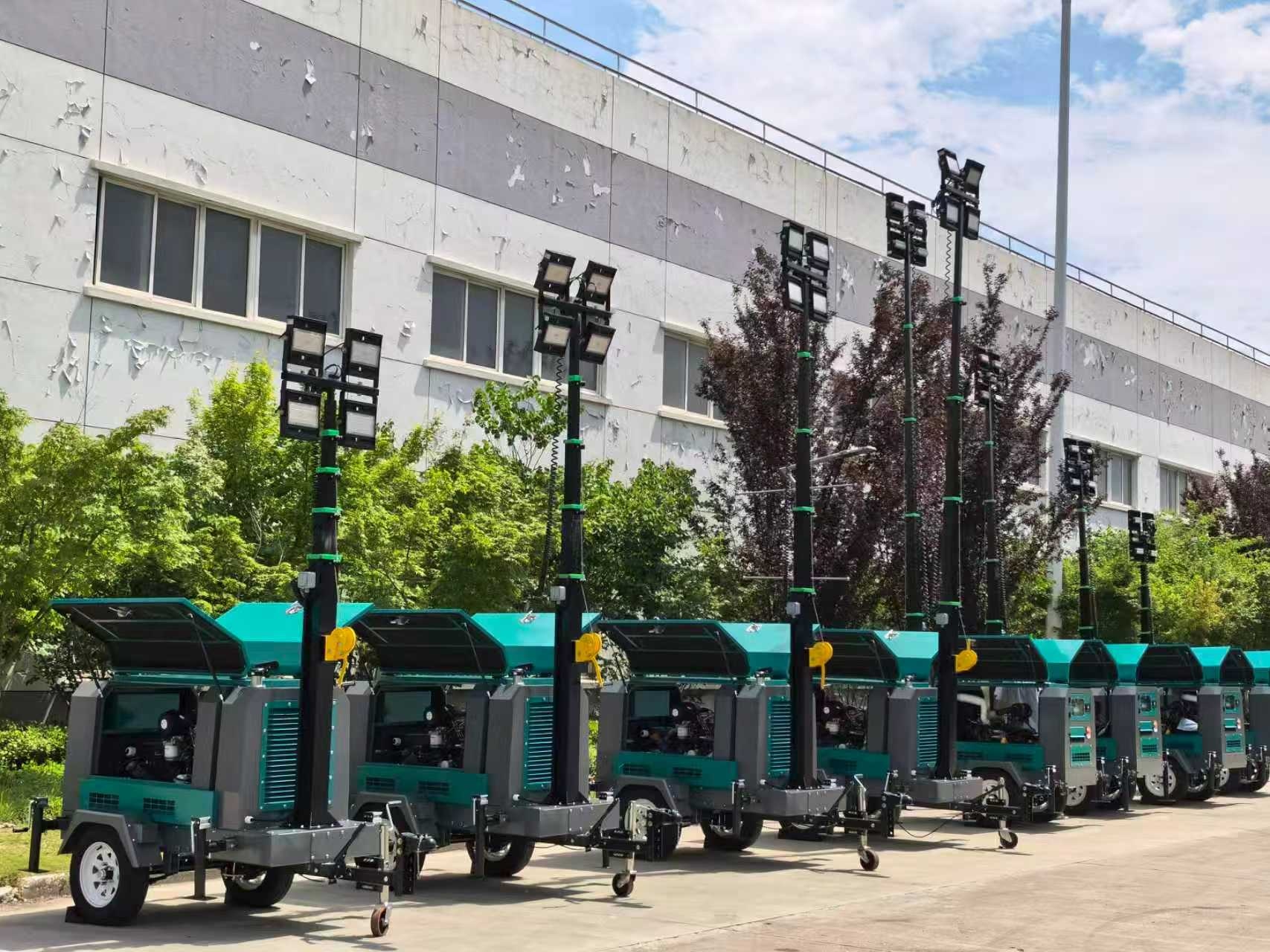
Field conditions rarely follow a neat curve. A solar array on a partly cloudy day, a pump lifting water from a fluctuating well, or an HVAC system serving a building with shifting occupancy all present load profiles that drift minute by minute. Static output curves, drawn from lab benchmarks, often miss these oscillations by a wide margin. The mismatch shows up as wasted energy, accelerated wear, or outright tripping.
Bridging that gap starts with logging actual demands over weeks, not hours. Sensors placed at the point of use capture spikes, dips, and idle stretches that no spec sheet anticipates. Then the control logic can reshape the output curve on the fly—tightening response during peak draw, flattening it during lulls, and holding reserve capacity for sudden surges. This isn't about forcing a machine to follow a fixed ideal; it's about letting the field teach the curve.
The payoff appears in quieter ways. A well-matched curve lets a compressor run longer at partial load without short cycling, cuts fuel burn on a generator by avoiding needless revving, or keeps a battery bank from deep discharges during ordinary mornings. Over a year, those small corrections compound into fewer service calls and a noticeably lower energy bill. The curve stops being a product spec and starts behaving like a custom tool.
Weather Sealing and Rust Resistance for Years on the Road
The first thing you notice after a few winters is how the door seals start to complain. Rubber that once felt plump and confident around the frame now stiffens, losing its grip just enough to let a thin whistle of wind through at highway speed. On this car, those seals are double-lipped and treated with a wax-based conditioner from the factory, so they don't harden into brittle little sticks after a season of freeze-thaw cycles. Water still beads on the sill instead of pooling, and the trunk lip stays dry even when you blast through a car wash with an old roof rack rattling overhead.
Underneath, the story is even less glamorous but more important. Most rust starts where you can't see it: inside rocker panels, behind rear wheel arches, along the pinch welds where salt spray gets trapped and eats quietly for years. Here the chassis gets a full dip in a zinc-rich e-coat before any color goes on, and the cavity wax is sprayed hot so it creeps into the overlapping seams. It's the same stuff they use on marine trailers, and you can smell it faintly on a warm day if you kneel by the rear bumper. Gravel kicks up, paint chips happen, but the galvanized layer underneath stays dull gray instead of turning orange.
Even the small stuff holds up: wiper arm nuts are capped, exhaust hangers are made from stainless instead of zinc-plated mild steel, and the drain holes under the doors are oval-shaped so they don't clog with leaf debris. After five years of parking near the coast, the only surface rust shows on the aftermarket tow hitch the previous owner bolted on without sealing the holes. That's the kind of detail you only appreciate when you're lying on your back with a flashlight, checking the brake lines for the third winter in a row and finding them still black and glossy.
Sound Levels That Pass Neighborhood Noise Rules
Most residential zones set daytime noise limits around 55 to 65 decibels, roughly the level of normal conversation or background music. If your activity stays below this range at the property line, it usually clears the local standard without complaint.
Evening and nighttime rules tighten considerably. Many municipalities drop the acceptable ceiling to 45 or 50 decibels after 10 p.m., which means a running air conditioner or distant traffic may be okay, but a raised voice or barking dog can push you over. The quietest hours often run until 7 a.m.
Short bursts, such as a passing motorcycle or a slammed car door, may be judged differently from steady hums. Enforcement often relies on an officer's measurement at the nearest affected residence, so the real test is not the source volume but what actually reaches your neighbor's ear.
Smart Load Management for Longer Engine Life
Every extra kilogram placed on a machine doesn't just add weight—it silently taxes the engine's internals. Smart load management means matching the actual demand to the engine's comfortable operating range, not its maximum rating. When operators avoid running at full throttle for extended stretches or carrying unnecessary ballast, piston rings seat better, oil temperatures stay within a safer window, and the crankshaft sees fewer stress cycles. Over the life of an engine, these small daily decisions translate into thousands of extra hours before the first major overhaul.
Think of the engine as a marathon runner rather than a sprinter. A runner who paces themselves, keeps hydration steady, and avoids sudden surges finishes the race with far less wear than one who constantly redlines. In the same way, engines thrive when loads are introduced gradually and kept within a mid-range band—usually 60% to 80% of rated capacity—rather than oscillating between idle and full load. This steady-state operation lets the cooling system work efficiently, reduces thermal shock on cylinder heads and exhaust valves, and keeps fuel dilution of the engine oil to a minimum.
Field data from long-haul fleets and stationary power plants shows a clear pattern: units that consistently run at 75% load outlast those cycled at 100% by an average of 30% before requiring liner or bearing replacement. The reason isn't just mechanical—it's also about how the engine's control systems adapt. Modern engines learn from load patterns, adjusting injection timing and boost pressure for the conditions they actually see. When those conditions are moderate and predictable, the engine settles into a gentler rhythm, extending the life of components from the turbocharger to the oil pump. In short, the smartest load management strategy isn't about doing less work—it's about doing the same work over a longer, more relaxed timeline.
Field-Tested Maintenance Habits From Rental Fleet Operators
Rental fleet mechanics don't chase perfect—they chase predictable. The operators who keep trucks on the road longest tend to replace filters, belts, and fluids on a schedule that ignores the manufacturer's normal interval and assumes every renter drove it like a getaway car. They log tire pressures at every check-in, not because it's policy, but because a slow leak from a weekend renter becomes a roadside call by Tuesday.
One habit that shows up again and again: greasing every fitting during an oil change, even the ones that look fine. Fleet shops also keep a whiteboard of recurring faults by unit number. When the same brake caliper shows up twice in six months, they don't just swap the part—they trace the line, check the proportioning valve, and dig until the root cause stops eating their afternoon.
Smart operators also insist on a short post-rental inspection before the vehicle goes back into the ready line. Ten minutes spent checking lights, wipers, and seat belts prevents the kind of small failure that turns a one-day rental into a four-hour argument with a stranded customer. It's less about checklists and more about building a rhythm where nothing leaves the lot with a known issue.
FAQ
Our units go through salt-spray testing and cold-start trials down to -20°C before they leave the floor. The enclosure uses powder-coated steel with fully welded seams, and the wiring is rated for high humidity. You get a generator that won't flinch when the site turns muddy or frozen.
That depends on the load and tank size. A 500 kVA unit with a 1,000-liter belly tank typically runs 24 hours at 75% load. We can also fit an external fuel connection so you can pull from a bulk tank and keep going for days without stopping.
Most of our smaller models, up to about 100 kVA, stay under 3,500 kg GVWR and work with a 3/4-ton truck. Larger units need a medium-duty vehicle. Every trailer comes with electric brakes, a breakaway system, and a heavy-duty lunette or ball hitch depending on your fleet.
As the original manufacturer, we control the whole build—frame welding, alternator pairing, control panel wiring, and load testing. If you need a different voltage, a shorter trailer, or a specific sound rating, the change happens on our line, not through a middleman. That also means spare parts ship directly from our warehouse.
Noise levels depend on the sound attenuation package. Standard units run around 70–75 dB(A) at 7 meters. If you need quieter operation for a residential area or film set, we can bring it down to 58–60 dB(A) with acoustic lining and a critical-grade exhaust silencer.
Check the coolant and oil levels daily, especially in dusty environments. Grease the trailer axle bearings every 6,000 miles, test the block heater if you're in cold climates, and load-test the unit monthly if it's used as a standby. Those four habits prevent most failures we see.
Yes, most digital control panels support load sharing. You can parallel two or more units with a sync kit and a common bus. That gives you redundancy for critical loads and lets you bring a smaller generator online during low-demand periods instead of running a large one lightly loaded.
Conclusion
Most buyers don’t need a degree in electrical engineering to understand what a mobile trailer generator can do. A good original manufacturer explains the difference between prime and standby ratings in plain terms, showing how much continuous power you actually get after voltage drops and altitude adjustments. What matters on a job site is not the marketing number on the hood but how the unit behaves under real load. If a generator holds frequency within a narrow band while a welder or crusher cycles on and off, that’s a better sign than a high peak rating. Build quality also plays a huge role in long-term reliability. Look for sealed control panels, stainless hinges, and full powder-coat or marine-grade finishes. These are the details that keep rust and moisture out when the trailer spends years parked near coastal air or muddy construction entrances. Noise is another practical limit: many neighborhoods and city permits require a specific decibel cap at the property line. A well-designed enclosure with proper baffles and low-speed fans can run at 62–68 dB(A) without sacrificing cooling.
Smart load management has moved from luxury to necessity. Instead of oversizing a generator and letting it wet-stack at light load, modern controllers stage loads, share between multiple units, and bring the engine up to operating temperature before heavy draw is applied. This not only extends engine life but cuts fuel waste dramatically. Rental fleet operators who keep generators running for tens of thousands of hours follow a remarkably consistent maintenance routine: load bank testing once a quarter, checking coolant pH before each season, inspecting belts and hoses for microcracks, and logging every filter change with the actual hours. The original manufacturer that supports this habit with clear service points, easy drain access, and onboard reminders makes those practices far more likely to stick. In the end, reliable power doesn’t come from a single impressive spec; it comes from how well the whole package holds up under routine abuse, changing weather, and the occasional operator who skips a manual.
Contact Us
Contact Person: Rita
Email: [email protected]
Tel/WhatsApp: +8613481024441
Website: https://www.dbdieselgenerator.com/