

Ozone Generator Manufacturer Reveals Key Factors for Reliable Ozone Systems
2026-08-27
Reliability in an ozone system isn’t a single feature you can circle in a brochure. It emerges from a chain of design, material, and testing decisions that most buyers never see. That’s where LUFUTATECH comes in: as an ozone generator manufacturer with deep field experience, they’re sharing the key factors that consistently predict whether a system will hold up—or fail when it matters most. If you’re evaluating ozone equipment, the insights below can save you from expensive trial and error.
Corrosion-Resistant Components That Survive Harsh Operating Conditions
In offshore platforms and chemical processing plants, the failure of a single metal part frequently starts at a microscopic pit rather than a visible crack. Corrosion-resistant components for these environments begin with alloy selection—duplex stainless steels, high-nickel grades like Inconel, or titanium—but chemistry alone is not enough. Sharp internal corners, stagnant fluid pockets, and weld heat-affected zones can turn a premium material into a corrosion cell. Designers therefore eliminate crevices, specify smooth transitions, and avoid mixed-metal contacts that accelerate galvanic attack.
Surface treatments such as passivation, anodizing, or thermal spray coatings add a second line of defense, yet their performance depends heavily on adhesion under thermal and mechanical stress. A coating that looks flawless after salt-spray testing may still delaminate in service when temperature swings cause the base metal to expand at a different rate. Progressive manufacturers now test components under combined corrosion-fatigue conditions, cycling parts through brine spray while applying cyclic loads, to ensure the protective layer does not become a crack initiation site.
In pulp and paper mills, seawater intake systems, and sour gas wells, the cost of corrosion-related downtime dwarfs the price of the component itself. This reality pushes engineers toward designs that sacrifice replaceable elements rather than the main structure—for example, integrating sacrificial anodes or designing flanges so that corrosion concentrates on cheap, easily swapped washers. Proven field data from similar harsh environments often outweighs laboratory certificates, because local variations in temperature, flow velocity, and chemical concentration can invalidate generic corrosion charts.
Why Ozone Concentration Monitoring Is Non-Negotiable
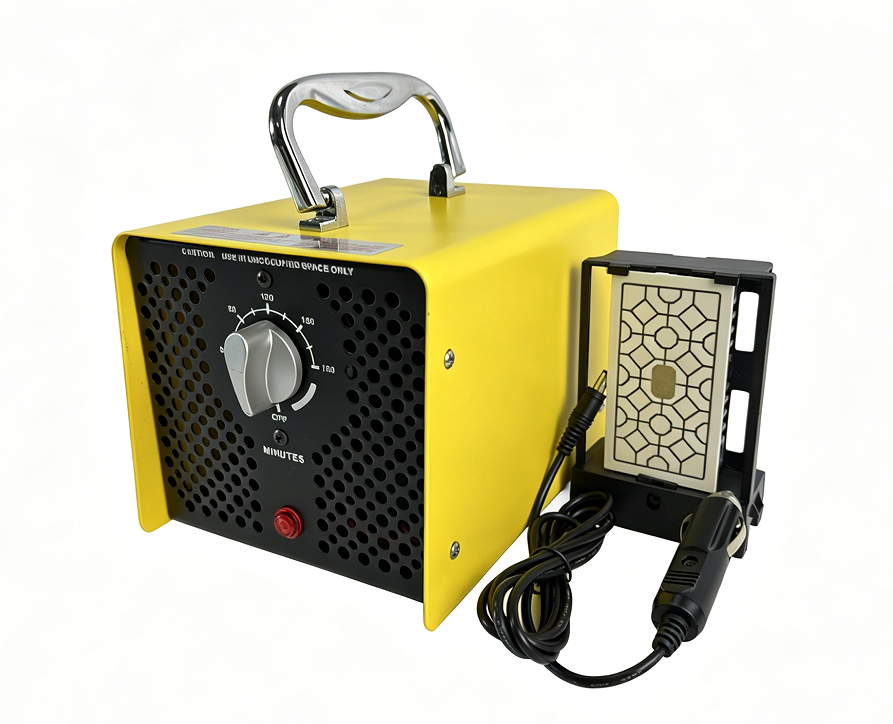
Ground-level ozone is not a pollutant that gives you visible warnings. Unlike smoke or haze, it can reach hazardous concentrations on a perfectly clear afternoon. That is exactly why continuous monitoring cannot be treated as an optional extra. Without reliable, real-time data, communities are left guessing about the air they breathe, and vulnerable groups—children, the elderly, and those with respiratory conditions—face risks that could have been anticipated and mitigated.
The chemistry of ozone formation is frustratingly dynamic. It depends on sunlight, temperature, and precursor emissions that shift hour by hour. A reading taken in the morning tells you almost nothing about exposure levels at noon. Only systematic monitoring captures these spikes, allowing for timely alerts and informed decisions. Treating monitoring as a luxury rather than a baseline undermines public health protection and leaves regulatory efforts flying blind.
There is also a compliance dimension that gets overlooked. Ozone levels can drift across borders and industrial zones, meaning local actions alone may not reflect what monitors detect. Without unbroken records, it becomes impossible to verify whether air quality standards are actually met or whether improvements are holding. In that sense, ozone monitoring is less a technical chore and more a fundamental contract with the public: you cannot manage what you refuse to measure.
The Power Supply Factor Most Buyers Ignore
When shopping for a PSU, most people glance at wattage and maybe check if it has an 80 Plus badge. But there’s one metric that rarely crosses their mind: transient response. This is how quickly the unit reacts to sudden load changes, like when your GPU spikes from idle to full tilt in a fraction of a second. A supply with poor transient response can cause voltage dips that lead to crashes, instability, or even hardware degradation over time—all with a unit that still claims “500W” on the box.
Another overlooked factor is hold-up time. That’s the window, measured in milliseconds, where the PSU keeps delivering power after the AC input drops or flickers. Cheap units often cut corners here, and your system reboots or shuts down during a brief brownout that a better supply would ride through without a hitch. If you live in an area with occasional power glitches, this single spec can save you from hours of troubleshooting random restarts.
Finally, pay attention to the number and quality of protection circuits. Over-current, over-voltage, short-circuit, and over-temperature protections aren’t glamorous, but they’re the difference between a dead PSU and a fried motherboard. Many budget models skimp on these safeguards to hit a low price point, leaving your entire build one bad surge away from becoming e-waste.
Cooling Efficiency: The Silent Killer of Ozone Output
Most ozone generators rely on corona discharge or UV, and both generate significant heat. That heat has to go somewhere. When cooling efficiency drops—whether from warm inlet water, reduced flow, or a fouled heat exchanger—the gas inside the reaction chamber gets hotter. Hotter gas accelerates the natural decomposition of ozone back to oxygen. You end up producing more ozone at the electrode but measuring less at the output. It’s a quiet loss that doesn’t trip any alarms.
Operators often focus on feed gas dryness or power supply settings, but cooling is the overlooked variable. A rise of just a few degrees in coolant temperature can shave several percentage points off the final ozone concentration. In many plants, cooling water comes from a shared loop, so summer temperatures or downstream demands can silently erode output. The problem hides in plain sight because the generator still runs, the lights are on, and no fault code appears.
The fix starts with measuring the temperature difference across the cooling circuit and checking flow rates against the original specs. Even a thin layer of scale or biofilm inside a plate exchanger will insulate the gas from the coolant. Cleaning or upgrading the cooling side often recovers lost ozone capacity without touching the electrodes or power electronics. If output has drifted downward for no obvious reason, suspect the silent killer before replacing expensive components.
How Preventive Maintenance Programs Extend System Lifespan
Preventive maintenance works by catching wear before it becomes failure. A bearing that gets a few grams of fresh grease on schedule can outlast one that runs dry and scores its raceway. The same logic applies to belts, filters, and electrical connections: small, routine interventions keep components operating inside the range they were designed for, so they don't silently drift toward early breakdown. Over years of service, that consistency compounds into a noticeably longer functional life for the whole system.
Beyond individual parts, scheduled maintenance also prevents one worn component from stressing everything around it. An unbalanced fan or a clogged filter forces motors, compressors, and control boards to work harder than intended, and that extra load accelerates aging across multiple subsystems. By restoring proper alignment, airflow, and calibration at regular intervals, a preventive program keeps the entire machine from running in a state of chronic strain. The result is fewer heat cycles, less vibration, and a system that reaches—or even exceeds—its expected service life without major rebuilds.
Real-World Stress Tests That Separate Durable Units from the Rest
Most durability claims fall apart once a product leaves the controlled lab bench. The units worth keeping are the ones that have been dragged across gravel, left in a hot car for a full afternoon, or knocked off a tailgate onto concrete and still function the next morning. These tests aren't about one dramatic impact; they're about accumulated wear: repeated thermal swings that loosen adhesives, fine dust that works into moving parts, and constant vibration that reveals which solder joints were never really solid.
A useful stress test mimics the chaos of everyday use without turning into a destruction derby. For example, cycling a hinge through ten thousand open-and-close motions while periodically introducing fine sand shows whether the bearing surfaces gall or bind. Similarly, alternating between high humidity and dry heat over several days exposes seals that swell, then shrink, then crack. The failures that show up here are rarely spectacular; they show up as intermittent connections, sticking buttons, or protective coatings that peel at the edges.
What separates a durable unit isn't a thicker shell or a higher price tag. It's how the design handles stress concentration and material fatigue in places you never see on a spec sheet. Units that pass real-world tests usually share a few unglamorous traits: serviceable parts, simple mechanical interfaces, and a lack of unnecessary joints where moisture can collect. When you compare them side by side with the rest, the difference often comes down to decisions made long before the first prototype was ever dropped on purpose.
FAQ
It comes down to the reaction chamber material and the power supply design. A 316L stainless steel chamber resists oxidation far longer than standard steel, and a current-limited high-frequency driver prevents the electrodes from overheating during long runs. Without those two, even a well-known brand won't hold up.
Usually, it's either moisture entering the corona cell or the cooling system being undersized. Ozone generation produces significant heat, and if the air or water cooling isn't matched to the ozone output, the dielectric material degrades quickly. We see a lot of failures from units that look tough but have plastic fittings that crack under thermal cycling.
For most industrial setups, a basic inspection every three to six months is enough—check the air dryer, clean the corona cell, and verify the output concentration. If you're using oxygen concentrators, the sieve bed may need replacement once a year. Skipping the air dryer maintenance is the fastest way to kill an ozone cell.
It's enormous. Ozone output drops sharply if the feed gas has moisture or oil vapor. A dew point of -60°C or lower is what you want for oxygen-fed systems, otherwise nitric acid forms inside the cell and corrodes the electrodes. Many "mysterious" failures trace back to a saturated desiccant dryer nobody checked.
Absolutely. Above 30°C, you lose both ozone yield and component life. That's why proper ventilation around the generator matters more than the rated output. In hot climates, we recommend sizing the cooling capacity at least 20% above the manufacturer's standard, otherwise the power supply overheats and shuts down intermittently.
A good control system lets you adjust ozone output linearly, not just on/off, and includes automatic shutdown on low flow or high temperature. If the unit lacks a flow switch and thermal cutoff, walk away. Those two features prevent the most common catastrophic failures in unattended installations.
Water-cooled typically wins for anything above 50 grams per hour. Air-cooled works fine for small units, but as the ozone output climbs, air cooling can't keep the dielectric temperature stable. Water cooling with a closed-loop chiller gives you consistent output and much longer electrode life, though it adds plumbing complexity.
It's non-negotiable. A reliable manufacturer will run each unit at full output for at least 24 hours and provide a test report with actual ozone concentration and power consumption. Many low-cost suppliers only do a quick electrical check, so you end up being the one discovering the leak or weak cell after installation.
Conclusion
Ozone system reliability often comes down to choices that aren't visible on a spec sheet. A manufacturer with field experience will point first to materials—valves, fittings, reaction chambers and seals made from ozone-resistant alloys or PTFE, because even small corrosion points become leak paths under continuous exposure. Then there's ozone concentration monitoring, which is not a luxury but a feedback loop that keeps dosing accurate as gas flow and temperature drift. The power supply also deserves more attention than it usually gets: a poorly matched transformer or rectifier can cause unstable corona discharge, dragging down output and accelerating electrode wear. Cooling, too, is often underestimated. If heat isn't removed effectively from the dielectric and electrodes, ozone production falls off sharply and internal components age faster than expected.
The most reliable systems aren't just well designed on day one—they're proven through stress testing and kept healthy with preventive maintenance. Manufacturers that stand behind their units run them under high ambient temperatures, humidity swings, and continuous-duty cycles to expose weak solder joints, undersized cooling fans, or control boards that drift. In service, a maintenance program built around periodic cleaning of air filters, checking dielectric integrity, inspecting check valves, and recalibrating sensors can add years to system life. It also prevents the kind of small failure that quietly reduces ozone output until the process is out of spec. Buyers who treat ozone generation as a long-term process asset rather than a commodity purchase tend to get consistent performance, fewer emergency repairs, and lower total cost over the equipment's lifespan.
Contact Us
Contact Person: Paul Luo
Email: [email protected]
Tel/WhatsApp: 0086-19966314501
Website: https://www.lufutatech.com