

Piezo Ceramic Brand Guide: Choosing the Right Supplier for Your Application
2026-11-16
Nothing stalls a piezo ceramic project faster than a supplier that overpromises and underdelivers. Spec sheets can look nearly identical, but the right brand makes a measurable difference in consistency, tuning, and field life. This guide is built to help you evaluate suppliers beyond the marketing gloss. Along the way, we'll examine how Siansonic addresses common sourcing pitfalls—giving you a concrete reference point for your own selection process.
The Gap Between a Piezo Ceramic Datasheet and Real-World Performance
Datasheet values for piezoelectric ceramics are typically measured under tightly controlled lab conditions—small signal, free boundary, room temperature, no mechanical load. In a real device, the ceramic sits inside a stack or bending element, glued or clamped, preloaded, driven at high field, and exposed to temperature swings. These differences can shift resonant frequency, capacitance, and displacement by tens of percent.
Take capacitance as an example. A datasheet may quote a value at 1 kHz, 0.5 V, unclamped. In a bolted actuator running at 100 V and 200 Hz, the actual capacitance often drops because of nonlinear dielectric response and compressive stress. Similarly, displacement per volt is quoted under free strain, but once the element is coupled to a load or housing, the effective stroke shrinks and hysteresis grows.
Engineers who treat the datasheet as a fixed specification rather than a reference point often end up with unexpected resonances, heat buildup, or reduced lifetime. The practical approach is to measure the ceramic in its final assembly under realistic drive and boundary conditions, then use datasheet numbers only as a starting point for comparison.
Why Equivalent Part Numbers Rarely Deliver the Same Result
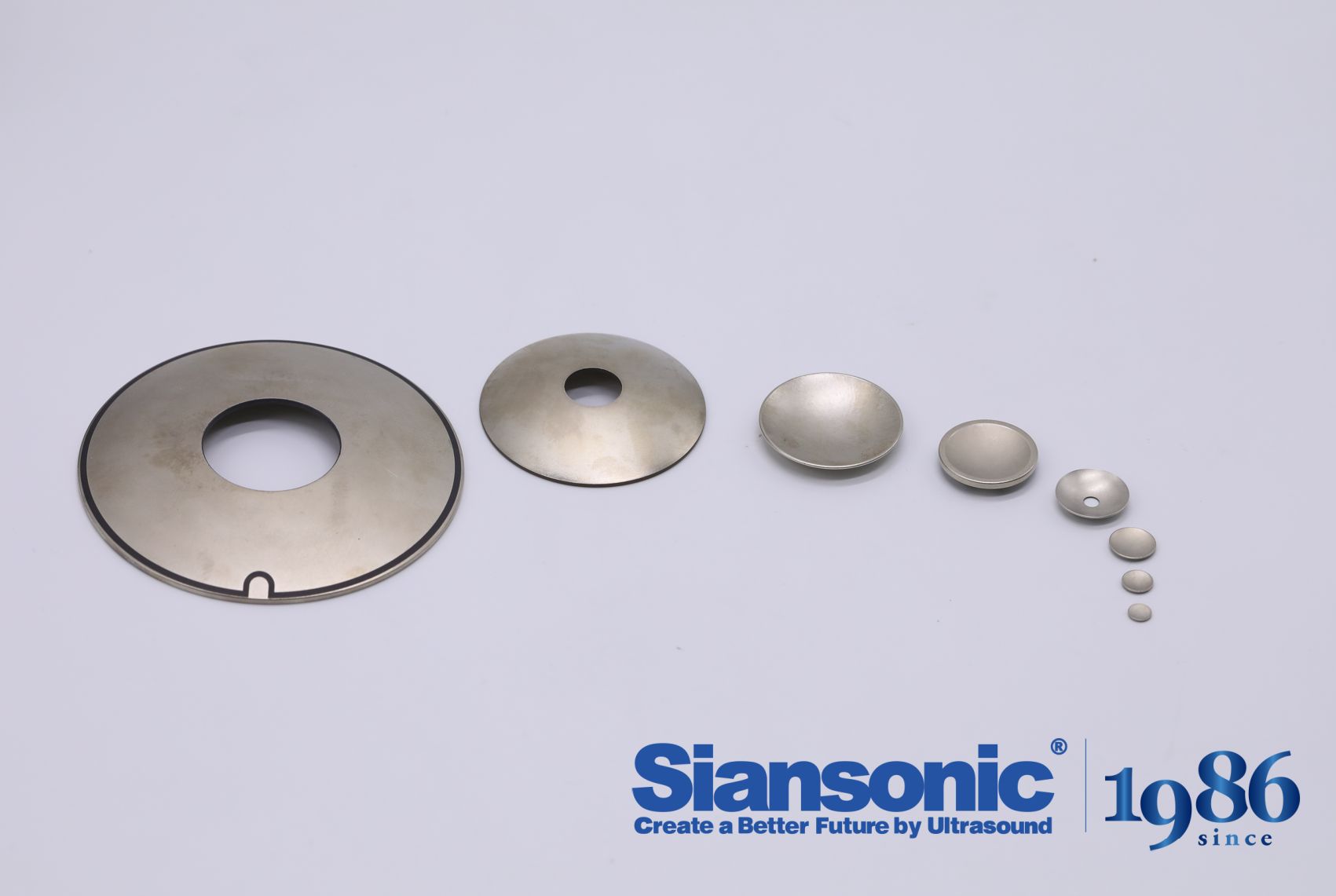
A part number is often treated as a promise of interchangeability, but the reality behind the label is far messier. Two components can share an identical designation yet come from different production batches, factories, or even contract manufacturers. Those differences ripple through tolerances, surface finishes, and material purity. A seal that fits perfectly in one assembly may weep under pressure in another, not because the drawing changed, but because a supplier switched to a marginally softer elastomer without updating the documentation.
Thermal and mechanical stress exposes another layer of divergence. Equivalent parts may meet the same nominal specs on a datasheet, yet perform differently once installed. A capacitor rated for 105°C might use a thinner dielectric from one source, shifting its endurance curve. A bearing with the same load rating could have different cage geometry or raceway grinding, leading to noise or premature spalling. These are not defects in the traditional sense—they are the fingerprints of distinct manufacturing philosophies hiding behind a shared part number.
Testing and certification add still more variables. A part that passes a generic incoming inspection might fail under the specific duty cycle of a real machine. Without lot-level traceability and a clear understanding of application-critical parameters, swapping an "equivalent" part becomes a gamble. The only reliable approach is to validate performance in your own system, because the part number tells you what to order, not what you'll actually get.
Matching Piezo Ceramic Material Grades to Your Drive Conditions
Piezo ceramic grades are not interchangeable; a stack that performs beautifully under one drive condition may crack or overheat under another. The first step is to look at your actual operating point, not just the headline displacement. If you drive at low frequency with a low duty cycle, soft PZT grades typically deliver more strain per volt and keep heat generation manageable. But push those same materials into continuous high-frequency actuation and the dissipation factor climbs, internal losses rise, and the element drifts out of tune.
For continuous or high-frequency work, harder PZT compositions usually make more sense. Their lower dielectric losses reduce self-heating, and the higher mechanical quality factor keeps resonance sharp and efficient. The tradeoff is a smaller strain coefficient, so you may need a slightly larger stack or a higher drive voltage to reach the same displacement. Matching the grade means accepting that tradeoff instead of forcing a soft material to run outside its comfort zone.
Also match the grade to your drive electronics. Soft grades often require lower voltage swings but draw more current and can be sensitive to bias. Hard grades tolerate higher fields and preloads, but they demand cleaner drive signals to avoid exciting spurious modes. Before finalizing a material, test a small batch at your real duty cycle, temperature, and preload, because the best grade on a datasheet is only as good as the conditions it was measured under.
What Supplier Test Reports Leave Out About Aging and Fatigue
Most supplier test reports focus on short-term, accelerated aging results that look clean on paper. They rarely show what happens after a seal or adhesive has been through hundreds of thermal cycles with humidity swings and occasional chemical exposure. Those small, cumulative changes—microcracking, plasticizer migration, surface oxidation—don't show up in a 500-hour oven test, but they can cause a field failure years later.
Fatigue data is another place where gaps appear. A report might list cycles to failure under a constant load or a simple sine wave, but real equipment rarely works that way. Variable loads, start-stop spikes, and resonance effects from nearby machinery create a much more damaging fatigue spectrum. Without that detail, the reported fatigue life can be off by an order of magnitude.
There's also the question of sample size and what counts as a failure. Supplier reports often pass a component if a handful of units survive a set number of cycles. That misses the wide scatter in aging behavior—some units degrade twice as fast as the average. The tail of the distribution is what matters for warranty costs and unexpected downtime, but it's usually not broken out in the summary tables.
Custom vs. Off-the-Shelf Piezo Ceramics: A Sourcing Reality Check
Engineers often assume custom piezo ceramics are the only route to hit tight performance specs, but off-the-shelf parts have quietly closed the gap in many applications. The real question isn't whether a standard disc or ring can work—it's whether your project can absorb the lead time and tooling costs that come with a custom run. A stock 20mm PZT-5A disc might handle a modest ultrasonic cleaning transducer just fine, while a custom shape only becomes necessary once you're pushing resonance frequency tolerance below a few percent or dealing with extreme temperature swings that demand a tailored doping profile.
Sourcing teams frequently underestimate how much of the "custom" premium goes into paperwork, not material science. A standard ceramic element from a reputable distributor ships in days, with known d33 coefficients and aging rates you can actually verify against published datasheets. Custom orders, by contrast, typically require six to twelve weeks of back-and-forth on drawings, a non-recurring engineering charge that can dwarf the per-unit price, and a qualification cycle that leaves little room for design iteration. Unless you're buying thousands of units or have an unusual geometry—say an elliptical ring for a flow meter with a non-circular pipe—the practical payoff rarely justifies the hassle.
The sensible move is to run a quick feasibility check against standard catalogs before committing to a custom build. Look at the required operating frequency, capacitance, and mechanical Q; if a stock part falls within 10-15% of those values, it's usually worth prototyping with it and tuning the drive electronics to compensate. Save custom piezo ceramics for cases where the physical footprint is fixed by an existing housing, the polarization direction must be non-standard, or you need a monolithic stack that can't be assembled from off-the-shelf rings. In most sourcing discussions, that reality check saves months of schedule and a pile of sunk costs.
Subtle Signs a Piezo Ceramic Supplier Understands Your Application
A supplier who truly gets your application won't just rattle off standard specs. Watch for the moment they start asking about your drive waveform shape, not just frequency and voltage. If they dig into whether you're running continuous or burst mode, or if they inquire about your mounting method before recommending a part, that's a signal they're thinking about real-world behavior, not just catalog numbers. These conversations feel less like a sales pitch and more like a design review.
Another subtle tell is how they handle your tolerance stack-ups. A generic vendor will quote the datasheet's ±10% on capacitance and call it a day. A knowledgeable one will ask how that variation affects your impedance matching or resonant frequency drift over temperature. They might even suggest a smaller lot with tighter binning for your prototype phase. That level of detail shows they understand piezo ceramics are living components, not fixed resistors.
Finally, listen for warnings that sound inconvenient. If they mention that a certain material grade tends to depole under your DC bias conditions, or that your epoxy choice could crack the element during thermal cycling, they're prioritizing your field reliability over a quick order. A supplier who volunteers failure modes before you ask is one who has learned your application's failure modes the hard way—and that's exactly who you want in your corner.
FAQ
For medical ultrasound, consistency in dielectric constant and coupling coefficient matters most. Look for suppliers who batch-test every lot and can show traceability back to raw powder. A supplier that understands acoustic matching layers will save you months of tuning.
Ask about their green machining and sintering shrinkage control. A capable brand will discuss tolerance stack-up from powder to fired part, not just geometry. Prototypes should come with measured d33 and capacitance values, not just dimensional reports.
High-power grades need low mechanical loss and stable frequency under heat. Commodity PZT-4 may drift as temperature climbs. Look for brands that quote mechanical quality factor at operating temperature and offer hard PZT formulations with lower loss tangent.
Sometimes, but you need to verify their process control. Smaller shops can excel in niche areas like single-crystal or lead-free compositions, yet may lack the in-house poling capacity for large volumes. Ask for failure rate data from actual production runs, not just sample lots.
Lead-free options like KNN or BNT are gaining ground, but performance gaps in high-drive conditions remain. A supplier that honestly compares their lead-free versus PZT under your specific drive level is more valuable than one claiming a drop-in replacement. Check their aging and depolarization data.
Poling temperature, field strength, and time directly affect domain alignment and long-term stability. A brand that polishes this step will provide polarized parts with a clearly defined aging curve. Ask if they offer corona poling for thin films or oil-bath poling for bulk components, and whether they re-pole after machining.
Request a set of five parts per composition with measured impedance spectra, capacitance, and d33 from each. Include a thermal cycle test from -20°C to 80°C. A trustworthy supplier will include these datasheets without you asking twice and will note any lot-to-lot variation.
Design around standard electrode patterns and specify raw material equivalents rather than brand-only part numbers. Qualify a second source during initial prototyping, even if it costs extra. Suppliers who share composition data and sintering profiles make cross-qualification far less painful.
Conclusion
Choosing a piezo ceramic supplier goes far beyond comparing catalog numbers. The first real challenge is that datasheets describe ideal behavior, but actual performance depends on drive conditions, mounting, and thermal history. Two parts with identical part numbers often behave differently because subtle material grade variations, electrode thickness, or poling quality shift resonance and displacement. A capable supplier helps you map material grades—soft versus hard PZT, for example—to your exact duty cycle, whether it's high-frequency actuation or high-power sonication. Without that guidance, you risk selecting a ceramic that heats too much or loses stroke under load.
Aging and fatigue data are rarely complete on standard test reports. Most suppliers omit long-term depolarization curves or cyclic loading effects, leaving you to discover drift after deployment. This is where sourcing strategy matters: off-the-shelf parts may satisfy a basic prototype, but custom formulations and electrode patterns often become necessary once you push duty cycle, temperature, or mechanical preload. The strongest sign of a knowledgeable supplier is not marketing language but specific questions about your drive waveform, ambient conditions, and lifetime target. They may ask about burst mode versus continuous operation, or whether the ceramic faces tensile stress. Those conversations, more than any datasheet comparison, reveal whether a brand truly understands your application.
Contact Us
Contact Person: Ivy Zhang
Email: [email protected]
Tel/WhatsApp: +86 1081502288
Website: https://www.siansonic.com/