

Produce Box Manufacturer Best Practices for Fresh Storage and Transport
2026-11-21
Every bruised apple and wilted leaf tells the same story: fresh produce lives or dies by the box it travels in. Yet too many growers and distributors still treat packaging as an afterthought, only to watch quality slip away between the field and the shelf. This guide unpacks the real-world practices that leading produce box manufacturers use to protect freshness during storage and transport — from ventilation design and moisture control to stacking strength and cold-chain compatibility. Along the way, you’ll see how Zemeijia approaches these challenges with practical, field-tested solutions that help your produce arrive as crisp as the moment it was packed.
Why Vent Placement Matters More Than Vent Count
Most people obsess over how many vents a tent has, but the real game-changer is where those vents sit. A tent with three well-placed openings can outperform one with six poorly positioned ones. High vents let hot air escape instead of lingering near your face, while low vents pull in cooler air from the ground. Without that vertical gap, airflow stalls no matter how many zippered mesh panels you count.
Placement also determines whether you stay dry and comfortable once the weather turns. A vent angled away from prevailing rain lets moisture roll off the fly instead of sneaking in. On still nights, cross-ventilation only works if the openings face each other rather than clustering on one side. That kind of design thinking matters more than a spec sheet bloated with numbers.
So when you compare shelters, ignore the marketing around a high vent total. Look at the actual positions: one near the peak, one at the door, one on a side wall. That spread creates a current you can feel within minutes. Poor placement just leaves you counting zippers while the inside turns stuffy and damp.
Moisture-Resistant Liners That Stay Neutral Under Condensation
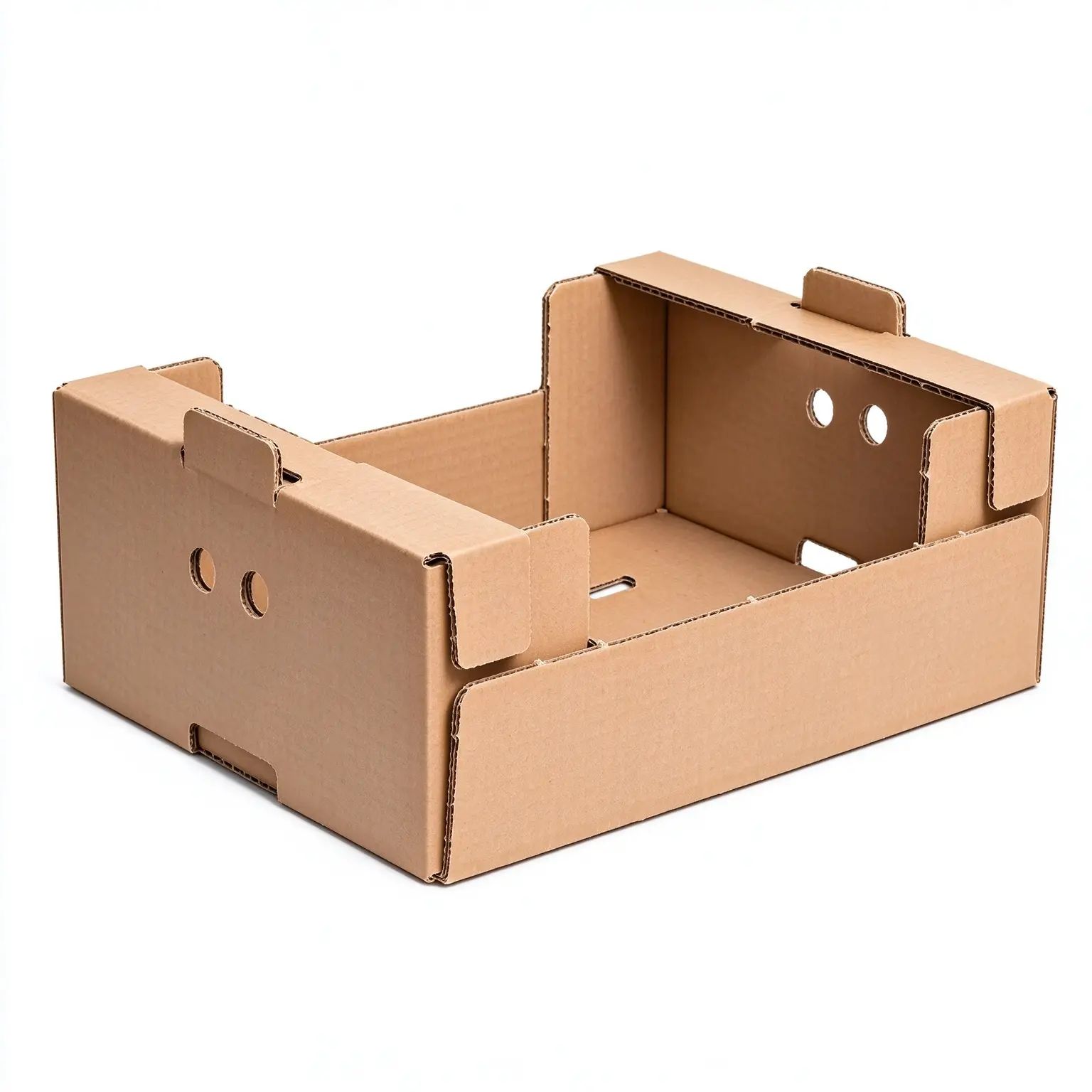
Condensation has a way of exposing weaknesses in liner materials that look fine on a spec sheet. Water beads sit on the surface, temperatures swing, and before long the backing starts to swell, curl, or pick up a faint chemical smell. These liners take a different route. The moisture-resistant face sheds condensation without softening, and the core stays inert even when relative humidity climbs and drops repeatedly.
What makes them feel different in actual use is their neutrality. There is no tacky residue left behind after a cold-to-warm transition, and no slow reaction with adhesives, coatings, or metal surfaces nearby. That matters in tight enclosures where air movement is limited and a liner cannot be swapped out easily. Over repeated cycles, they simply hold their shape and keep doing their job without adding unwanted chemistry to the space.
Sizing Tolerances That Reduce Shifting on Palletized Loads
Tightening dimensional tolerances at the carton level does more than improve stack appearance—it directly limits the micro-movements that accumulate during transit. When each box sits within a narrow height and width band, the top layer cannot rock sideways on a slightly smaller carton below it, and edge alignment stays consistent from one pallet pattern to the next. Even a few millimeters of excess clearance invites creep, especially on long hauls with repeated vibration inputs.
The practical target is not absolute precision but a tolerance window matched to the pallet footprint and the stretch wrap tension you actually run. A common field adjustment is to shift from plus-or-minus three millimeters down to plus-or-minus one and a half on the primary load-bearing dimension, then verify that the combined stack stays inside the pallet overhang limits. Cartons that arrive within that reduced band let the wrap grip a uniform surface instead of bridging over low spots, which is where shifting usually begins.
One overlooked detail is the interaction between board caliper and die-cut scoring depth. A thicker liner or a deeper score can eat into the internal dimension after folding, so two cartons printed from the same CAD file may still differ by several millimeters once erected. Measuring the finished, filled carton—not the flat blank—against a simple go/no-go fixture helps catch that drift before a full production run leaves the floor. Over time, that discipline reduces the need for dunnage, corner boards, and extra wrap layers that only mask the underlying size variation.
How to Stress-Test a Produce Box Before Cold Chain Shipping
A produce box that survives a gentle warehouse walk rarely holds up once it hits a vibrating reefer floor for fourteen hours. Start with the drop test, but don't just follow a generic height chart. Fill the box with actual product—wet celery, dense melons, leafy greens—then let it fall from tailgate height onto concrete, corner first. That corner impact is where most single-wall corrugated fails before the box ever sees a cold room.
Next, simulate compression in a humid environment. Stack three loaded boxes, spray a fine mist to mimic condensation cycles, and leave them in a 2°C chamber for eight hours. Check for sidewall bowing or top panel sag. If the box uses recycled linerboard, expect a 15–20% strength loss once moisture penetrates the flutes. That loss doesn't show up on a dry lab bench, but it will on a cross-dock in summer.
Finally, run a short vibration sequence on a shaker table with a random profile that mirrors rough road segments. Watch the bottom flaps and any ventilation slots. A box that flexes at the hand holes or tears at the score lines will let warm air pocket inside, which shortens shelf life faster than a bruised stem. Replace anything that shows more than 3 mm of permanent deformation at the vertical edges.
Stacking Compression Limits for Long-Haul Fresh Transport
Long-haul fresh transport pushes every link in the cold chain to its physical limit. The moment produce is loaded, temperature, humidity, and air movement begin working against shelf life. Stacking too high or too tight blocks the airflow that would normally carry field heat away from the center of the pallet, creating pockets where respiration accelerates and spoilage starts long before the truck reaches the first checkpoint.
Practical experience shows that the real ceiling is rarely the reefer unit's rated capacity. It is the way cartons are arranged, the vent alignment between layers, and the discipline of leaving a narrow channel along the ceiling and floor. Drivers and dock crews who treat every stack as a deliberate airflow design consistently report lower rejection rates, while random or overly dense loading turns even a modern trailer into a slow cooker for leafy greens and berries.
The limit also shifts with route length and ambient swings. A load pattern that holds up for eight hours in mild weather can collapse into warm zones on a two-day run across the desert. Smart operators read compression not just as vertical weight, but as the squeeze on air, time, and temperature control. They adjust block heights, use tier separators, and sometimes leave a partial pallet out entirely, knowing that the cost of lost cube is cheaper than a full load condemned on arrival.
Condensation-Proof Markings That Remain Readable in Storage
Storage areas rarely stay dry, and the real problem starts when warm air meets cold steel or plastic. Ordinary printed labels absorb that moisture, causing ink to feather, codes to fade, and adhesive edges to lift. Markings designed for condensation resistance use hydrophobic films and low-absorption topcoats, so water beads on the surface instead of soaking into the print. This keeps alphanumeric codes and barcodes sharp even when the surrounding air is saturated.
The difference often comes down to the bond between ink and substrate. Condensation-proof options typically combine resin-rich inks with a tightly cured overlaminate, preventing moisture from reaching the printed layer. They also handle temperature swings better: repeated cooling and warming will not crack the surface or create fogging under the laminate. For cold storage, unheated warehouses, and outdoor cabinets, that means a label remains legible without wiping or relabeling after every cycle.
In practice, this is less about special handling and more about selecting materials that tolerate damp contact from the start. Users can expect consistent scan performance and visual clarity on bins, racks, and packaging even when condensation forms overnight. The markings look untouched because the moisture never gets a chance to work its way beneath the surface.
FAQ
Use a slightly taller interior depth so the top layer never rests directly on the product below. Full flute contact across the bottom panel spreads shock better than corner posts alone. For tender items, a smooth interior liner removes the sharp edges of cut corrugated that leave rub marks on skins.
Leafy greens need lower side vents to pull cold air across the core and upper vents to release respiration heat. Stone fruit benefits more from aligned end-panel vents that create straight air channels through stacked pallets, which helps pull field heat out of the center without drying the fruit surface.
Combine a moisture-resistant curtain coating on the outside with a starch-based water barrier on the inside bottom. Avoid full wax saturation unless boxes sit in direct ice contact. The real difference comes from controlling condensation points: leave a small uncoated strip at the top seam so trapped humidity can escape instead of soaking the board.
Wax coating earns its cost when packs are top-iced or stored in near-saturated humidity for more than a week, such as broccoli, sweet corn, or fresh herbs in slush ice. For dry-packed stone fruit or tomatoes, a ventilated uncoated box with a light moisture barrier performs better because airflow matters more than water resistance.
Use a cross-column pattern where the corners of every second layer sit directly over the center of the carton below, not a straight column. This spreads load across the strongest part of the sidewall. Add a slip sheet only between layers that carry different box heights so short cartons do not receive point loads from the pallet above.
Field boxes absorb rough handling, direct sun, and uneven stacking while still warm and slightly damp from the field. A thicker outer wall and stronger flute hold their shape even when condensation softens the board. Repack boxes move through a controlled line and into cold storage faster, so a lighter wall works without sacrificing arrival quality.
Print a scannable lot code directly into the box blank during die-cutting, not as a separate label. Each code carries field block, harvest crew, and time window. This lets the packer keep the line moving and still gives receivers a single point of lookup when a quality issue appears days later.
Conclusion
Produce box manufacturers tend to over-index on the number of vents when the real failure point is often where those openings sit. A carton with fewer, well-placed vents can move air across the crown of the product and pull heat away from the center of the pallet, while a higher vent count in the wrong position creates cold spots and weakens corners. That same attention to layout applies to liners. A liner that wicks moisture or breaks down under condensation turns into a source of contamination and softening, so the material choice has to stay inert through repeated temperature swings instead of just surviving a single water spray test. Dimensional control matters just as much: tight but practical sizing tolerances keep cartons from sliding on a pallet and prevent bruised edges when straps settle.
Before a box enters a cold chain, it should be pushed past normal handling conditions rather than checked against a static spec. Loaded boxes can be run through vibration and drop sequences at the expected humidity, then inspected for popped joints, torn handholds, and liner movement. For long hauls, stacking compression limits need to account for the loss of board strength as moisture rises in the container, not just dry-box numbers from a lab. Printed markings on the outside should use inks or coatings that resist condensation rub-off so handlers can still read lot codes and storage instructions after the box has sat in a cooler. Build these checks into the production routine and the box becomes part of the cold chain, not a liability inside it.
Contact Us
Contact Person: Sasha Du
Email: [email protected]
Tel/WhatsApp: +86 13869836645
Website: https://www.zmjpackagings.com/