

Stainless Steel Casting from an Original Manufacturer You Can Trust
2026-10-21
When every component must withstand harsh environments without compromise, the choice of casting partner defines your project's integrity. At Zhaoyuqi, we don't just pour metal—we engineer precision stainless steel castings that carry your reputation. Discover why leading industries trust an original manufacturer whose quality control is as unyielding as the alloys we pour.
Straight From the Melt: How We Control the Alloy
Getting the alloy right starts while the metal is still in the furnace. We don't rely on guesswork. Each charge is weighed and recorded before it enters the melt, and once the bath is fully liquid, we pull a sample from the middle, not the edge. The spectrometer gives us a breakdown in seconds. If the manganese or silicon is off by a fraction, the heat gets adjusted immediately—extra additions are calculated, stirred in, and rechecked until the numbers settle where they belong.
Chemistry alone won't save a poorly handled melt. Temperature is held in a tight range because too hot burns out elements and too cold leaves them uneven. We keep the bath moving with a steady stir, then run an inert gas through it to lift out hydrogen and oxide films. That part doesn't show up in the final part, but it decides whether the casting will be clean or full of inclusions. It's the quiet half of alloy control.
The decision to pour is never automatic. A second sample is taken right before the metal leaves the furnace, poured into a small chill mold, and checked against the original target. If the chemistry lines up and the temperature is still in the correct window, the heat is released. Only then does the metal move from our control to the mold. Every batch gets the same sequence, with no shortcuts.
Tolerances That Hold Up in Your Machining Setup
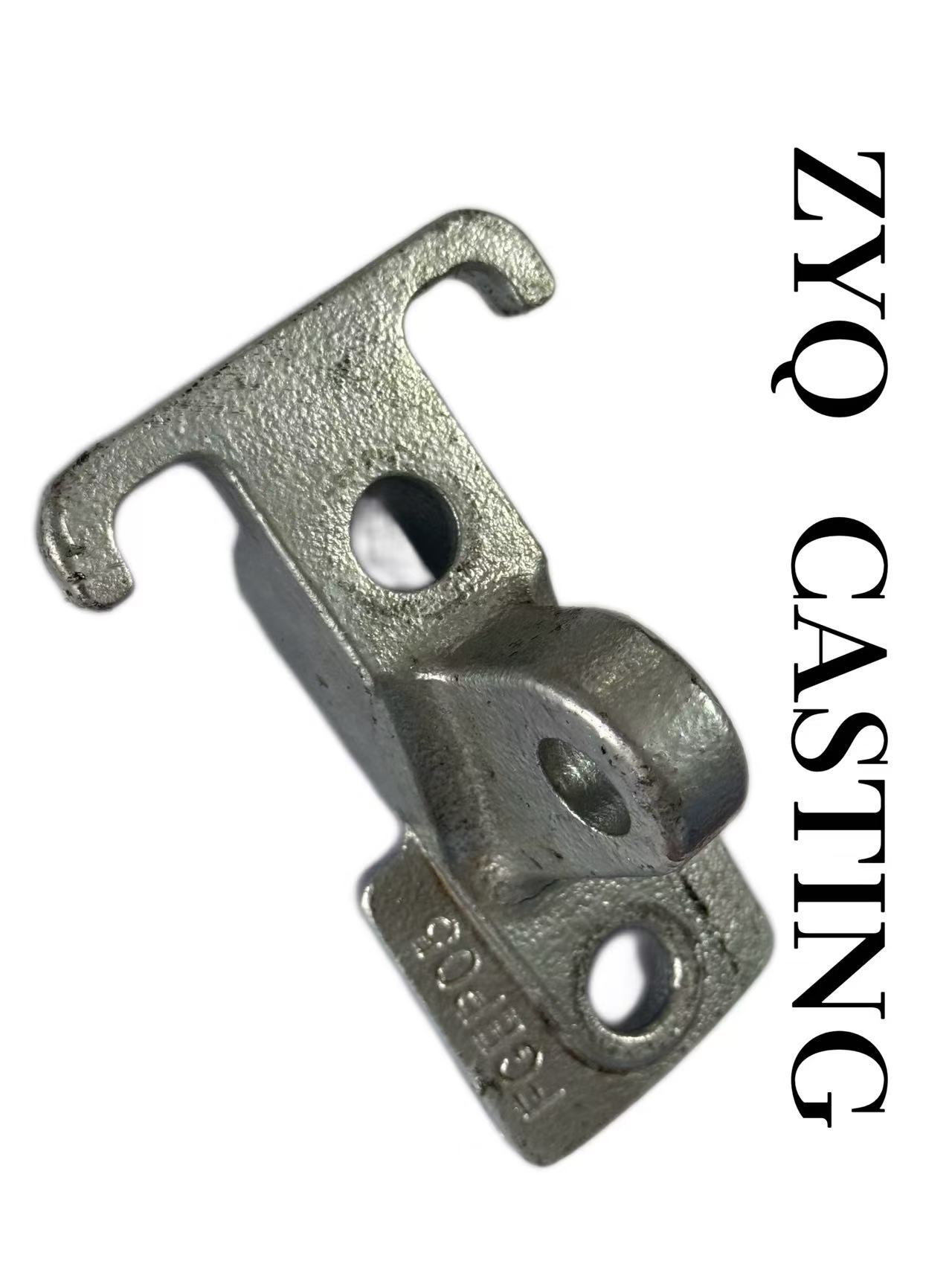
Most shops inherit a blanket block tolerance and never question it, so every feature gets the same plus/minus whether it matters or not. That wastes time and forces machinists to chase numbers that have no functional purpose. Instead, pull apart the assembly and mark only the surfaces that actually locate, seal, or transmit load as tight. Let clearance holes, cosmetic edges, and non-mating pockets open up to ±0.010 or more. Use GD&T position and profile callouts tied to realistic datums rather than stacking linear tolerances between hole centers, and you will spend far less time fighting setups that are tighter than they need to be.
A tight tolerance on paper means nothing if the part moves during the cut. Tool pressure, clamping distortion, and thermal drift can eat a ±0.0005 allowance before the spindle even warms up. Keep critical features in one clamping whenever you can, and if you must flip the part, locate off machined datums from the first operation, not raw cast or saw-cut surfaces. Beef up fixture rigidity and use balanced cutting parameters so the tool is not pushing the workpiece around. A quick check with an indicator before finishing passes will show whether the setup is actually repeating to the tolerance you need.
Check what you claim to hold. The tolerance band should dictate the measurement tool, not the other way around. Calipers will not reliably verify a ±0.001 bore position, and a CMM is overkill for a bracket slot with ±0.015. Match the gauge to the feature: bore micrometers, air spindles, functional go/no-go fixtures, or a simple indicator sweep depending on the geometry. If a dimension is truly critical, run a short capability check on your fixture and machine before production, and record the actual measured range. That way you know the tolerance holds up in your setup, not just in the CAD model.
No Middlemen, No Mystery: Just Our Name on the Casting
When you turn over a part and see our name etched into the metal, that's the whole story. There's no broker passing the work around, no anonymous shop floor halfway across the globe, no chain of custody that leaves you guessing who actually poured the iron. We cut the pattern, mix the alloy, pour the mold, and knock off the sand ourselves. The hand that finishes the surface is the same one that signs the inspection sheet.
That kind of directness changes how you buy castings. You're not negotiating with a sales rep who has to call a factory that might subcontract to another factory. You're talking to the person who will set the cores in the drag that morning. If a dimension drifts, we adjust the pattern before lunch. If you need a rush order, we can look you in the eye and tell you honestly whether it's possible, because the whole process lives under one roof.
So the name on the casting isn't a brand slogan or a layer of marketing. It's a receipt. It says: these are our mistakes to make, our standards to meet, and our reputation to answer for. No middlemen to blur the responsibility. No mystery about where your parts come from. Just us, standing behind every pour.
From CAD to Casting: The Steps We Never Skip
The path from a clean CAD model to a solid casting is rarely a straight line, and the places where it can go wrong are almost always the same. Before any pattern is cut, we go through the model wall by wall, hunting for abrupt section changes, hidden undercuts, or a draft angle that looks fine on screen but will fight the mold during extraction. These small corrections at the design stage cost minutes; finding them after the first pour costs days and a scrapped part.
Once the geometry passes that first pass, the focus shifts to how the metal will actually move and freeze. We build the gating and riser layout around the specific alloy, not a generic template, and then run solidification simulations until the shrinkage and gas porosity predictions sit in the scrap sections rather than the critical surfaces. If the simulation shows a hot spot near a boss or flange, we adjust the riser contact or add a chill instead of handing it over and hoping the foundry works it out on the floor.
The last set of non-negotiables happens after the pour. The first casting from every pattern isn't just visually inspected—it goes through dimensional checks against the CAD file, and depending on the part's end use, dye penetrant or radiographic testing. Those results get compared with the simulation predictions, and any mismatch triggers a change to the process before the next melt. Skipping that feedback loop might save a few hours on a rush order, but it always comes back as a field failure or a customer complaint.
Surface Quality You Can Feel Before Polishing
Raw cast surfaces often get dismissed as unfinished, but here they carry a deliberate tactile story. Run your fingertips across the grain before any abrasive touches it — the subtle ripples and micro-undulations aren't defects; they’re evidence of controlled flow and cooling. This is the kind of surface that tells you the toolpath was tuned, the feed rates were listened to, and the material behaved exactly as intended.
What you feel is a consistent tooth, not random roughness. The peaks and valleys sit within a predictable band, which means sanding starts from a known baseline instead of chasing irregularities. It also hints at how the part will respond to primer or powder: less hidden porosity, fewer surprises after the first coat. In practice, this pre-polish texture saves hours of rework because the foundation is already honest.
There’s a quiet confidence in touching a part that hasn’t been dressed up yet. It doesn’t need gloss to prove its dimensional accuracy or material integrity. The surface is a fingerprint of the process — readable, repeatable, and ready for whatever finish comes next.
Small Orders Welcome, Big Standards Fixed
Minimum order quantities usually exist to protect the supplier, not the customer. We've taken a different route: small runs are accepted without a penalty or a second-tier process. That matters when you're testing a new design, filling a niche market, or simply not ready to warehouse a year's worth of product.
What doesn't change is the inspection logic. Each order, whether it's a single sample or a container load, moves through the same checkpoints—material checks, tolerance verification, finish review. A flaw that would stop a large batch also stops a small one.
So the promise isn't "cheap because it's small." It's that you can order exactly what you need and still receive work that meets the same fixed standard we hold for every order. No tiered quality, no quiet downgrades.
FAQ
We melt and pour every batch in our own facility, so you're not paying a middleman and you can trace the exact heat lot back to the furnace.
304 and 316 are the workhorses, but we regularly pour 17-4 PH, 2205 duplex, and heat-resistant grades like 310 for tougher jobs.
Yes. We start with wax or 3D printed patterns for one-off prototypes, then move to high-volume tooling once the design is locked.
Typically ±0.5% of a dimension or better, depending on geometry. We also offer secondary machining if your drawing calls for tighter control.
Every heat is spectro-tested, and we can add X-ray, dye penetrant, or pressure testing based on the part's end use. Reports ship with the order.
Tooling usually takes 2 to 4 weeks, and first articles ship within 3 to 5 weeks after approval. Repeat orders run faster.
We offer shot blasting, pickling, passivation, electropolishing, and basic machining so the part arrives closer to ready-to-use.
Direct communication with our engineers, full control over the melt, and no markup on outsourced castings. If a defect ever appears, we fix the root cause in-house.
Conclusion
When you place an order for stainless steel castings with us, the first thing that happens is not paperwork—it’s a melt schedule. We control the alloy from the moment the scrap and virgin metal go into the furnace, adjusting carbon, chromium, nickel, and molybdenum levels to match your exact grade, not just the nearest off-the-shelf mix. That focus carries through every step from your CAD file onward. We build the gating and risering in-house, simulate solidification before we ever cut a mold, and inspect each pattern for shrinkage or distortion. There are no outside vendors doing the critical work, and no trading company putting their logo on parts we poured. Our name goes on the casting because our people made it, from the first heat to the final blast.
That same direct control shows up in the tolerances you need for your machining setup. We hold flatness, hole position, and wall thickness to numbers that actually work on a CNC fixture, not just on a drawing. You can feel the difference before polishing—our shell removal and shot blasting leave a clean, uniform surface without burn-on or veining, so you spend less time hand-finishing. And if your order is twenty pieces instead of two thousand, the standards don't drop. Small runs get the same alloy certification, the same dimensional report, and the same quiet confidence that comes from working with a foundry that hasn't outsourced its own name.
Contact Us
Contact Person: Nico Yin
Email: [email protected]
Tel/WhatsApp: 8618561567088
Website: https://www.ductileironparts.com/