

Top 10 Innomotics Motors Company Innovations Transforming Industries
2026-10-01
Industrial motors rarely make headlines, yet Innomotics is quietly reshaping entire sectors with breakthroughs that go far beyond rotation. From AI-driven predictive maintenance to energy recovery systems that turn factories into power plants, the company's top ten innovations are rewriting what's possible on the factory floor. At Chuangjuman, we've tracked these shifts closely—because the next decade of manufacturing won't be won by horsepower alone, but by intelligence baked into every shaft and stator. Here's a look at the ideas poised to transform how the world makes, moves, and manages energy.
Your Motor Can Now Warn You Before It Fails
Motors have traditionally given little notice before breaking down, leaving maintenance teams to react after the damage is already done. That is starting to change. By embedding compact sensors and lightweight analysis tools directly into the motor housing, you can now catch the early signs of wear long before a failure interrupts your operation. The shift is less about adding complexity and more about giving the machine a way to speak up while there is still time to act.
The warning signs are often subtle: a slight change in vibration, a gradual rise in winding temperature, or an uneven current draw that comes and goes. On their own, these readings might not mean much. Compared against weeks of normal operating data, however, they form a clear pattern of decline. When the motor detects that pattern, it can send a simple alert describing what is likely wrong and how urgently it needs attention.
That early notice changes the maintenance conversation. Instead of scheduling an emergency shutdown or waiting for a spare part to arrive, your team can plan a short service window, swap a bearing, or rebalance a load before the problem spreads. The motor keeps running, the repair bill stays lower, and the production line avoids the kind of surprise that used to turn a small fault into a major outage.
IE5 Efficiency That Pays for Itself in Months
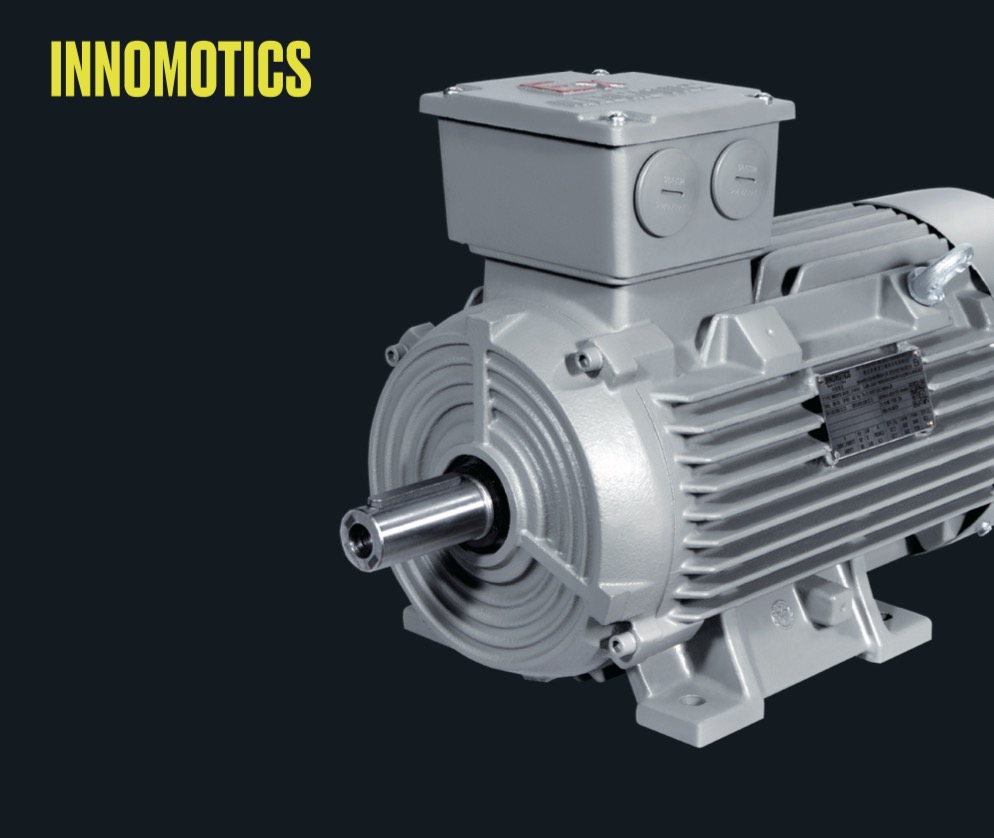
Most industrial motors run far more hours than you'd think, and that's exactly where IE5 starts to quietly tilt the numbers in your favor. Even a modest efficiency gain turns into real money when a motor spins for six or seven thousand hours a year. In many continuous-duty applications, the premium you pay for an IE5 unit disappears within a few billing cycles—not years.
Take a 30 kW motor running two shifts a day. Swapping the old IE3 for IE5 might shave a few percentage points off energy losses. That sounds tiny until you multiply it by your electricity rate and annual runtime. Frequently, the extra upfront cost is recovered in four to nine months, depending on local tariffs. After that, the savings keep stacking up every single month.
Efficiency isn't just about the electric bill. Cooler running means less thermal stress on windings and bearings, so the motor tends to last longer and require fewer unscheduled repairs. Fewer interruptions and lower maintenance labor add another layer of payback that isn't always captured in a simple ROI formula. When all of that is considered, the switch to IE5 often pays for itself faster than a spreadsheet predicts.
A Modular Drive That Ships Assembled and Ready
Most modular drives arrive as a box of parts and a prayer. This one doesn't. Every unit leaves the line fully assembled, pre-aligned, and tested under load, so the first time it spins up on your floor is the first time it's ever been powered down. There's no shimming, no coupling guesswork, and no late-night call to support about a missing bolt.
Because the drive ships as a single sealed module, mounting it is closer to installing an appliance than building a machine. The housing is pre-wired, connectors only fit one way, and the output shaft is locked in place until you remove the transport bracket. Maintenance crews can swap a unit in under an hour without special tooling or a rigging crew.
The assembled design also removes the usual tolerance stacking that happens when components come from different suppliers and meet for the first time on site. Bearings, gear set, and motor are mated at the factory and run through a full break-in cycle. That means the drive you receive is already past infant mortality, which is why the warranty starts at installation, not at first power-up.
Sealed Tight for the Dirtiest Jobs on Earth
A proper seal isn't a luxury once the work site turns into a soup of clay, manure, or metal shavings. This closure holds against gritty slurry, standing water, and airborne fines that chew through ordinary gaskets. You can drop it, drag it, or leave it half-buried overnight, and the interior stays bone-dry.
The difference comes down to how the lip and channel mate under pressure. Instead of relying on a single thin O-ring, the face compresses a broad, oil-resistant gasket along three axes. That means no thin spots, no wiggle room for dust to sneak past, and no sticky residue when you finally pop it open for cleaning.
In practice, that translates to fewer tear-downs, longer life for whatever is inside, and one less thing to curse at when the weather turns. Dirty jobs already demand enough from you; the seal should be the part you never have to think about.
Old Factories Get a Digital Brain Without Replacing Motors
Many plants still run on motors that have been in service for decades, and ripping them out for newer models is rarely an option. The smarter move involves clamping compact sensor packs onto existing motor housings and feeding the signals into edge devices that learn normal operating patterns within days. From there, anomalies in vibration, current draw, and heat become visible long before a bearing fails.
What makes this approach practical is that the original motor, starter, and cabling stay exactly where they are. Instead of rewiring the plant floor or scheduling a costly shutdown, maintenance teams attach non-invasive current transformers and wireless vibration sensors. The digital brain then builds a baseline for each asset and flags drift that hints at misalignment, phase imbalance, or lubrication breakdown.
The payoff shows up in fewer surprise outages and longer intervals between manual inspections. One food processing line, for example, spotted a subtle increase in high-frequency vibration on a mixer motor and caught a failing bearing during a planned sanitation window. No motor was replaced, no production was lost, and the old workhorse kept running with a sharper sense of its own health.
Hushed Power for Hospitals, Brutal Strength for Mines
Hospital corridors demand near silence, yet every machine must answer without hesitation. The generator's acoustic shell swallows noise down to a library murmur while its sensors track voltage drift across neonatal wings and imaging suites. Maintenance crews no longer schedule around patient rest—the unit hums through overnight outages with only a faint LED pulse revealing its labor.
Shift that same engineering mindset to a copper drift, and the priorities invert. Dust-choked intake screens, vibration from blasting, and a 24-hour production clock punish anything built soft. The reinforced frame shrugs off stray rock, coolant loops run hot without cavitation, and torque arrives in a flat, tireless band that keeps ventilation fans spinning long after the temperature gauge redlines.
What separates the two is less about horsepower than intention. One design cloaks its output in insulation and smart throttling; the other sheds weight for heat sinks and impact plating. Yet both rely on the same core discipline: predictable failure modes, overspec'd bearings, and wiring harnesses routed so a single chafed cable never takes a ward or a haulage drift offline.
FAQ
Their motors use advanced magnetic materials and streamlined cooling channels, cutting energy losses by up to 20% compared to conventional designs. This directly lowers operating costs in cement plants and mining operations where motors run nonstop.
They embed smart sensors and edge analytics directly into the motor housing. Operators get real-time torque and vibration data without retrofitting separate monitoring systems, which simplifies predictive maintenance.
The company's retrofit kits add variable frequency drive compatibility to older fixed-speed motors. This allows a plant to modulate speed based on load, trimming energy use by double-digit percentages.
Their sealed bearing systems and corrosion-resistant coatings are engineered for extreme dust, moisture, and chemical exposure. This extends service intervals in wastewater treatment and offshore platforms, where unplanned downtime is costly.
Each motor gets a virtual counterpart that simulates thermal stress and load cycles before physical production. Engineers adjust rotor balance and insulation thickness in the digital model, reducing prototype iterations.
They design motors with spark-resistant enclosures and specialized cooling to handle hydrogen's lower ignition energy. This makes them safe for use in electrolyzers and hydrogen compression stations.
Their drives feature adaptive pressure control that automatically matches pump speed to real-time demand. Municipal water systems using this technology report significant energy savings and fewer pipe bursts.
Conclusion
Innomotics motors are turning industrial downtime from a guessing game into a scheduled event. The first breakthrough lets a motor flag its own wear patterns long before a bearing seizes, so maintenance teams swap parts during planned breaks instead of midnight scrambles. Pair that with IE5 efficiency levels, and the energy savings arrive fast enough that the hardware often pays for itself within a few billing cycles—not decades. The modular drive concept then removes the usual assembly headache: it ships as one prebuilt unit that slashes installation time and wiring errors on the factory floor.
For environments that eat standard equipment alive, the sealed motor enclosures shrug off dust, moisture, and abrasive grit, keeping mines and cement plants running without constant tear-downs. But the most surprising shift might be the digital retrofit layer. Older factories can bolt on a smart monitoring brain without replacing every motor, turning analog workhorses into data-generating assets. And across the noise spectrum, Innomotics manages both extremes—near-silent operation for hospital ventilation and relentless torque for underground crushers, all from the same design philosophy.
Contact Us
Contact Person: Jony
Email: [email protected]
Tel/WhatsApp: 086-0571-86161808
Website: https://en.hzcjm.com/