

Top 10 Oil-Injected Air Compressors for Reliable Industrial Performance
2026-08-07
In the demanding world of industrial operations, reliable compressed air isn't just a convenience—it's the backbone of productivity. Oil-injected air compressors remain the go-to choice for countless facilities, balancing efficiency, durability, and consistent performance. But with so many models on the market, how do you separate the workhorses from the also-rans? In this guide, we spotlight the top 10 oil-injected air compressors that are redefining industrial reliability, including standout solutions from Seize Air. Whether you're upgrading aging equipment or building a new system from the ground up, these picks promise to keep your operations running smoothly—with a few surprises along the way.
Why Oil-Injected Might Be Your Shop’s Missing Piece
Most shops settle into a groove with their equipment, running the same compressors for years without realizing there might be a smarter fit. An oil-injected rotary screw compressor often sits just outside that comfort zone—familiar in bigger facilities but overlooked in smaller operations. These machines bring a steady, reliable air supply without the noise and heat spikes of piston units, making them a quiet workhorse that doesn’t demand constant attention.
The real advantage hides in the run time. Oil-injected screws are built to handle continuous duty cycles with ease, meaning they don’t gasp for breath during heavy production days. The internal oil bath does more than just lubricate—it seals clearances and whisks away heat, so the compressor hums along cooler and tighter than dry alternatives. This translates into fewer breakdowns and a lifespan that outlasts the typical shop compressor, which adds up to real savings over time, not just on repairs but in energy consumption too.
Shops hanging onto older reciprocating units often don’t notice the slow creep of inefficiency until production stalls or air quality suffers. Adding an oil-injected unit can reshape how your team works—quieter mornings, consistent tool performance, and less time babysitting pressure levels. It’s not about chasing the newest thing; it’s about filling a gap you might not have known was there until the demand quietly outgrew your setup.
Three Metrics That Reveal a Compressor’s True Grit
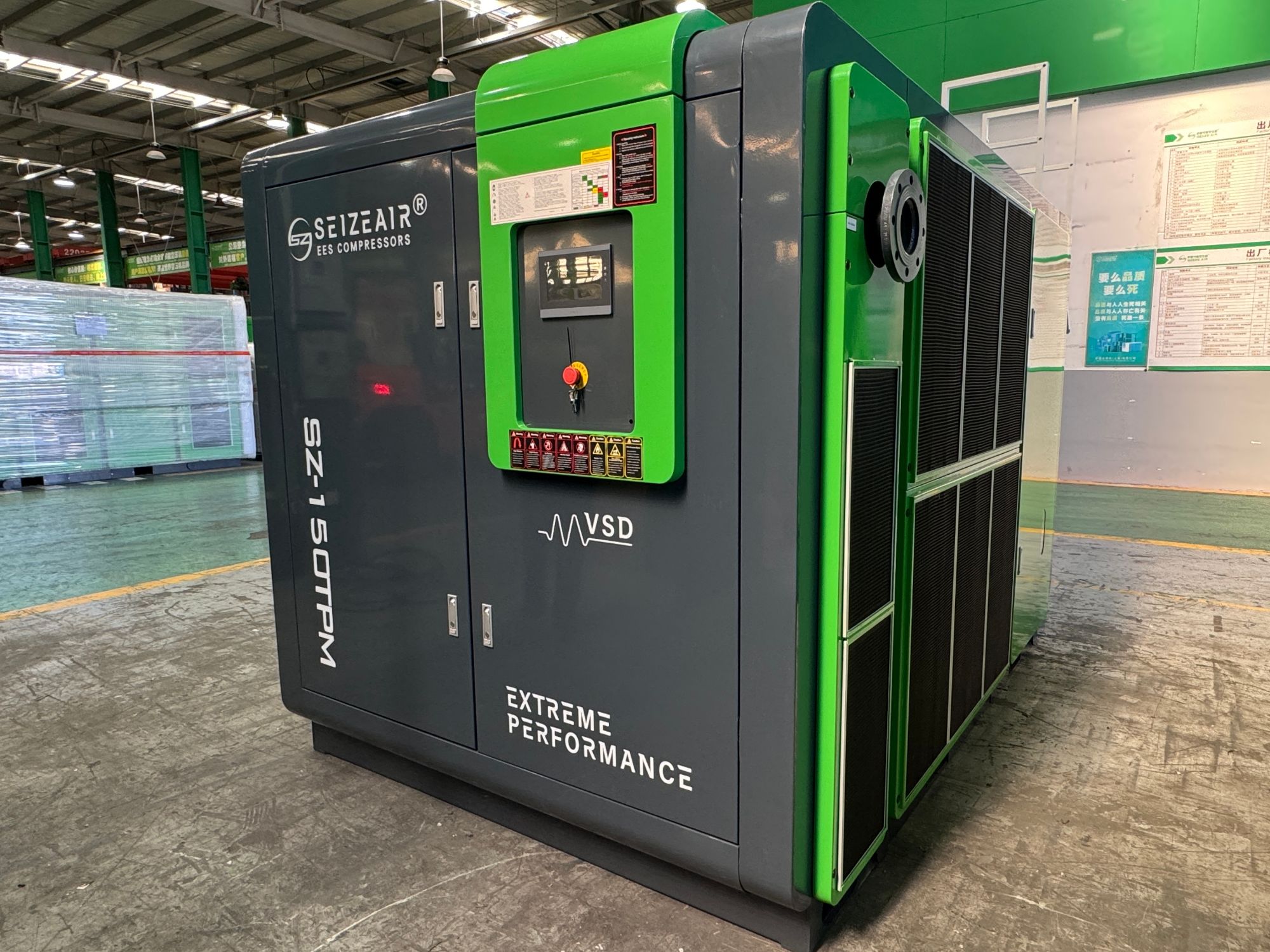
It’s easy to get lost in glossy spec sheets when shopping for an air compressor. But horsepower ratings and tank size only scratch the surface. If you want to know whether a machine can actually handle your workload day after day, you need to dig into three less glamorous numbers: shift factor, specific power, and unloaded runtime percentage. These metrics don’t make it into the marketing brochures, but they expose how a compressor behaves when the excitement of the unboxing is long gone.
Shift factor tells you how much the compressor is actually working during a given shift. A machine that cycles on and off at idle may look efficient on paper, but frequent starts can chew through motors and contactors. A high shift factor—closer to 100%—means the unit is delivering air when you need it, not just spinning its wheels. It’s the difference between a tool that’s ready to go and one that’s constantly catching its breath.
Then there’s specific power, which measures how many kilowatts it takes to produce each cubic foot of air. This is where the real operating cost hides. Two compressors with identical horsepower can have wildly different specific power numbers due to internal losses, poor screw profiles, or cheap bearings. And don’t overlook unloaded runtime—the minutes the machine spends running without producing air. Excessive unloaded hours are a red flag for oversizing or poor system design, slowly bleeding your budget through wasted electricity. Together, these three metrics separate the workhorses from the show ponies.
Maintenance Habits That Double Your Unit’s Lifespan
Most people only think about their unit when it stops working. But the real secret to longevity is paying attention before problems start. A simple monthly visual check can catch small issues—like debris buildup or unusual wear—before they turn into expensive failures. It’s not about being a technician; it’s about spotting changes early and addressing them immediately.
Beyond spotting problems, consistency in routine care pays off immensely. Cleaning or replacing filters, keeping coils free of dirt, and ensuring proper airflow aren’t glamorous tasks, but they’re the foundation of efficiency. When these basics are neglected, the unit has to work harder, generating excess heat and stress that silently shorten its life. The difference between a unit lasting 7 years and 15 years often comes down to these monotonous habits.
Another overlooked aspect is the operating environment. Simple adjustments like providing shade for outdoor components, maintaining clearance around them, and even controlling indoor humidity can dramatically reduce the load. It’s not just about the unit itself; it’s about the system it operates in. Think of it as reducing friction in the entire process—less strain means less breakdown, and that directly translates to nearly double the lifespan.
The Dirty Truth About Air Purity and Oil Carryover
Most people assume that compressed air is clean, but the reality is far from it. Every time a compressor runs, it draws in atmospheric air loaded with moisture, dust, and even microscopic pollutants. During compression, these contaminants get concentrated, and to make matters worse, the compressor itself adds lubricating oil into the mix. This invisible cocktail then travels through the entire air system, silently coating pipes, valves, and eventually the end product with a thin film of grime.
Oil carryover isn't just an aesthetic issue—it can ruin sensitive equipment, contaminate food and pharmaceutical batches, and lead to costly downtime. Even tiny oil aerosols, measured in parts per million, can wreak havoc over time. They clog pneumatic controls, leave residues on packaging, and create slippery surfaces. Yet many users are completely unaware of how much oil is actually slipping through their filters, because standard measurements often don't capture the whole picture.
The dirty truth is that achieving true air purity requires more than a basic coalescing filter. Temperature shifts, aging compressor oil, and fluctuating demand all affect oil carryover rates, sometimes doubling them overnight. Without continuous monitoring or rigorous maintenance, your "clean" compressed air is likely anything but. Unless you're actively measuring and taking steps to control it, that sleek air system is probably delivering a steady stream of contamination right where it hurts the most.
When a Rotary Screw Beats a Piston Hands Down
A rotary screw compressor truly shines when your operation demands continuous, high-volume airflow without the jarring starts and stops of piston units. In settings where air tools run for hours on end—think manufacturing lines or busy auto shops—the screw's seamless cycle keeps pressure steady and heat buildup low. Unlike pistons that can struggle with thermal stress during marathon sessions, the helical rotors just keep spinning, delivering a consistent stream of compressed air with far less internal wear.
Efficiency becomes the tiebreaker when energy bills start climbing. Rotary screws pack more air per unit of power, especially at full load, and they waste less energy on friction and vibration. Piston compressors might hold their own for intermittent duty—filling a tire here, powering a nail gun there—but in a race to run a sandblaster or CNC machinery nonstop, the screw runs away with it. The difference shows up not just in cooler operation but in real savings on electricity, month after month.
There's also the matter of sound and footprint. On a busy shop floor, the muffled thrum of a rotary screw is a welcome alternative to the hammering clatter of a piston. Plus, screw compressors often integrate better into tight spaces, with many units designed to tuck under workbenches or mount on walls. When the job calls for clean, quiet, and relentless output, it's hard to argue with the screw's dominance—it's simply the right tool for a different grade of demand.
How to Spot a Compressor Engineered for Non-Stop Duty
The first giveaway is often the frame and bearing design. Compressors built for 24/7 operation tend to have oversized, heavy-duty bearings and stiff shaft assemblies that minimize deflection under constant load. Cast iron or ductile iron housings are common, providing both mass and vibration damping. Look for service-friendly features like split housing designs that let you replace bearings without a full teardown—a clear sign the unit was made to stay online with minimal downtime.
Cooling is another telltale. Machines designed for continuous duty rarely rely solely on ambient airflow. Instead, you’ll see integrated cooling fins, oil jackets, or external coolers that keep temperatures in check during marathon runs. Pay attention to the valve design too. High-end non-stop compressors use ring-type or reed valves with advanced profiles that resist fatigue and sticking. These valves often sit in easily accessible pockets, letting technicians swap them out fast during a brief shutdown window.
Motor size and duty rating deserve attention. A continuous-duty compressor won’t have a “max run time” spec; its motor nameplate will state “continuous” or S1 rating. Crankcase capacity is another subtle clue—larger sumps hold more oil and can tolerate longer change intervals. Finally, look for protective controls like automatic drain systems, low-oil shutdowns, and temperature sensors. These aren’t just safety nets; they’re built-in intelligence that helps the compressor run unattended for entire shifts without a babysitter.
FAQ
Oil-injected designs typically deliver greater durability and can handle higher duty cycles because the oil provides continuous cooling and sealing. Many industries choose them for 24/7 operation where reliability trumps the absolute purity of compressed air.
For non-stop, heavy workloads, rotary screw compressors with robust oil injection systems tend to shine. Look for models renowned for high CFM output and oversized coolers — something like the Kaeser SFC series or Atlas Copco GA models often appear at the top of reliability-focused lists.
Daily checks on oil level, temperature, and condensate drains keep serious issues at bay, while full service (oil, filters, separators) usually runs every 2,000 to 4,000 hours. Sticking to that schedule prevents most sudden breakdowns.
If the receiver tank is sized correctly and the compressor’s output (CFM) matches the total tool demand, you can run multiple tools smoothly. It’s all about matching the compressor’s capacity to the combined need rather than just counting tools.
People often overlook the importance of duty cycle. Even top-brand compressors have limits; running a compressor meant for 60% duty cycle continuously will kill it early, no matter how good the build quality is.
There’s genuine efficiency in modern variable speed drive (VSD) models. They match motor speed to air demand, often cutting energy use by 30% or more compared to fixed-speed units. It’s a real saving, not just a gimmick.
With consistent maintenance, a well-built oil-injected compressor can run 10 to 15 years or more before needing major work like bearing or airend replacement. Some even surpass 20 years in light industrial settings.
Conclusion
Oil-injected air compressors have become indispensable workhorses in countless industrial settings, providing the reliable compressed air that keeps production lines moving. For many shops, the missing piece to achieving consistent performance is a well-chosen oil-injected unit that balances power with efficiency. When evaluating options, it’s essential to look beyond the spec sheet and focus on three revealing metrics: actual free air delivery, specific energy consumption, and the duty cycle rating. These numbers tell you more about a compressor’s true grit than any marketing claim. But even the best machine won’t last if maintenance is ignored. Simple habits—like monitoring oil levels, changing filters on schedule, and inspecting for leaks—can easily double the lifespan of your unit, turning it from a short-term expense into a long-term asset.
The dirty truth is that air purity and oil carryover can make or break your downstream processes, so it’s critical to select a compressor with effective separation technology. In many applications, a rotary screw compressor decisively beats a piston model, especially when continuous duty is the norm. Spotting a compressor engineered for non-stop operation means checking for a true 100% duty cycle, robust cooling systems, and high-quality components designed to run around the clock. The top 10 oil-injected air compressors on the market today excel in these areas, delivering the reliable industrial performance that modern operations demand—without compromising on air quality or durability.
Contact Us
Contact Person: Mia
Email: [email protected]
Tel/WhatsApp: +86 19821985894
Website: https://www.seize-air.com