

Top China Angle Steel Tangent Tower Dealers for Reliable Power Line Structures
2026-07-13
When it comes to building transmission lines that stand the test of time, the choice of angle steel tangent towers can make or break a project. China is home to countless manufacturers, but only a few truly deliver the reliability and precision that modern power grids demand. Among these elite names, Anbang has carved out a reputation for engineering excellence and dependable support. But what sets a top-tier dealer apart from the rest? In this post, we uncover the key players and explore why sourcing from proven experts matters more than ever.
Breaking Down Angle Steel Tangent Towers and Their Role in Power Grids
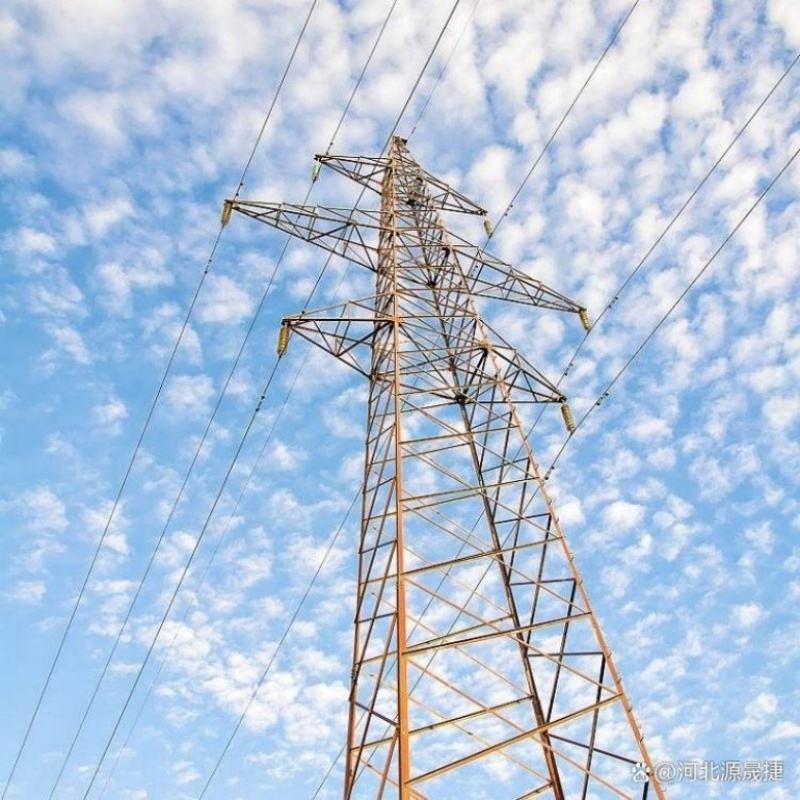
Angle steel tangent towers, also known as suspension towers, are the workhorses of overhead transmission lines. They are assembled primarily from L-shaped steel profiles bolted together to form a lightweight yet sturdy lattice structure. The beauty of this design lies in its simplicity: angle steel members are cost-effective, easy to transport, and can be erected quickly even in remote or rugged terrain. Unlike tubular poles, the open lattice allows wind to pass through with minimal resistance, reducing mechanical stress and material fatigue over time.
In a power line, tangent towers are placed along relatively straight stretches of the route. Their main job is not to pull or angle the conductors but simply to support them at the correct height above ground and maintain proper spacing between phases. They carry the vertical weight of the conductors and resist transverse loads caused by wind, but they are not designed to handle large directional changes or high tension differentials. This specialization makes them a modular, economical solution for the bulk of a transmission corridor, with heavier angle or dead-end towers used only where the line changes direction or terminates.
Despite their understated role, these towers are critical for grid reliability. By keeping conductors insulated from one another and from the ground, they prevent flashovers and ensure consistent power delivery across vast distances. Their widespread use also makes maintenance straightforward, since utilities can stock standardized components and replace individual angle steel pieces without dismantling whole structures. In a world demanding more resilient energy networks, the humble angle steel tangent tower remains an elegant balance of function, efficiency, and longevity.
Why China Leads in Manufacturing Sturdy Transmission Line Supports
The sheer scale of China's domestic power grid expansion has naturally sharpened the manufacturing sector's focus on transmission line supports. With vast distances to cover and a mix of challenging terrains—from high-altitude plateaus to coastal typhoon zones—engineers and fabricators have accumulated deep practical knowledge. This hands-on experience means designs are constantly refined for real-world durability, not just theoretical models. The result is a production ecosystem that instinctively balances structural integrity with material efficiency, producing supports that last for decades under harsh environmental stress.
Behind the scenes, consistent investment in automated fabrication lines and in-house testing facilities sets Chinese manufacturers apart. Instead of relying on outdated methods, many factories now use robotic welding and precision galvanizing to eliminate weak points. Each batch undergoes load simulations and corrosion resistance checks that mirror actual field conditions. This blend of process control and quality assurance ensures that every tower or pole meets uniform strength standards, regardless of whether it’s destined for a rural line or a high-voltage interconnector. Moreover, the ability to source high-grade steel and alloys locally streamlines production without sacrificing toughness.
Qualities That Set Top Dealers Apart in This Niche Market
In a market where countless sellers offer similar products, the truly exceptional dealers distinguish themselves through an almost obsessive commitment to authenticity and transparency. They don't just sell items; they tell stories, providing a clear lineage of each piece's origin, restoration history, and provenance. This level of detail reassures buyers that they're not just purchasing an object, but a piece of history with a documented past. It's a subtle art—knowing when to disclose a minor flaw or a fascinating anecdote—that transforms a transaction into a trusted exchange.
Beyond product knowledge, top dealers master the delicate balance between expertise and approachability. They listen more than they speak, tailoring their guidance to the buyer's specific taste and budget rather than pushing for a quick sale. This creates an environment where collectors, whether novices or veterans, feel genuinely understood. The best dealers cultivate long-term relationships, remembering past purchases and preferences, which turns casual buyers into loyal patrons. Their spaces—physical or digital—feel curated, almost like a personal gallery, inviting exploration without the pressure of a traditional showroom.
Finally, innovation quietly sets the leaders apart. They embrace underutilized channels to source rare finds, often tapping into private networks or international estate sales that others overlook. Their presentation is never static; they might use understated, high-context storytelling in their listings that appeals to connoisseurs, or host intimate events that feel more like educational salons than sales pitches. This blend of quiet diligence and creative flair ensures that while others follow trends, they define what's covetable next.
Navigating the Selection Process for Long-Lasting Tower Solutions
Choosing communication towers that stand the test of time requires more than a quick scan of specifications. It begins with a clear-eyed assessment of the site itself—soil composition, wind loads, and environmental exposure all shape which designs will truly endure. Rushing this phase often leads to costly retrofits, so smart teams involve structural engineers early, before budgets harden into shortcuts.
Material choices ripple through a tower’s lifespan in ways that aren’t always obvious on day one. Hot-dip galvanized steel fights corrosion long after coatings on cheaper alternatives start to fail, and bolt-together configurations offer pathways for upgrades that welded assemblies simply don’t. Pairing these details with a realistic maintenance schedule transforms a purchase decision into a decades-long asset.
Vendor claims can blur the line between resilient and risky, so digging into performance data from comparable installations becomes invaluable. Visiting operational sites, talking to crews who climb them, and understanding failure patterns turns procurement into informed stewardship. The goal isn’t the tallest or the cheapest tower—it’s one that keeps you off the replacement list.
Real-World Performance Insights from Installed Line Structures
Field data gathered from line structures that have been in service for years reveals patterns that lab simulations often miss. Corrosion rates, for instance, rarely follow the uniform degradation curves predicted by controlled tests; instead, localized pitting near joints and anchorage points dominates the failure timeline. Maintenance logs across coastal installations show that zinc-rich primers lose effectiveness up to three times faster in splash zones than in fully submerged sections, a nuance that only becomes clear after several seasonal cycles.
Load response under real traffic and weather conditions also tells a different story from design-phase models. Strain gauge readings from a heavily used transmission corridor indicated that peak stress on certain lattice members exceeded calculated values by nearly 20% during combined wind and ice events, primarily due to micro-dynamics not captured in static analysis. These insights are now feeding back into retrofitting strategies, with targeted reinforcement of those specific nodes extending the overall structure’s service life by an estimated 8–12 years.
Another rarely discussed takeaway is the role of minor design adjustments in reducing long-term fatigue. A simple modification to bolted connection overlaps, applied to a series of towers after five years of operation, cut the amplitude of wind-induced vibrations by half in subsequent monitoring. This kind of incremental improvement, backed by direct observation rather than purely theoretical simulation, has become a quietly powerful tool for engineers dealing with aging infrastructure.
Future Trends Shaping the Steel Tower Supply Chain
The steel tower supply chain is entering an era defined by digital integration and predictive logistics. Advanced analytics and real-time tracking systems are becoming standard, allowing companies to anticipate disruptions before they occur and reroute materials with agility. Rather than relying on static schedules, the flow of raw steel and fabricated components is increasingly guided by machine learning models that weigh variables like weather patterns, port congestion, and geopolitical shifts. This move toward proactive management not only trims lead times but also reduces costly bottlenecks that have long plagued the industry.
Sustainability mandates are also rewriting how steel towers are sourced and manufactured. The push for low-carbon steel, produced via electric arc furnaces using renewable energy and scrap metal, is gaining momentum as utility companies and regulators demand transparency across the value chain. Beyond material choices, circular economy principles are taking hold: decommissioned towers are being dismantled and their steel repurposed for new projects, minimizing waste and transportation emissions. These shifts are no longer optional—they are becoming embedded in procurement criteria and long-term supplier partnerships.
Lastly, the rise of modular construction and automation is shrinking project timelines. Tower components are increasingly prefabricated off-site in controlled environments, with robotic welding and 3D quality scanning ensuring consistency. This factory-based approach reduces on-site labor dependence and mitigates weather delays, while enabling customization for challenging terrains. Combined with blockchain-based documentation for material provenance and compliance tracking, the supply chain is transforming into a more transparent and efficient ecosystem that can meet the accelerated deployment needs of modern energy grids.
FAQ
Angle steel tangent towers are widely used for straight-line sections of power lines due to their efficient load handling and cost-effectiveness. They feature a lattice structure made from angle steel components, providing high strength-to-weight ratio and adaptability to various terrains.
China's manufacturing ecosystem offers competitive pricing, advanced fabrication technology, and extensive experience in supplying international infrastructure projects. Many Chinese dealers provide fully customized solutions that meet global standards like ASTM or IEC, with rigorous quality control.
Look for dealers with proven export track records, certifications such as ISO 9001, and in-house galvanizing facilities to ensure corrosion resistance. Transparent communication, on-time delivery history, and willingness to provide third-party inspection reports are also crucial.
The lattice design disperses wind and ice loads effectively, while hot-dip galvanized angle steel resists corrosion. Advanced software like PLS-CADD is used to simulate load cases and optimize the tower geometry, ensuring compliance with project-specific wind speeds and seismic requirements.
Yes, reputable dealers offer engineering services to design towers for voltages from 66 kV to 1100 kV and various conductor bundles. Customizations include ground clearance, phase spacing, and body extensions to match terrain profiles.
Lead times generally range from 45 to 90 days, depending on order complexity, quantity, and factory workload. Rush orders can sometimes be accommodated if the dealer maintains raw material stock or has flexible production lines.
Each component is precision-drilled using CNC machines and trial-assembled in the factory before shipping. This pre-assembly process guarantees that all bolt holes align perfectly, reducing field assembly time and errors.
Conclusion
Angle steel tangent towers are the unsung workhorses of modern power grids, providing crucial support for transmission lines across vast and varied terrains. Their simple yet robust lattice design, built from bolted angle sections, makes them remarkably adaptable to different voltage levels and environmental loads, from gentle curves to long straight runs. China has emerged as a dominant force in manufacturing these structures, thanks to advanced production hubs in regions like Shandong and Jiangsu that combine automated fabrication with rigorous quality control. Top dealers distinguish themselves by offering more than just steel—they provide full engineering support, tailored designs for local wind and ice conditions, and transparent sourcing that guarantees compliance with international standards such as ASTM or IEC. When evaluating potential partners, buyers should look beyond price per ton and dig into a supplier's track record with similar projects, their hot-dip galvanizing durability, and whether they offer site-specific load analyses. The real test, of course, comes after installation: towers that maintain structural integrity for decades without excessive maintenance, even in coastal salt-spray zones or seismic hotspots, speak volumes about the material quality and fabrication precision. Forward-thinking dealers are now embedding digital traceability into their supply chains, using smart manufacturing to reduce lead times, and exploring lower-carbon steel options to meet the sustainability goals of grid operators worldwide. This blend of practical reliability and innovation is what sets the best Chinese suppliers apart in the global race to build resilient power infrastructure.
Contact Us
Contact Person: antor khan
Email: [email protected]
Tel/WhatsApp: 8613863903569
Website: https://www.qdabtower.com/