

Top Drill Rod Factory: Expert Insights on High-Performance Manufacturing Solutions
2025-12-23
In the competitive world of industrial manufacturing, the quest for precision and durability is paramount—nowhere more so than in the production of drill rods. Welcome to our blog, where we delve deep into the heart of top-tier manufacturing with expert insights from a leading factory. Today, we're sharing secrets behind high-performance solutions that transform demanding projects into seamless successes. At the forefront of this innovation is PULANKA, a name synonymous with cutting-edge engineering and reliability. What sets their approach apart in an industry often dominated by generic methods? As we uncover the strategies driving superior quality and efficiency, you'll discover why partnering with experts like PULANKA can be a game-changer for your operations. Get ready to explore the nuts and bolts of excellence that keep the world drilling forward.
Innovative Techniques in Drill Rod Production
The evolution of drill rod production has shifted significantly from traditional methods to sophisticated processes that emphasize material science and precision engineering. Innovations like high-frequency induction heating allow for controlled tempering, enhancing the rods' resistance to wear and fatigue in demanding environments such as mining or construction. Additionally, the integration of robotic assembly lines streamlines manufacturing, reducing human error while boosting output efficiency. These advancements not only improve performance but also extend the service life of drill rods, making them more cost-effective and reliable for heavy-duty applications.
Another groundbreaking technique involves the use of advanced coatings, such as diamond-like carbon or tungsten carbide overlays, applied through methods like physical vapor deposition. These coatings dramatically increase surface hardness and reduce friction, combating common issues like corrosion and abrasion. Coupled with computer-aided design simulations, manufacturers can now optimize rod geometry to distribute stress more evenly, minimizing breakage risks. This focus on surface treatments and structural design has led to drill rods that outperform conventional models, even under extreme pressure and temperature conditions.
Looking forward, the adoption of smart technologies like sensor-embedded rods is gaining traction, enabling real-time monitoring of conditions like temperature, vibration, and load during operation. This data-driven approach allows for predictive maintenance, alerting operators to potential failures before they occur, thereby reducing downtime and safety hazards. By combining these innovative techniques, the industry is not just enhancing product quality but also transforming how drill rods are utilized and maintained in the field.
Advanced Materials for Enhanced Durability
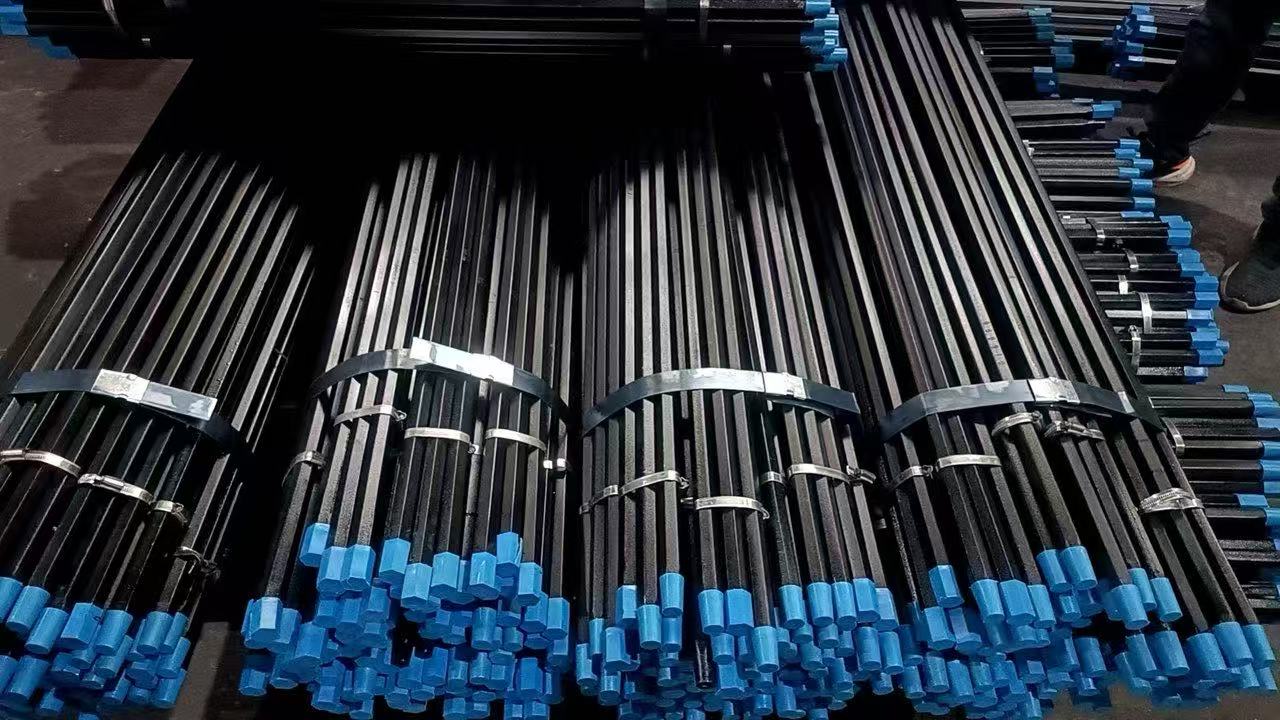
The evolution of drill rod production has shifted significantly from traditional methods to sophisticated processes that emphasize material science and precision engineering. Innovations like high-frequency induction heating allow for controlled tempering, enhancing the rods' resistance to wear and fatigue in demanding environments such as mining or construction. Additionally, the integration of robotic assembly lines streamlines manufacturing, reducing human error while boosting output efficiency. These advancements not only improve performance but also extend the service life of drill rods, making them more cost-effective and reliable for heavy-duty applications.
Another groundbreaking technique involves the use of advanced coatings, such as diamond-like carbon or tungsten carbide overlays, applied through methods like physical vapor deposition. These coatings dramatically increase surface hardness and reduce friction, combating common issues like corrosion and abrasion. Coupled with computer-aided design simulations, manufacturers can now optimize rod geometry to distribute stress more evenly, minimizing breakage risks. This focus on surface treatments and structural design has led to drill rods that outperform conventional models, even under extreme pressure and temperature conditions.
Looking forward, the adoption of smart technologies like sensor-embedded rods is gaining traction, enabling real-time monitoring of conditions like temperature, vibration, and load during operation. This data-driven approach allows for predictive maintenance, alerting operators to potential failures before they occur, thereby reducing downtime and safety hazards. By combining these innovative techniques, the industry is not just enhancing product quality but also transforming how drill rods are utilized and maintained in the field.
In the relentless pursuit of long-lasting performance, advanced materials are redefining what it means to be durable. Gone are the days when durability was simply about withstanding wear and tear; today, it encompasses resistance to extreme temperatures, corrosion, and even environmental stressors. Innovations in nanomaterials, self-healing polymers, and high-performance composites are pushing the boundaries, ensuring that products not only last longer but also maintain their integrity under harsh conditions. This shift is crucial across industries from aerospace to infrastructure, where every extra day of service translates to significant cost savings and enhanced safety.
What sets these materials apart isn't just their toughness, but their adaptability and smart functionality. For instance, shape-memory alloys can recover their original form after deformation, while advanced ceramics offer exceptional hardness and thermal stability without becoming brittle. By integrating these cutting-edge solutions, engineers can design components that proactively protect themselves against degradation, rather than merely reacting to it after damage occurs. This proactive approach minimizes maintenance needs and reduces lifecycle impacts, making durability an active quality rather than a passive attribute.
Ultimately, the evolution of advanced materials for enhanced durability is about more than just longevity—it's about sustainability and efficiency. Materials that resist degradation longer mean fewer replacements and less waste, aligning with global efforts toward circular economies. As research continues to unveil new possibilities, from bio-inspired designs to graphene-enhanced composites, the future promises materials that not only endure but also evolve, setting new standards for resilience in an ever-changing world.
Sustainable Practices in High-Performance Manufacturing
The evolution of drill rod production has shifted significantly from traditional methods to sophisticated processes that emphasize material science and precision engineering. Innovations like high-frequency induction heating allow for controlled tempering, enhancing the rods' resistance to wear and fatigue in demanding environments such as mining or construction. Additionally, the integration of robotic assembly lines streamlines manufacturing, reducing human error while boosting output efficiency. These advancements not only improve performance but also extend the service life of drill rods, making them more cost-effective and reliable for heavy-duty applications.
Another groundbreaking technique involves the use of advanced coatings, such as diamond-like carbon or tungsten carbide overlays, applied through methods like physical vapor deposition. These coatings dramatically increase surface hardness and reduce friction, combating common issues like corrosion and abrasion. Coupled with computer-aided design simulations, manufacturers can now optimize rod geometry to distribute stress more evenly, minimizing breakage risks. This focus on surface treatments and structural design has led to drill rods that outperform conventional models, even under extreme pressure and temperature conditions.
Looking forward, the adoption of smart technologies like sensor-embedded rods is gaining traction, enabling real-time monitoring of conditions like temperature, vibration, and load during operation. This data-driven approach allows for predictive maintenance, alerting operators to potential failures before they occur, thereby reducing downtime and safety hazards. By combining these innovative techniques, the industry is not just enhancing product quality but also transforming how drill rods are utilized and maintained in the field.
In the relentless pursuit of long-lasting performance, advanced materials are redefining what it means to be durable. Gone are the days when durability was simply about withstanding wear and tear; today, it encompasses resistance to extreme temperatures, corrosion, and even environmental stressors. Innovations in nanomaterials, self-healing polymers, and high-performance composites are pushing the boundaries, ensuring that products not only last longer but also maintain their integrity under harsh conditions. This shift is crucial across industries from aerospace to infrastructure, where every extra day of service translates to significant cost savings and enhanced safety.
What sets these materials apart isn't just their toughness, but their adaptability and smart functionality. For instance, shape-memory alloys can recover their original form after deformation, while advanced ceramics offer exceptional hardness and thermal stability without becoming brittle. By integrating these cutting-edge solutions, engineers can design components that proactively protect themselves against degradation, rather than merely reacting to it after damage occurs. This proactive approach minimizes maintenance needs and reduces lifecycle impacts, making durability an active quality rather than a passive attribute.
Ultimately, the evolution of advanced materials for enhanced durability is about more than just longevity—it's about sustainability and efficiency. Materials that resist degradation longer mean fewer replacements and less waste, aligning with global efforts toward circular economies. As research continues to unveil new possibilities, from bio-inspired designs to graphene-enhanced composites, the future promises materials that not only endure but also evolve, setting new standards for resilience in an ever-changing world.
High-performance manufacturing isn't just about speed and quality—it's increasingly about doing it right for the planet. More factories are adopting sustainable practices by reducing waste in every step, from raw materials to final products, and investing in energy-efficient machinery that slashes carbon emissions without compromising output.
Beyond the obvious environmental wins, these green initiatives often boost a company's bottom line. For instance, reusing water in cooling systems or recycling scrap metal not only minimizes resource consumption but also cuts operational costs, giving businesses a competitive edge while meeting stricter regulatory demands.
What really sets leaders apart is their holistic approach: they integrate sustainability into their core strategy, training employees to innovate in eco-friendly ways and collaborating with suppliers to ensure the entire supply chain aligns with green goals, turning sustainability from a buzzword into a tangible asset.
Customized Solutions for Diverse Industrial Applications
The evolution of drill rod production has shifted significantly from traditional methods to sophisticated processes that emphasize material science and precision engineering. Innovations like high-frequency induction heating allow for controlled tempering, enhancing the rods' resistance to wear and fatigue in demanding environments such as mining or construction. Additionally, the integration of robotic assembly lines streamlines manufacturing, reducing human error while boosting output efficiency. These advancements not only improve performance but also extend the service life of drill rods, making them more cost-effective and reliable for heavy-duty applications.
Another groundbreaking technique involves the use of advanced coatings, such as diamond-like carbon or tungsten carbide overlays, applied through methods like physical vapor deposition. These coatings dramatically increase surface hardness and reduce friction, combating common issues like corrosion and abrasion. Coupled with computer-aided design simulations, manufacturers can now optimize rod geometry to distribute stress more evenly, minimizing breakage risks. This focus on surface treatments and structural design has led to drill rods that outperform conventional models, even under extreme pressure and temperature conditions.
Looking forward, the adoption of smart technologies like sensor-embedded rods is gaining traction, enabling real-time monitoring of conditions like temperature, vibration, and load during operation. This data-driven approach allows for predictive maintenance, alerting operators to potential failures before they occur, thereby reducing downtime and safety hazards. By combining these innovative techniques, the industry is not just enhancing product quality but also transforming how drill rods are utilized and maintained in the field.
In the relentless pursuit of long-lasting performance, advanced materials are redefining what it means to be durable. Gone are the days when durability was simply about withstanding wear and tear; today, it encompasses resistance to extreme temperatures, corrosion, and even environmental stressors. Innovations in nanomaterials, self-healing polymers, and high-performance composites are pushing the boundaries, ensuring that products not only last longer but also maintain their integrity under harsh conditions. This shift is crucial across industries from aerospace to infrastructure, where every extra day of service translates to significant cost savings and enhanced safety.
What sets these materials apart isn't just their toughness, but their adaptability and smart functionality. For instance, shape-memory alloys can recover their original form after deformation, while advanced ceramics offer exceptional hardness and thermal stability without becoming brittle. By integrating these cutting-edge solutions, engineers can design components that proactively protect themselves against degradation, rather than merely reacting to it after damage occurs. This proactive approach minimizes maintenance needs and reduces lifecycle impacts, making durability an active quality rather than a passive attribute.
Ultimately, the evolution of advanced materials for enhanced durability is about more than just longevity—it's about sustainability and efficiency. Materials that resist degradation longer mean fewer replacements and less waste, aligning with global efforts toward circular economies. As research continues to unveil new possibilities, from bio-inspired designs to graphene-enhanced composites, the future promises materials that not only endure but also evolve, setting new standards for resilience in an ever-changing world.
High-performance manufacturing isn't just about speed and quality—it's increasingly about doing it right for the planet. More factories are adopting sustainable practices by reducing waste in every step, from raw materials to final products, and investing in energy-efficient machinery that slashes carbon emissions without compromising output.
Beyond the obvious environmental wins, these green initiatives often boost a company's bottom line. For instance, reusing water in cooling systems or recycling scrap metal not only minimizes resource consumption but also cuts operational costs, giving businesses a competitive edge while meeting stricter regulatory demands.
What really sets leaders apart is their holistic approach: they integrate sustainability into their core strategy, training employees to innovate in eco-friendly ways and collaborating with suppliers to ensure the entire supply chain aligns with green goals, turning sustainability from a buzzword into a tangible asset.
Customized Solutions for Diverse Industrial Applications
Tailoring solutions to meet the unique demands of different industries isn't just a service—it's a necessity in today's fast-paced market. Whether you're in manufacturing, energy, or logistics, we dive deep into your specific challenges, crafting approaches that go beyond one-size-fits-all fixes. We focus on understanding your operational nuances, ensuring every solution integrates seamlessly with your existing systems. This personalized attention not only boosts efficiency but also helps you stay ahead of competitors by addressing pain points that generic options often overlook. Our goal is to deliver not just results, but a strategy that evolves with your needs.
From optimizing supply chains to enhancing production lines, our adaptability sets us apart. We collaborate closely with clients to develop modular components that can be fine-tuned as requirements shift. By leveraging advanced analytics and real-time data, we design solutions that are both scalable and resilient—perfect for industries like pharmaceuticals or automotive where precision is key. This hands-on, iterative process ensures that our offerings are not just effective today but remain relevant tomorrow, helping you navigate disruptions and capitalize on emerging opportunities.
Our commitment extends to sectors with specialized needs, such as construction or agriculture, where environmental factors and regulatory standards play a huge role. We blend innovative technologies with industry-specific expertise to create robust, sustainable solutions. By focusing on long-term value and continuous improvement, we empower businesses to reduce waste, increase safety, and achieve their strategic goals. It's all about building partnerships that drive real-world impact, turning challenges into competitive advantages.
Cutting-Edge Technology in Quality Assurance
The evolution of drill rod production has shifted significantly from traditional methods to sophisticated processes that emphasize material science and precision engineering. Innovations like high-frequency induction heating allow for controlled tempering, enhancing the rods' resistance to wear and fatigue in demanding environments such as mining or construction. Additionally, the integration of robotic assembly lines streamlines manufacturing, reducing human error while boosting output efficiency. These advancements not only improve performance but also extend the service life of drill rods, making them more cost-effective and reliable for heavy-duty applications.
Another groundbreaking technique involves the use of advanced coatings, such as diamond-like carbon or tungsten carbide overlays, applied through methods like physical vapor deposition. These coatings dramatically increase surface hardness and reduce friction, combating common issues like corrosion and abrasion. Coupled with computer-aided design simulations, manufacturers can now optimize rod geometry to distribute stress more evenly, minimizing breakage risks. This focus on surface treatments and structural design has led to drill rods that outperform conventional models, even under extreme pressure and temperature conditions.
Looking forward, the adoption of smart technologies like sensor-embedded rods is gaining traction, enabling real-time monitoring of conditions like temperature, vibration, and load during operation. This data-driven approach allows for predictive maintenance, alerting operators to potential failures before they occur, thereby reducing downtime and safety hazards. By combining these innovative techniques, the industry is not just enhancing product quality but also transforming how drill rods are utilized and maintained in the field.
In the relentless pursuit of long-lasting performance, advanced materials are redefining what it means to be durable. Gone are the days when durability was simply about withstanding wear and tear; today, it encompasses resistance to extreme temperatures, corrosion, and even environmental stressors. Innovations in nanomaterials, self-healing polymers, and high-performance composites are pushing the boundaries, ensuring that products not only last longer but also maintain their integrity under harsh conditions. This shift is crucial across industries from aerospace to infrastructure, where every extra day of service translates to significant cost savings and enhanced safety.
What sets these materials apart isn't just their toughness, but their adaptability and smart functionality. For instance, shape-memory alloys can recover their original form after deformation, while advanced ceramics offer exceptional hardness and thermal stability without becoming brittle. By integrating these cutting-edge solutions, engineers can design components that proactively protect themselves against degradation, rather than merely reacting to it after damage occurs. This proactive approach minimizes maintenance needs and reduces lifecycle impacts, making durability an active quality rather than a passive attribute.
Ultimately, the evolution of advanced materials for enhanced durability is about more than just longevity—it's about sustainability and efficiency. Materials that resist degradation longer mean fewer replacements and less waste, aligning with global efforts toward circular economies. As research continues to unveil new possibilities, from bio-inspired designs to graphene-enhanced composites, the future promises materials that not only endure but also evolve, setting new standards for resilience in an ever-changing world.
High-performance manufacturing isn't just about speed and quality—it's increasingly about doing it right for the planet. More factories are adopting sustainable practices by reducing waste in every step, from raw materials to final products, and investing in energy-efficient machinery that slashes carbon emissions without compromising output.
Beyond the obvious environmental wins, these green initiatives often boost a company's bottom line. For instance, reusing water in cooling systems or recycling scrap metal not only minimizes resource consumption but also cuts operational costs, giving businesses a competitive edge while meeting stricter regulatory demands.
What really sets leaders apart is their holistic approach: they integrate sustainability into their core strategy, training employees to innovate in eco-friendly ways and collaborating with suppliers to ensure the entire supply chain aligns with green goals, turning sustainability from a buzzword into a tangible asset.
Customized Solutions for Diverse Industrial Applications
Tailoring solutions to meet the unique demands of different industries isn't just a service—it's a necessity in today's fast-paced market. Whether you're in manufacturing, energy, or logistics, we dive deep into your specific challenges, crafting approaches that go beyond one-size-fits-all fixes. We focus on understanding your operational nuances, ensuring every solution integrates seamlessly with your existing systems. This personalized attention not only boosts efficiency but also helps you stay ahead of competitors by addressing pain points that generic options often overlook. Our goal is to deliver not just results, but a strategy that evolves with your needs.
From optimizing supply chains to enhancing production lines, our adaptability sets us apart. We collaborate closely with clients to develop modular components that can be fine-tuned as requirements shift. By leveraging advanced analytics and real-time data, we design solutions that are both scalable and resilient—perfect for industries like pharmaceuticals or automotive where precision is key. This hands-on, iterative process ensures that our offerings are not just effective today but remain relevant tomorrow, helping you navigate disruptions and capitalize on emerging opportunities.
Our commitment extends to sectors with specialized needs, such as construction or agriculture, where environmental factors and regulatory standards play a huge role. We blend innovative technologies with industry-specific expertise to create robust, sustainable solutions. By focusing on long-term value and continuous improvement, we empower businesses to reduce waste, increase safety, and achieve their strategic goals. It's all about building partnerships that drive real-world impact, turning challenges into competitive advantages.
Advancements in quality assurance are transforming traditional testing approaches, making them faster and more reliable. With the integration of AI and machine learning, QA teams can now predict potential defects before they occur, analyzing historical data to identify patterns and prevent issues in production. This shift not only enhances software quality but also allows testers to focus on more complex scenarios where human intuition is indispensable, leading to a more dynamic and proactive QA environment.
Automation tools are evolving beyond simple script execution, incorporating elements like robotic process automation (RPA) and natural language processing (NLP) for more intuitive test creation. Imagine a system that learns from user interactions and automatically generates test cases, reducing manual effort and minimizing human error. This not only accelerates the testing cycle but also ensures broader coverage, adapting to changes in real-time and keeping pace with agile development practices.
Emerging technologies such as blockchain and IoT are introducing new dimensions to quality assurance, particularly in data security and device interoperability. For instance, blockchain can verify the integrity of test results and track changes throughout the development lifecycle, enhancing transparency. Meanwhile, IoT testing involves simulating complex networks of interconnected devices, ensuring seamless functionality in diverse environments, which is crucial for industries like healthcare and smart manufacturing.
Expert Strategies for Efficiency and Cost Reduction
The evolution of drill rod production has shifted significantly from traditional methods to sophisticated processes that emphasize material science and precision engineering. Innovations like high-frequency induction heating allow for controlled tempering, enhancing the rods' resistance to wear and fatigue in demanding environments such as mining or construction. Additionally, the integration of robotic assembly lines streamlines manufacturing, reducing human error while boosting output efficiency. These advancements not only improve performance but also extend the service life of drill rods, making them more cost-effective and reliable for heavy-duty applications.
Another groundbreaking technique involves the use of advanced coatings, such as diamond-like carbon or tungsten carbide overlays, applied through methods like physical vapor deposition. These coatings dramatically increase surface hardness and reduce friction, combating common issues like corrosion and abrasion. Coupled with computer-aided design simulations, manufacturers can now optimize rod geometry to distribute stress more evenly, minimizing breakage risks. This focus on surface treatments and structural design has led to drill rods that outperform conventional models, even under extreme pressure and temperature conditions.
Looking forward, the adoption of smart technologies like sensor-embedded rods is gaining traction, enabling real-time monitoring of conditions like temperature, vibration, and load during operation. This data-driven approach allows for predictive maintenance, alerting operators to potential failures before they occur, thereby reducing downtime and safety hazards. By combining these innovative techniques, the industry is not just enhancing product quality but also transforming how drill rods are utilized and maintained in the field.
In the relentless pursuit of long-lasting performance, advanced materials are redefining what it means to be durable. Gone are the days when durability was simply about withstanding wear and tear; today, it encompasses resistance to extreme temperatures, corrosion, and even environmental stressors. Innovations in nanomaterials, self-healing polymers, and high-performance composites are pushing the boundaries, ensuring that products not only last longer but also maintain their integrity under harsh conditions. This shift is crucial across industries from aerospace to infrastructure, where every extra day of service translates to significant cost savings and enhanced safety.
What sets these materials apart isn't just their toughness, but their adaptability and smart functionality. For instance, shape-memory alloys can recover their original form after deformation, while advanced ceramics offer exceptional hardness and thermal stability without becoming brittle. By integrating these cutting-edge solutions, engineers can design components that proactively protect themselves against degradation, rather than merely reacting to it after damage occurs. This proactive approach minimizes maintenance needs and reduces lifecycle impacts, making durability an active quality rather than a passive attribute.
Ultimately, the evolution of advanced materials for enhanced durability is about more than just longevity—it's about sustainability and efficiency. Materials that resist degradation longer mean fewer replacements and less waste, aligning with global efforts toward circular economies. As research continues to unveil new possibilities, from bio-inspired designs to graphene-enhanced composites, the future promises materials that not only endure but also evolve, setting new standards for resilience in an ever-changing world.
High-performance manufacturing isn't just about speed and quality—it's increasingly about doing it right for the planet. More factories are adopting sustainable practices by reducing waste in every step, from raw materials to final products, and investing in energy-efficient machinery that slashes carbon emissions without compromising output.
Beyond the obvious environmental wins, these green initiatives often boost a company's bottom line. For instance, reusing water in cooling systems or recycling scrap metal not only minimizes resource consumption but also cuts operational costs, giving businesses a competitive edge while meeting stricter regulatory demands.
What really sets leaders apart is their holistic approach: they integrate sustainability into their core strategy, training employees to innovate in eco-friendly ways and collaborating with suppliers to ensure the entire supply chain aligns with green goals, turning sustainability from a buzzword into a tangible asset.
Customized Solutions for Diverse Industrial Applications
Tailoring solutions to meet the unique demands of different industries isn't just a service—it's a necessity in today's fast-paced market. Whether you're in manufacturing, energy, or logistics, we dive deep into your specific challenges, crafting approaches that go beyond one-size-fits-all fixes. We focus on understanding your operational nuances, ensuring every solution integrates seamlessly with your existing systems. This personalized attention not only boosts efficiency but also helps you stay ahead of competitors by addressing pain points that generic options often overlook. Our goal is to deliver not just results, but a strategy that evolves with your needs.
From optimizing supply chains to enhancing production lines, our adaptability sets us apart. We collaborate closely with clients to develop modular components that can be fine-tuned as requirements shift. By leveraging advanced analytics and real-time data, we design solutions that are both scalable and resilient—perfect for industries like pharmaceuticals or automotive where precision is key. This hands-on, iterative process ensures that our offerings are not just effective today but remain relevant tomorrow, helping you navigate disruptions and capitalize on emerging opportunities.
Our commitment extends to sectors with specialized needs, such as construction or agriculture, where environmental factors and regulatory standards play a huge role. We blend innovative technologies with industry-specific expertise to create robust, sustainable solutions. By focusing on long-term value and continuous improvement, we empower businesses to reduce waste, increase safety, and achieve their strategic goals. It's all about building partnerships that drive real-world impact, turning challenges into competitive advantages.
Advancements in quality assurance are transforming traditional testing approaches, making them faster and more reliable. With the integration of AI and machine learning, QA teams can now predict potential defects before they occur, analyzing historical data to identify patterns and prevent issues in production. This shift not only enhances software quality but also allows testers to focus on more complex scenarios where human intuition is indispensable, leading to a more dynamic and proactive QA environment.
Automation tools are evolving beyond simple script execution, incorporating elements like robotic process automation (RPA) and natural language processing (NLP) for more intuitive test creation. Imagine a system that learns from user interactions and automatically generates test cases, reducing manual effort and minimizing human error. This not only accelerates the testing cycle but also ensures broader coverage, adapting to changes in real-time and keeping pace with agile development practices.
Emerging technologies such as blockchain and IoT are introducing new dimensions to quality assurance, particularly in data security and device interoperability. For instance, blockchain can verify the integrity of test results and track changes throughout the development lifecycle, enhancing transparency. Meanwhile, IoT testing involves simulating complex networks of interconnected devices, ensuring seamless functionality in diverse environments, which is crucial for industries like healthcare and smart manufacturing.
To truly optimize operations and cut expenses, businesses must go beyond basic cost-cutting measures and adopt holistic, expert-driven approaches. This involves integrating advanced technologies like automation and AI to streamline processes, reduce manual errors, and free up human resources for higher-value tasks, thereby enhancing overall efficiency and slashing operational costs over the long term. For instance, implementing predictive analytics can help anticipate maintenance needs in manufacturing, preventing costly downtime and extending equipment lifespan, which contributes to significant savings while maintaining productivity.
Another effective strategy is lean management, which focuses on eliminating waste in all forms—be it time, materials, or energy—through continuous improvement and employee engagement. By empowering teams to identify inefficiencies and suggest solutions, companies can foster a culture of innovation that drives cost reduction from the ground up. This not only lowers expenses but also boosts morale and retention, creating a sustainable competitive advantage in crowded markets.
Moreover, strategic outsourcing and partnerships can play a crucial role in reducing costs without compromising quality. By leveraging external expertise for non-core functions such as IT support or logistics, organizations can access specialized skills at a fraction of the in-house cost, while investing more in core competencies to drive growth. This flexible approach allows businesses to scale operations efficiently, adapt to market changes, and achieve a balanced budget that supports both short-term savings and long-term success.
FAQ
High-performance manufacturing at a top drill rod factory is driven by advanced metallurgical processes, precision machining techniques, rigorous quality control systems, and the use of durable materials like high-grade steels or carbides, ensuring enhanced durability and efficiency in drilling operations.
They implement stringent testing protocols, including non-destructive testing and performance simulations, and adopt industry standards like ISO certifications, while also leveraging expert engineering insights to optimize rod design for specific applications.
Key challenges include managing material costs, achieving consistent hardness and wear resistance, minimizing defects during production, and adapting to diverse geological conditions, which requires continuous innovation and skilled workforce training.
Technology plays a crucial role through automation, CNC machining for precision, data analytics for process optimization, and advanced heat treatment methods, all contributing to increased productivity and reduced waste.
Experts recommend considering factors such as rock type, drilling depth, and equipment compatibility, and suggest consulting with manufacturers to choose rods with appropriate dimensions, strength, and corrosion resistance tailored to the job.
They focus on innovation in material science, invest in sustainable practices to reduce environmental impact, and build strong customer relationships through reliable after-sales support and customized solutions.
Recent trends include the development of composite materials for lighter weight, integration of smart sensors for real-time monitoring, and advancements in coating technologies to enhance lifespan and reduce maintenance needs.
Conclusion
As a leading drill rod manufacturer, our factory demonstrates excellence through innovative production techniques that optimize performance and precision. By integrating advanced materials, we enhance durability and reliability, ensuring each product withstands demanding industrial conditions. Our commitment to sustainability involves eco-friendly practices and resource efficiency, balancing high-performance output with environmental responsibility. This comprehensive approach allows us to deliver customized solutions tailored to diverse applications, from mining to construction, meeting specific client needs with flexibility and expertise.
Leveraging cutting-edge technology in quality assurance, we implement rigorous testing and real-time monitoring to maintain superior standards and consistency. Expert strategies focus on operational efficiency and cost reduction, streamlining processes without compromising quality. This holistic manufacturing philosophy, combining innovation, sustainability, customization, and technological advancement, positions us as a top-tier provider of drill rod solutions. Our insights drive industry-leading results, empowering clients with reliable, high-performance tools that excel in varied operational environments.
Contact Us
Contact Person: Elma
Email: [email protected]
Tel/WhatsApp: +86 13738628777
Website: https://www.pulankagroup.com/