

Top Explosion-Proof Electric Heaters for Safe Industrial Heating Solutions
2026-07-22
In industries where flammable gases, vapors, or dust are part of the daily environment, standard heating equipment isn’t just inadequate—it’s a potential hazard. Explosion-proof electric heaters are the silent guardians of operational safety, but finding the right fit goes beyond specs and certifications. It’s about matching thermal precision with the unpredictable reality of your worksite. That’s why top-tier solutions from manufacturers like Shenzhou Chemical Industry matter—they combine rigorous engineering with materials that withstand the harshest conditions without compromise. Whether you're heating process fluids, maintaining pipeline temperatures, or preventing freeze-ups in hazardous zones, the choices you make ripple through your safety record. In this post, we’ll cut through the noise and explore what makes certain heaters stand out where it truly counts.
Engineered for Hazardous Environments – Uncompromising Safety Standards
When every second counts in a volatile atmosphere, equipment failure is simply not an option. Our systems are built from the ground up to withstand the harshest industrial environments—whether it's a combustible dust zone, a corrosive offshore platform, or an explosive gas facility. Each component is meticulously sealed, reinforced, and tested beyond conventional limits to prevent ignition sources and maintain integrity under pressure, shock, and extreme temperature swings.
Compliance is where many stop; we start. Beyond meeting ATEX, IECEx, and NEC standards, our designs incorporate redundant safety measures that address the unpredictable. From spark-resistant housings to intrinsically safe circuits, every layer of protection is designed not just to meet regulations but to establish a new benchmark for operational security in classified areas.
But true safety isn't just about certification—it's about real-world resilience. That's why our products undergo rigorous field simulation, from salt fog tests to prolonged vibration endurance, ensuring they perform when you need them most. When lives and infrastructure are on the line, uncompromising safety isn't a feature; it's the foundation of everything we engineer.
Innovative Heating Technology That Maximizes Energy Efficiency
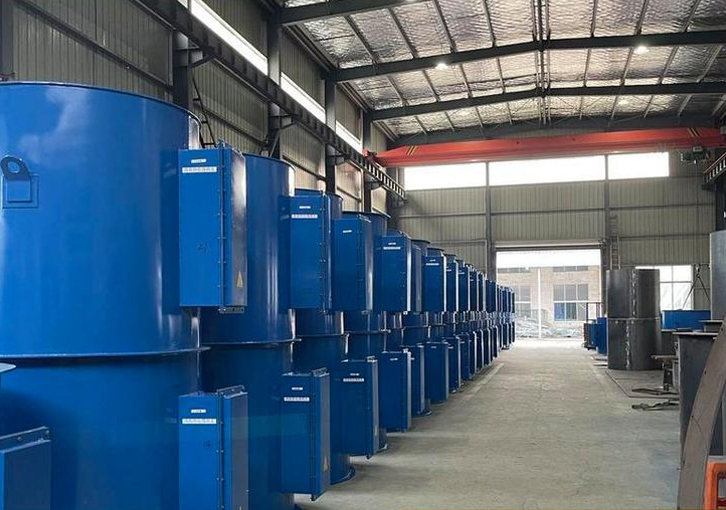
A quiet revolution is unfolding in the way we heat our spaces, driven by a design philosophy that refuses to waste a single joule. Instead of simply generating warmth and pushing it into a room, the latest systems capture and recycle thermal energy that conventional heaters squander. Advanced heat exchangers, often inspired by aerospace engineering, extract every trace of heat from the fuel or electricity source before exhaust ever leaves the unit. This near-total thermal transfer means that the warmth reaching your living room is almost equal to the energy consumed, slashing utility bills without any sacrifice in comfort.
What makes this leap possible is a shift from brute force to intelligent modulation. Traditional heating cycles between full power and idle, creating temperature swings and wasteful spikes in energy use. The new approach employs variable-output burners or solid-state heat pumps that adjust their output in real time, matching exactly the heat loss of the building. By sensing indoor and outdoor conditions thousands of times per minute, these systems operate continuously at the lowest possible setting that maintains your chosen temperature. The result is a steady, silent warmth that feels natural, while the meter barely ticks upward.
Beyond the core technology, efficiency is amplified by the materials and configuration of the heat distribution network. Low-thermal-mass radiators, underfloor loops embedded in phase-change compounds, and even cabinetry that doubles as gentle heat emitters are replacing clunky metal boxes. These surfaces radiate heat at lower temperatures over larger areas, which not only feels more pleasant but also reduces the temperature differential that drives energy loss. When paired with zoning controls that heat only occupied rooms, the entire system functions as a finely tuned ecosystem, preserving comfort and money with an intelligence that fades into the background.
Built to Last: Durability in Extreme Industrial Conditions
Industrial equipment faces relentless stress—abrasive dust, corrosive chemicals, punishing vibrations. Yet genuine durability isn’t merely about surviving these attacks. It’s about maintaining precise function when every sensor, every seal, and every weld is pushed to failure thresholds. In a smelting plant, for instance, a conveyor drive unit must endure fluctuating loads and 24/7 operation without sacrificing torque consistency. That’s why materials like vacuum-degassed bearing steels and fluorocarbon elastomer seals are chosen not for their specs alone, but for how they interact: the steel resists micropitting under boundary lubrication, while the seal maintains flexibility from -40°F to 400°F. The engineering challenge lies in anticipating compound failure modes—when thermal expansion and contamination conspire to degrade performance in ways no single test can replicate.
Real-world endurance demands more than laboratory validation. Take offshore drilling platforms, where salt spray and shock loads are constants. Here, hydraulic cylinder rods are often plated with a proprietary chromium-ceramic coating that micro-cracks to retain oil film, drastically reducing corrosion fatigue. Fasteners are torqued to yield with ultrasonic measurement to ensure clamping force stays uniform despite decades of pounding. This obsessive focus on fasteners and surface treatments stems from a hard lesson: in extreme environments, the margin between operational excellence and catastrophic downtime often hinges on the most mundane components.
Designing for these extremes also means embracing imperfection as a parameter. Components are deliberately allowed to wear in specific patterns—like gear teeth with a slight bias cut to distribute load after initial bedding-in, or bearing housings with calculated clearances that account for thermal growth. Monitoring systems are then tuned not to detect failure, but to track this predetermined wear curve, flagging deviations before they cascade. It’s a philosophy that treats durability as a dynamic state rather than a static shield, ensuring machines degrade gracefully and predictably, even when the environment does everything in its power to break them.
Precise Temperature Control for Critical Processes
In semiconductor fabrication, even a half-degree drift can scrap an entire wafer batch. Our thermal management systems lock onto target temperatures with a variance of less than ±0.02°C, using multi-zone PID loops that adapt to load changes in real time. The result is repeatable etch rates and deposition thicknesses across thousands of cycles, eliminating the guesswork that often plagues legacy chillers and heaters.
We tackled the common headache of gradient formation by embedding microfluidic channels directly into the process chamber walls. This pulls heat away from hotspots before they can develop, keeping the entire working surface within a narrow thermal band. Operators no longer have to juggle separate cooling plates or compensate with slower ramp rates—the system handles it transparently while logging every adjustment for traceability.
Beyond the hardware, the control software learns from each run and preemptively adjusts for recurring perturbations like ambient temperature swings or incoming material variance. One pharmaceutical client saw a 40% reduction in rejected lyophilization cycles after we identified and neutralized a periodic cooling tower fluctuation that their previous controller had simply reacted to too late.
Rapid Deployment and Low-Maintenance Design
Getting a system up and running shouldn’t feel like a drawn-out ordeal. Our approach focuses on stripping away unnecessary complexity so that initial setup is measured in hours, not days. Pre-configured components and clear, minimal-step instructions mean your team can go from unboxing to operational without specialized training or external consultants.
Once deployed, the design truly proves its worth by practically taking care of itself. Automated diagnostics, self-healing routines, and intuitive update mechanisms drastically cut the time you spend on upkeep. Routine maintenance tasks are either eliminated or simplified to the point where they fit into the natural flow of your work, rather than becoming disruptive events.
This balance of speed and simplicity doesn’t come at the expense of capability. By paring back to essentials and building in resilient defaults, we’ve created a system that adapts quietly to your environment. It stays out of your way while reliably delivering what you need, with the kind of straightforward dependability that becomes easy to forget about—until you realize how much heavier the alternative used to feel.
Global Certifications and Compliance for Peace of Mind
When you’re sourcing products or components from around the globe, the label “certified” carries more weight than a simple stamp. It’s a signal that what you’re dealing with has been scrutinised against internationally recognised benchmarks—be it for electrical safety, environmental impact, or performance under stress. These aren’t just bureaucratic hoop-jumping exercises; they’re hard-earned proof that a manufacturer has opened its processes to third-party auditors and met standards that often exceed local regulations.
That level of transparency is what delivers genuine peace of mind. Instead of crossing your fingers and hoping a shipment meets spec, you have verified documentation that each unit was built to consistent, repeatable standards. Whether it’s CE marking for European markets, UL listing for North America, or RoHS compliance for restricted substances, every mark on a product tells you someone independent has checked the work. That means fewer surprises in the field, less time troubleshooting, and a dramatically lower chance of regulatory snags at customs.
Beyond ticking boxes, these certifications reflect a culture of accountability. Companies that invest in maintaining multiple global certifications are signaling that they’re in it for the long haul—continually adapting to evolving standards rather than chasing shortcuts. For you, that translates into a supply chain you can trust, products that perform as promised, and the quiet confidence that comes from knowing every detail has been vetted by people whose only agenda is safety and quality.
FAQ
They prevent ignition of flammable gases, vapors, or dust by containing sparks and limiting surface temperatures, ensuring safety in chemical plants, oil refineries, and mining operations.
Begin by calculating the area's heating load in BTUs, then match it to a heater with the appropriate wattage, enclosure rating, and certifications like ATEX or Class I Div 1 for the specific hazardous zone.
Yes, many models are designed with built-in thermostats and rugged components that function reliably at sub-zero temperatures, making them ideal for pipeline stations or unheated warehouses in winter.
Regularly inspect seals and conduit connections for integrity, clean fins and guards to maintain airflow, and verify thermostat accuracy. Always de-energize the unit before any service work.
They eliminate the need for on-site fuel storage, produce no combustion byproducts, and offer precise temperature control without open flames, reducing the risk of accidental fires.
Many units come with remote monitoring capabilities, automatic shut-off upon fault detection, and compatibility with building management systems to provide real-time alerts and centralized control.
Conclusion
Selecting the right heating equipment for hazardous industrial settings demands more than just warmth—it requires engineering that anticipates risk and eliminates it. Top-tier explosion-proof electric heaters are built from the ground up to operate in environments where flammable gases, vapors, or dust are a constant presence. Their enclosures are rigorously sealed and constructed from rugged materials like stainless steel, rated to withstand both internal explosions and external impacts without compromising safety. Every design choice, from the cooling fins to the terminal housings, follows uncompromising safety protocols aligned with global certification marks such as ATEX, IECEx, and UL. This means operators can rely on a heating solution that actively prevents ignition sources, even under the most volatile conditions.
Beyond baseline protection, these heaters integrate advanced thermal technologies that maximize energy use while delivering precise, process-critical temperature control. Thin-film or finned elements, often paired with intelligent digital controllers, maintain tight temperature windows with minimal overshoot, reducing energy waste and operational costs. The units arrive pre-assembled for rapid deployment and feature modular components that simplify maintenance, cutting downtime in demanding continuous-operation settings. Their corrosion-resistant builds extend service life in marine, chemical, and petrochemical installations, where salt spray and aggressive media rapidly degrade ordinary equipment. Backed by thorough factory testing and multi-region compliance documentation, they provide a turnkey, future-proof solution for safe industrial heating that puts both performance and peace of mind at the forefront.
Contact Us
Contact Person: Mr. Wang
Email: [email protected]
Tel/WhatsApp: 8613705299955
Website: https://vip.e-baixing.com/szhgyw