

Top Global Import and Export Data Providers for Reliable Trade Intelligence
2026-05-09
In the fast-paced world of international business, staying ahead means tapping into precise, timely trade data. Whether you're scouting new markets, monitoring competitors, or optimizing your supply chain, the right intelligence can be your sharpest competitive edge. But with a sea of providers claiming to offer the best global import and export insights, how do you separate the signal from the noise? This post dives into the top data providers that deliver not just numbers, but actionable trade intelligence you can trust. Along the way, you'll discover why platforms like Tendata are changing the game for businesses that refuse to fly blind in today's volatile trade landscape. Get ready to uncover the sources that empower smarter decisions and fuel global growth.
What Sets Reliable Trade Intelligence Apart?
Trade intelligence that you can actually act on doesn’t just dump raw data at your feet. It sifts through the noise, validating every shipment record against multiple sources and flagging anomalies before they become your problem. This kind of rigor means you’re working with facts, not guesses—whether you’re monitoring a new supplier or tracking a competitor’s supply chain shifts.
The real differentiator is how intelligence adapts to your world. Generic dashboards often miss the subtle patterns that matter to your specific industry or region. Reliable platforms let you filter out the irrelevant layers so you see only what affects your margins, your delivery timelines, and your relationships. It’s the difference between staring at a global weather map and getting a precise forecast for your own route.
Speed matters, but not at the expense of clarity. The best trade intelligence delivers early signals—customs filings, purchase orders, vessel movements—while they’re still actionable, not weeks later when the opportunity has sailed. Combined with human-readable narratives instead of abstract charts, it turns information into a genuine competitive edge that feels more like a briefing from a seasoned analyst than a software export.
The Providers Shaping Global Import-Export Insights
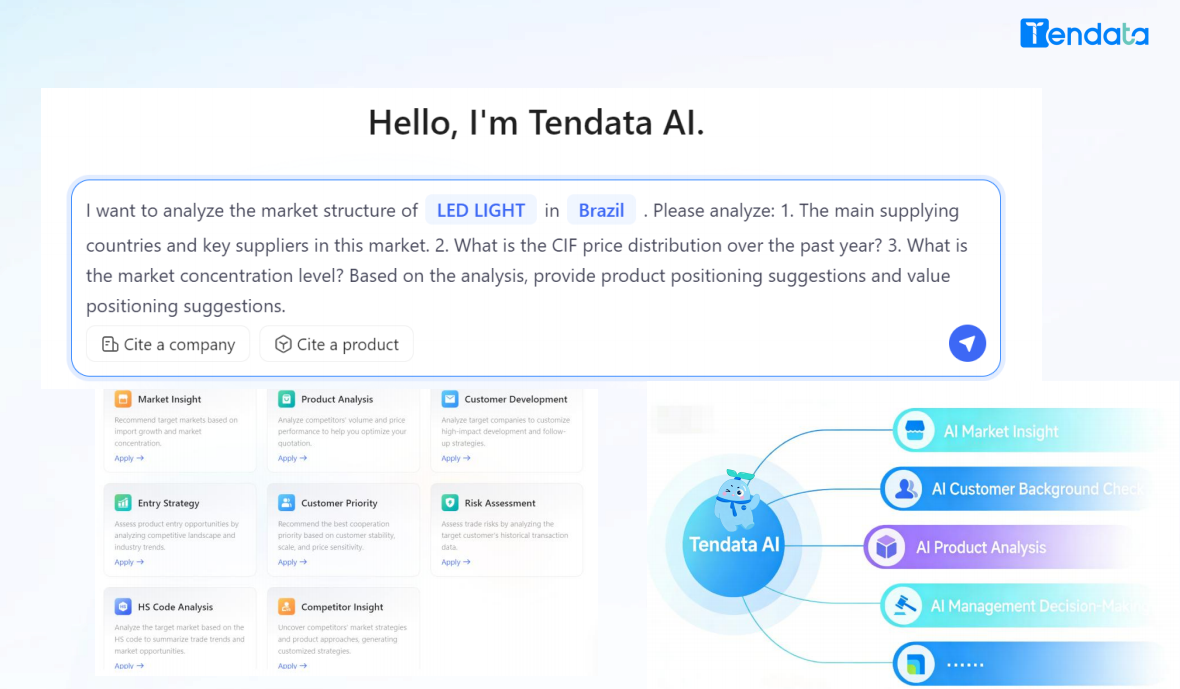
A mix of official and commercial players drives the intelligence behind global trade flows. Customs agencies in virtually every country supply the foundational data, but it’s the specialized aggregators and analytics firms that stitch together thousands of fragmented records into coherent pictures. They pull from shipping manifests, port logs, and even satellite tracking of cargo vessels to capture movement before it appears in official reports.
These providers don’t just collect figures—they clean, categorize, and enrich them, often adding layers like commodity classifications or estimated arrival times. The result is a near real-time view of commerce that helps businesses pivot their sourcing strategies, banks assess country risk, and policymakers gauge the true pulse of international trade long before formal statistics are published.
From Raw Data to Actionable Market Knowledge
Turning scattered data points into clear market direction starts with the right framing. Instead of drowning in dashboards, we focus on patterns that reveal customer shifts, untapped niches, and competitive gaps. Every table column or survey response becomes a clue, but only if you know what question it answers. The real work lies in filtering noise from signal—isolating the metrics that genuinely link to business outcomes.
The translation from analysis to action depends on empathy and context. A sudden dip in repeat buyers might look like a product issue, but deeper behavioral mapping often uncovers friction in the post-purchase experience or a shift in referral channels. By layering quantitative trends with qualitative insights, you start to see not only what is happening but why it matters to specific audience segments. That understanding shapes offers, messaging, and timing in ways generic reports never could.
Ultimately, the goal is to equip teams with knowledge that triggers confident decisions, not just more data. When stakeholders can see how a pricing tweak or a new feature will move the needle before it launches, raw figures evolve into a shared strategic language. This ongoing loop—collect, interpret, apply, measure—builds an organization’s intuition, making market sensitivity a repeatable advantage rather than a guessing game.
Trusted Sources for Cross-Border Trade Analysis
Accurate cross-border trade analysis relies on data from institutions with a longstanding reputation for integrity and global reach. Organizations like the World Trade Organization provide comprehensive statistical databases covering merchandise trade, tariffs, and services across nearly all economies. Their reports are grounded in official submissions from member governments, ensuring a level of consistency and verification that ad-hoc commercial sources often lack.
National customs agencies and central banks offer another layer of granularity, revealing shipment-level details or balance of payments flows that illuminate trade patterns in real time. While these datasets may require careful harmonization—given differences in reporting standards—their direct connection to border transactions makes them indispensable for analysts seeking to identify emerging supply chain shifts or validate market entry strategies.
Academic and multilateral policy research, such as working papers from the International Monetary Fund or the Organisation for Economic Co-operation and Development, complements raw data with nuanced modeling of trade dynamics. These sources often dissect the impact of non-tariff barriers, regional trade agreements, and currency fluctuations, equipping decision-makers with forward-looking insights rather than rearview metrics alone.
How Industry Leaders Gain a Competitive Edge
True market dominance isn't about chasing every new trend. The companies that consistently stay ahead are the ones that obsess over what their customers actually struggle with daily, then quietly solve those problems before anyone else notices they exist.
Many organizations talk about "agility," but the leaders we've observed treat adaptability as a cultural constant, not just a project phase. They empower small teams to make quick calls, learn from small failures, and pivot without endless committee approvals.
Another underrated edge lies in how a company nurtures its own bench. Rather than hiring for culture fit, they hire for culture add, constantly injecting fresh perspectives while retaining the people who know how to navigate the internal landscape. This blend of stability and new thinking makes them much harder to disrupt.
Choosing a Provider That Aligns with Your Goals
It’s easy to get swept up in feature lists and pricing tiers, but the real differentiator often comes down to something less tangible: how well a provider understands the direction you're heading. A tool or service might check every functional box today, yet still hold you back if their long-term vision doesn’t mirror your own. Pay attention to the questions they ask during early conversations. Are they curious about your growth plans, your operational bottlenecks, or the metrics that matter most to your team? That genuine interest—not scripted discovery calls—reveals whether they’re ready to adapt alongside you.
Beyond the sales pitch, look at the community and ecosystem they’ve built. A provider that aligns with your goals typically attracts a similar crowd—peers who share your pain points and ambitions. Check their forums, user groups, or publicly available roadmaps. See if the discussions revolve around solving problems you actually care about. Also note how they handle feedback. Quick, thoughtful responses to user suggestions signal a company that co-evolves with its clients. This kind of partnership turns a simple transaction into a long-term asset, meaning you won’t outgrow them the moment your needs become more nuanced.
Finally, trust your operational instincts. A provider can have stellar documentation and a slick interface, but if their support hours don’t cover your busiest periods—or their uptime philosophy doesn’t match your risk tolerance—misalignment will surface under pressure. Request a trial that mirrors real-world usage; simulate a chaotic Tuesday afternoon, not a quiet Sunday morning. The goal isn't just to find someone who can deliver a service, but to connect with a team that operates on the same wavelength. When your success and their incentives naturally intersect, reliability becomes less of a promise and more of a predictable outcome.
FAQ
Basic customs data just scratches the surface—listing shipments and values. Top providers layer on things like buyer and supplier profiles, historical trends, shipping routes, and even predictive analytics. It’s the difference between staring at a raw spreadsheet and having a strategist whisper market opportunities in your ear.
Absolutely. While big players use it for massive supply chain optimization, a small furniture maker might discover an untapped market for handmade chairs in Scandinavia, or a coffee roaster could find a reliable bean supplier in Colombia without flying there. It’s all about filtering the noise to find actionable nuggets.
It’s a constant battle. The best ones fuse automated cleansing algorithms with human verification, cross-referencing bills of lading, customs declarations, and shipping manifests. They also normalize messy data—like turning “2,500 kgs” from one country and “2.5 tonnes” from another into a single comparable figure. Still, no dataset is perfect; smart users always cross-check critical decisions.
Names like Panjiva (now part of S&P Global), ImportGenius, and Descartes Datamyne often come up for breadth, but if you’re eyeing Africa or parts of Asia, regional specialists like Export Genius or Tendata can fill gaps. It’s less about one reigning champion and more about stitching together the right sources for your map.
Drowning in data without a clear question. New users often pull massive reports on everything happening in a country and then freeze. The trick is to start narrow—maybe “who are the top three buyers of organic olive oil in Germany?”—and then expand. Also, ignoring the context: a spike in imports might just be one company stocking up for a warehouse, not a market trend.
Lawyers use it to trace counterfeit goods routes, economists track inflation pulse via real-time trade flows, and sustainability teams monitor carbon footprints by analyzing shipping distances. A film production company once checked data to see where antique props were being imported from for a period piece. It’s a versatile tool if you think sideways.
Pricing is all over the map—some charge per look at a shipment report (like a paywall), others offer annual seats with unlimited queries. Most reputable providers offer limited free trials or demo accounts. It’s worth pushing for a trial with your actual use-case, not just a generic tour, to see if the UI clicks with your team’s patience level.
A few pioneers are blending traditional data with satellite imagery, maritime AIS feeds, and even social sentiment to predict port congestions or commodity shortages. For instance, if containers are stacking up at Long Beach and chatter about a trucker strike grows, the system might signal alternative routing a week early. It’s not crystal-ball magic, more like a very diligent analyst who never sleeps.
Conclusion
In a landscape flooded with fragmented shipping records and inconsistent customs filings, reliable trade intelligence stands apart by offering verified, real-time visibility into global cargo movements. The most trusted import and export data providers don’t just dump raw figures; they transform billions of shipment events into cleansed, structured feeds that reveal buyer-supplier networks, pricing trends, and supply chain vulnerabilities. Companies like Descartes Datamyne, Export Genius, and Panjiva (now part of S&P Global) have built their reputations on deep coverage across 190+ countries, but what truly separates them is how they turn complexity into clarity. Their platforms merge maritime manifests with land and air waybills, then layer in company linkages, compliance checks, and market demand signals. This shift from mere data delivery to contextualised insight means a business can spot a competitor’s new supplier in Vietnam, gauge the impact of a port strike on its own shipments, or identify a high-growth market for its product category without relying on outdated secondary research.
For industry leaders, gaining a competitive edge hinges on converting those insights into rapid, informed decisions. The best providers align with distinct organisational goals: some specialise in Latin American trade corridors or deep HS-code mapping for specific industries, while others offer API-first architectures that plug directly into ERP systems, enabling procurement teams to monitor supplier performance dynamically. Instead of generic market reports, they deliver custom alerting when a key buyer shifts sourcing patterns or when a consignment faces demurrage risk. Actionable knowledge emerges when a user can seamlessly trace the full shipment life cycle, benchmark freight rates, and anticipate demand shifts before they appear in public statistics. Choosing a partner, therefore, becomes less about database size and more about fit—whether the provider invests in regional data partnerships, supports the languages and trade regimes relevant to your supply chain, and translates its intelligence into tangible outcomes like reduced lead times or smarter contract negotiations. In an era of constant disruption, leaning on a source that consistently refreshes its data and interprets it through a commercial lens is what keeps multinationals, mid-sized traders, and logistics firms moving ahead.
Contact Us
Contact Person: Grace
Email: [email protected]
Tel/WhatsApp: +86 18721992033
Website: https://www.tendata.com