

Top Halogenated Aromatic Intermediates as Essential Building Blocks for Modern Synthesis
2026-09-03
Halogenated aromatic intermediates are the quiet workhorses behind many of today's most powerful bond-forming reactions. From Suzuki and Heck couplings to SNAr and beyond, the right aryl halide can mean the difference between a three-step route and a ten-step detour. But not all halogenated building blocks are created equal—reactivity, regiochemistry, and stability vary widely. Here, we cut through the noise to spotlight the top halogenated aromatic intermediates that every modern synthesis lab should know. Whether you're optimizing a medchem campaign or scaling an agrochemical intermediate, these compounds deserve a place in your retrosynthetic toolkit. And if you need them with consistent quality, DSL Chemicals offers a supply chain you can build on.
The Quiet Workhorses of Medicinal Chemistry
Amide bond formation is the sort of reaction that rarely gets mentioned in a medicinal chemistry lecture, yet it accounts for a staggering share of the bonds made during lead optimization. Reagents like HATU, EDC, and T3P sit on shelves in nearly every synthesis lab, quietly converting carboxylic acids and amines into the amide linkages that appear again and again in kinase inhibitors, GPCR ligands, and protease substrates. Their reliability is what lets chemists assemble diverse libraries without constantly troubleshooting side reactions.
Cross-coupling chemistry has a similar status. Suzuki-Miyaura and Buchwald-Hartwig reactions are so embedded in routine practice that medicinal chemists often treat them as solved problems, reaching for a palladium catalyst and a boronate ester without a second thought. Yet these methods transformed the field by making biaryl and aniline motifs accessible on milligram-to-kilogram scales. The real workhorse quality shows in how forgiving they are: even with mediocre substrates, a standard set of conditions usually delivers enough product to test a biological hypothesis.
Purification and analysis rarely get credit either, but no drug discovery program would survive without them. Preparative HPLC runs with acetonitrile-water gradients, thin-layer chromatography in a fume hood, and LC-MS checks after every step form the unglamorous backbone of daily lab work. A clean mass spectrum and a single peak on a UV trace are often what decide whether a compound advances to the next assay, making these quiet tools just as essential as any high-profile reaction.
When a Single Halogen Atom Changes Reactivity
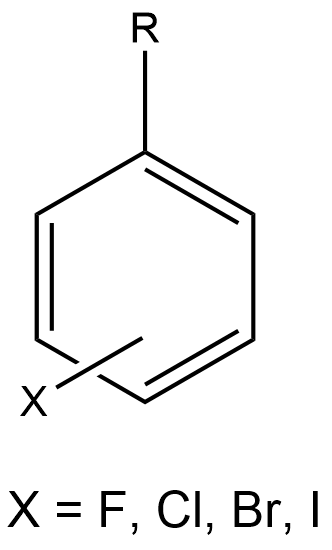
The swap of one halogen for another can seem like a minor edit on paper, yet in practice it shifts electron density, bond lengths, and leaving-group ability enough to reroute an entire mechanism. Take aryl chlorides versus aryl bromides: the latter often participate in palladium-catalyzed cross-couplings under noticeably milder conditions, not because bromine is “better” in some abstract sense, but because the carbon–bromine bond is weaker and more polarizable, making oxidative addition easier. Fluorine sits at the opposite end, frequently acting as a deactivating substituent in nucleophilic aromatic substitution while also altering the acidity and metabolic stability of neighboring functional groups.
A single halogen swap also changes selectivity. In an SN2 reaction, moving from chloride to iodide can accelerate displacement by orders of magnitude, allowing a transformation to proceed at room temperature where the chloro analogue would require heat. That same iodide, however, can introduce side reactions through oxidation or light-induced radical pathways that the chloride would never trigger. Medicinal chemists exploit this regularly: replacing a para-fluoro with para-chloro may preserve steric bulk but sharply alter logP, binding pocket occupancy, and even the preferred conformation of an aliphatic chain. The result is that “just one atom” rarely means just one atom—it rewires the reactivity landscape around it.
Bromo, Chloro, or Iodo: Matching Halogen to Reaction
The choice of halogen in a reaction is rarely arbitrary—it quietly shapes the entire reactivity profile. Bromo substituents strike a balance between leaving-group ability and stability, making them a favorite in many SN2 displacements. Chloro groups are more robust, often surviving conditions that would activate a bromide, but they demand a stronger push or a polar solvent to depart. Iodo, the most labile of the three, can turn a sluggish substitution into a near-instantaneous process, yet this same sensitivity invites unintended eliminations or side reactions when heat or base is present.
Matching the halogen to the reaction is as much about kinetics as it is about synthetic patience. In a nucleophilic substitution, iodide outperforms bromide and chloride by orders of magnitude under identical conditions, thanks to its weaker carbon–halogen bond and superior polarizability. However, that speed comes at a cost: iodides are light-sensitive, prone to oxidation, and often too expensive for large-scale work. Chlorides, on the other hand, might need refluxing for hours, but they tolerate a wider range of upstream chemistry without premature activation.
A practical approach is to treat the halogen as a tunable handle rather than a fixed feature. If a sequence involves multiple substitution steps, start with a chloro group to keep the site dormant until the final act, then swap in an iodo substituent just before the key coupling. For one-pot or tandem reactions where the leaving group must depart at exactly the right moment, bromo often offers the most forgiving window—active enough to proceed under mild heating, yet stable enough to avoid background noise.
Scaling Up Without Losing Selectivity
The assumption that a reaction behaves identically at bench and plant scale rarely survives contact with reality. Mixing times stretch, heat removal becomes sluggish, and concentration gradients emerge that a small flask never knew. These shifts quietly erode the very selectivity that made a process worth scaling in the first place.
Some teams fight this by redesigning the vessel rather than the chemistry. Continuous flow systems, for instance, trade batch unpredictability for tight residence time control, keeping side reactions starved of opportunity. Others lean on intensified mixing elements or staged addition of reagents, nudging the local environment back toward what the lab data promised.
The trick is not to scale the reactor alone but to scale the conditions that selectivity depends on. That often means instrumenting the pilot run more heavily than the lab run, watching for early signs of drift in impurity profiles, and being willing to adjust feed points or cooling loads mid-campaign. Selectivity is not a fixed property; it is a fragile equilibrium you carry across scales.
From Waste Streams to Valuable Aryl Halides
Industrial side streams often harbor halogenated aromatics that are overlooked as mere byproducts. Instead of treating them as disposal burdens, a shift in perspective reveals these compounds as ready-made scaffolds for high-value aryl halides. By fine-tuning reaction conditions—such as using catalytic amounts of iodide salts or photoredox mediators—waste chlorides and bromides can be selectively upgraded without requiring energy-intensive isolation steps.
One practical route involves halogen exchange under mild heating, where less reactive aryl chlorides in mixed waste are converted to more versatile aryl iodides. This not only circumvents the cost of fresh halogenation reagents but also reduces the environmental load of incineration or landfilling. The key is to exploit differences in bond dissociation energies and solubility profiles, allowing the target aryl halide to be extracted directly from the crude stream.
Beyond simple exchange, tandem functionalization can be employed: a waste aryl bromide may first undergo borylation, then be re-halogenated with a different halogen source to yield a bespoke aryl iodide or fluoride. Such sequences turn a linear waste problem into a circular synthetic opportunity, where the molecular complexity already present in the stream is preserved rather than destroyed.
Next-Generation Cross-Couplings Still Need These Building Blocks
The shift toward photocatalytic and electrochemical cross-coupling methods hasn't erased the need for the same organoboron, organozinc, and aryl halide reagents that dominated the field twenty years ago. In fact, many of these newer systems are more sensitive to residual metal impurities or moisture, making high-quality building blocks even more critical. A poorly stored vial of pinacol boronate can kill a photoredox/Ni dual-catalytic reaction faster than an outdated ligand.
What has changed is the expectation around functional group tolerance and the rise of Csp3-rich scaffolds. Alkyl halides, alkyl boranes, and N-hydroxyphthalimide esters are now indispensable inputs for forging sp3-sp2 and sp3-sp3 bonds. Despite the excitement around direct C-H activation, most medicinal chemistry routes still fall back on these pre-functionalized intermediates because they offer predictable reactivity and a shorter optimization timeline.
Looking ahead, investment in a broader range of bench-stable, structurally diverse building blocks will likely pay off more than chasing yet another exotic catalytic cycle. Supply chains for specialized aryl bromides or secondary alkyltrifluoroborates remain uneven, and that bottleneck consistently slows discovery work. Until in situ functionalization becomes as routine as weighing out a solid reagent, these classic modules will stay at the heart of next-generation coupling chemistry.
FAQ
They sit at a sweet spot between stability and reactivity. The carbon-halogen bond survives many transformations, yet it activates the ring for metal-catalyzed couplings, nucleophilic aromatic substitution, or directed metalation. That means a single intermediate can be carried through multiple steps and then functionalized precisely when needed. Bromides and iodides are especially useful in cross-coupling because they undergo oxidative addition readily, while chlorides offer a cheaper option if the catalyst system is tuned. Beyond coupling, the halogen can be converted to a Grignard or organolithium reagent, opening up further C-C and C-heteroatom bond-forming routes.
Bromides generally react faster and under milder conditions with palladium or nickel catalysts, so they are the default choice for complex substrates where you cannot risk harsh temperatures. Chlorides are less reactive but significantly cheaper, which matters at scale. Modern ligand design has narrowed the gap, with electron-rich phosphines and N-heterocyclic carbenes enabling efficient coupling of aryl chlorides. Iodides are the most reactive but often too costly and light-sensitive for routine use. The decision usually balances substrate availability, catalyst loading, and whether you need selective mono-coupling when multiple halogens are present.
Fluorine changes the pharmacokinetic profile of a molecule without adding much steric bulk. A single fluorine or trifluoromethyl group can block metabolic hotspots, improve membrane permeability, and alter pKa. Aromatic fluorides also participate in nucleophilic aromatic substitution, making them convenient handles for late-stage diversification. The challenge is that C-F bonds are strong, so you usually cannot use the same cross-coupling chemistry as with bromides or iodides. Instead, fluorinated intermediates often enter through building blocks that already carry the fluorine in the desired position.
The position of the halogen matters as much as its identity. Ortho substituents can impose steric hindrance, which may slow a coupling but also prevent unwanted side reactions. Para and meta halogens usually offer more predictable electronics. You also need to think about the functional group tolerance of the downstream chemistry. If the molecule already contains sensitive groups, a bromide might be too reactive and give off-target coupling, so a chloride with a tailored ligand could be safer. Solubility, crystallinity, and ease of purification of the intermediate itself often get overlooked but can determine whether a route is practical beyond the milligram scale.
2,6-Dichlorobenzonitrile and 2-chloro-5-chloromethylpyridine are classic examples. They appear repeatedly in herbicides and insecticides because the halogen pattern gives the right balance of lipophilicity and metabolic stability. 3,5-Dichloroaniline is another one, serving as a key precursor for fungicides. In many cases, the halogen is not present in the final active ingredient but is used to direct a coupling or cyclization and then removed or replaced. That temporary role is often underestimated but hugely valuable in building complex heterocycles.
Ortho halogens can coordinate to metal centers, sometimes accelerating a reaction or steering selectivity, but they can also block approach of bulky catalysts. Para halogens generally give the most predictable electronic effects, with resonance and inductive contributions aligning. Meta halogens are often less activated toward nucleophilic aromatic substitution unless strong electron-withdrawing groups are also present. If you are planning a directed metalation, an ortho halogen can act as a directing group itself, enabling selective deprotonation at the adjacent position. These subtle positional effects frequently decide whether a synthesis is high-yielding or fails completely.
Many of them are dense liquids or low-melting solids with high vapor pressures, so they need tightly sealed containers and good ventilation. Light sensitivity is a real concern for iodides and some bromides, which can slowly liberate halogen and form colored decomposition products. Chlorinated aromatics are generally more robust but can be corrosive if traces of acid are present. For reactive intermediates like benzylic halides, storing them cold and under inert atmosphere is usually necessary. It is also worth checking compatibility with common solvents before scaling up, because some halogenated aromatics react slowly with DMSO or DMF at elevated temperatures.
Conclusion
Halogenated aromatic intermediates rarely attract the spotlight, yet they underpin much of modern drug discovery and materials research. These compounds function as the quiet workhorses of medicinal chemistry, enabling the precise construction of complex molecules through well-established cross-coupling reactions. What makes them truly powerful is how a single halogen atom can shift a molecule's reactivity profile—fluorine, chlorine, bromine, and iodine each bring distinct electronic and steric effects that dictate downstream transformations. Choosing bromo, chloro, or iodo derivatives is not arbitrary; it hinges on matching the halogen's leaving-group ability, stability, and oxidative addition kinetics to the specific catalytic system. This nuance becomes even more critical at pilot and production scales, where maintaining selectivity without sacrificing yield often requires re-evaluating solvent systems, ligand choices, and temperature gradients. Interestingly, some of the most valuable aryl halides now originate from waste streams—recovered brominated or chlorinated byproducts that, after purification, re-enter synthetic routes as high-grade starting materials rather than being incinerated or landfilled.
The rise of next-generation cross-coupling methodologies has not diminished the need for these building blocks; if anything, it has expanded the toolbox. Photoredox catalysis, electrochemical C–H halogenation, and late-stage functionalization platforms still rely on robust, well-characterized halogenated aromatics to anchor bond-forming steps. Researchers continue to refine scalable routes because even a minor drop in isomeric purity can cascade into costly failures during multi-step syntheses. By treating halogenated intermediates not as commodities but as tunable synthons, synthetic chemists gain leverage to build diverse libraries while keeping process chemistry viable. Their enduring relevance lies in this dual role: simple enough to be made from industrial waste, yet sophisticated enough to enable the most advanced coupling reactions currently available.
Contact Us
Contact Person: Wei Zhang
Email: [email protected]
Tel/WhatsApp: 862163529955
Website: https://www.dslchem.com