

Top LED Light Therapy for Glowing Skin
2026-08-27
If your skincare routine feels like it's missing that extra glow, you're not alone. Countless serums and creams promise radiant skin, but few deliver the targeted, science-backed results of LED light therapy. Once confined to dermatologist offices, this technology has made its way into our homes, offering a non-invasive way to boost collagen, calm redness, and unveil a lit-from-within complexion. In this guide, we'll explore the top LED light therapy devices for glowing skin, with special attention to Omeina—a brand that's redefining at-home treatments with professional-grade performance. Ready to see your skin in a new light?
Why Red Light Feels Like a Shortcut to Lit-From-Within Skin
Most glow-boosting routines lean on reflection—shimmer, oil, a well-placed highlight. Red light skips the surface trickery. It nudges your skin's own energy production, waking up mitochondria so cells work faster, clearing out dullness at the source. That's why a few minutes under the panel can look like a full night of sleep.
The shortcut part isn't about skipping steps, it's about skipping the waiting. Collagen and circulation respond to those specific wavelengths almost immediately, bringing a soft flush that doesn't fade when you wash your face. There's no peeling, no tightness, no hiding indoors—just a gradual brightening that reads as health rather than makeup.
Maybe it feels like a cheat because it targets the layer that actually matters. You're not adding light to the surface, you're coaxing it up from below. That shift—from covering up to turning on—makes red light closer to a habit than a treatment, and the glow sticks around long after the device is off.
The Blue Light Detail Most Glowing-Skin Guides Skip Over
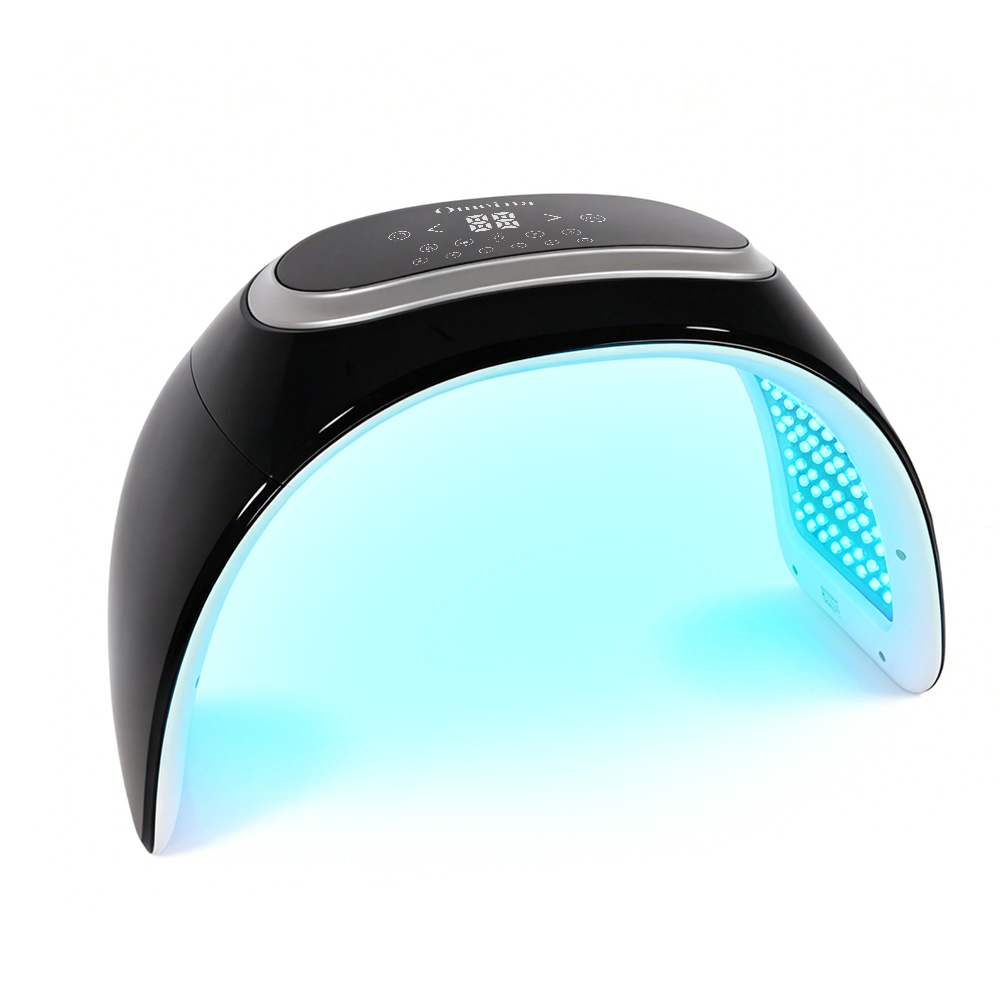
Most glowing-skin routines obsess over UV rays and completely ignore the high-energy visible light beaming from every screen you own. Blue light doesn't burn the way a day at the beach does, but it drills down past the epidermis and keeps working while you scroll. That constant low-grade exposure nudges melanocytes into overdrive, which is why stubborn dark patches can show up even if you're diligent about sunscreen.
Here's the part that rarely makes it into the typical guide: blue light triggers a different kind of oxidative stress than UV. It generates free radicals that break down collagen and elastin at a slower, sneakier pace. You won't see a red reaction, so the damage accumulates without any obvious warning sign. Over months, that can mean dullness, fine lines that seem to appear out of nowhere, and a complexion that just looks tired.
The fix isn't to ditch your devices or slap on a heavy blue-light-blocking cream that feels like paste. Look for ingredients with proven antioxidant firepower—think licochalcone A, iron oxides, or a solid vitamin C layered under your daily moisturizer. Even a few drops of a mineral-based tint can act as a physical shield. It's a small shift, but it addresses the wavelength most routines leave wide open.
How to Time Your LED Sessions Around Your Moisturizer (Not the Other Way Around)
Think of your moisturizer as the fixed point in your routine. You likely already have a time when your skin feels dry or when you wind down for the night—that's when the moisturizer goes on. Instead of forcing an LED session into a random slot and then rushing to adjust your moisturizer timing, slot the light therapy in right before that step. Cleanse, use your LED device on bare skin, and then apply your moisturizer immediately after. This keeps the routine fluid and stops you from skipping either step.
The main reason to avoid the reverse order is that a rich cream can act like a shield. Once moisturizer is on, the light has to push through that layer, and you lose some of the benefit. By letting your moisturizer schedule anchor the routine, you give the LED a clear path on clean skin, then seal everything in with your usual cream. If your skin is particularly sensitive, you can also split the difference: use a light hydrating serum before LED, but save the heavier moisturizer for after.
What Your Skin Barrier Actually Thinks About Nightly Light Exposure
Every night, while you scroll through your phone or leave the bathroom light glowing, your skin barrier is quietly trying to run its overnight repair shift. It expects darkness—a signal to boost ceramide production, calm inflammation, and rebuild the lipid matrix that kept you protected all day. But when photons from screens and bulbs keep tapping on its surface, your barrier gets confused. It doesn't see the light itself, but it senses the disruption: the shift in temperature, the delayed melatonin surge in surrounding cells, the subtle oxidative stress. From its perspective, night never really arrives.
The real annoyance for your barrier isn't the light alone, but the mixed messages. Darkness triggers a cascade of repair enzymes and antioxidants that work best in a low-stress environment. Light exposure, even dim ambient glow, can nudge keratinocytes to stay in a daytime-like state of alertness. This means fewer resources go toward fixing micro-tears and replacing lost moisture. Over weeks, your barrier starts to feel like an overworked night-shift employee who keeps getting called in for unnecessary meetings—it's not that it can't function, but the quality of work drops. You might notice more redness, flakiness, or that tight, thin feeling after washing.
If your skin barrier could send you a late-night text, it would probably say: "Give me two hours of real darkness before you sleep. Not total blackout—just enough to let my repair crew clock in without interference." It doesn't demand you ditch all screens forever, just to create a buffer zone. Dim the lights, switch to warm-toned bulbs, or hold your phone farther away. Your barrier isn't dramatic; it just knows that even a small reduction in nightly light pollution can mean the difference between waking up resilient or waking up compromised. And honestly, it would rather spend the night rebuilding than fighting off the afterglow of your last video.
The One Pre-LED Step That Changes How Your Face Looks by Morning
Most people slap on an LED mask right after washing their face, but that skips the one move that makes the light actually work harder. Grab a cotton round soaked with a low-percentage AHA or BHA toner and swipe it across dry skin before you sit under the red or near-infrared glow. The acid lifts the film of dead cells and residual oil that would otherwise scatter the light, letting it reach the deeper layers where collagen and circulation respond.
Don't overdo it—three swipes with a gentle blend, like lactic or mandelic acid under five percent, is enough. You're not trying to resurface your whole face; you're just clearing the surface so the LED isn't wasting energy on buildup. Wait about thirty seconds for the toner to dry, then follow with your device as usual. By morning, the combination of exfoliation and deeper light penetration tends to flatten fine lines and leave a noticeable evenness that a mask alone rarely delivers.
Skip heavy creams or facial oils right before the session. They sit on top and block the wavelengths. If your skin feels tight after the toner, mist with a plain water-based essence or a hyaluronic acid serum with no occlusives, then start your LED treatment. That sequence—light chemical exfoliation, a breathable hydration layer, then LED—has a way of making your face look like you slept nine hours even when you didn't.
Why Cheaper LED Masks Can Still Outperform the Fancy Ones
Most people assume a higher price tag means better light therapy, but that logic falls apart fast with LED masks. The actual diodes that emit red and near-infrared wavelengths cost very little to produce, even when they hit the exact clinical ranges of 630 to 850 nanometers. A budget mask from a no-name brand often uses the same chip suppliers as a luxury one, so you're not necessarily buying a better spectrum. You're mostly paying for the logo, the unboxing experience, and a marketing budget that has to be recouped somewhere.
What actually moves the needle is power density and fit, not the price. Some cheaper masks deliver more joules per square centimeter simply because they place the diodes closer to your skin or use a flexible silicone that hugs the contours of your face better than a rigid, premium shell. That closer, more even contact means less light scatters into the room and more reaches the deeper layers where collagen gets built. A fancy mask with a gap between the panel and your cheeks can underperform a $60 one that sits flush against your jaw and forehead.
There's also the overlooked factor of consistency. Expensive devices sometimes pack in extra modes, timers, and app connectivity that paradoxically make people skip sessions. A dead-simple, cheap mask with one button and a 10-minute auto shutoff tends to get used more regularly, and with light therapy, frequency beats features. If a budget option hits the right wavelengths, has adequate irradiance, and stays comfortable enough to wear while you answer emails or watch TV, it can easily outperform a shelf queen that does everything except get used.
FAQ
Red light mainly targets collagen production and can soften fine lines over time, while blue light goes after acne-causing bacteria. If your main goal is glow, red or near-infrared is the one to reach for; blue is better saved for breakouts.
Some people see a temporary plumpness right after the first session because blood flow increases. But for a lasting change in texture and brightness, most need three to four weeks of consistent use, about three to five sessions per week.
They can work if you pick a device with the right wavelengths and actually use it regularly. The convenience factor matters more than the brand name—five minutes a day with a decent mask often beats sporadic salon visits.
Generally no, because LED doesn't emit UV light. That said, if you're using any photosensitizing ingredients like retinol or certain acids, it's smart to space them out or check with a derm. Red and amber wavelengths are usually safe for most skin tones.
Clean, dry skin works best so the light can penetrate without a barrier. Skip heavy oils or thick creams beforehand. After the session, apply a hydrating serum or moisturizer while your skin is still slightly warm to lock in the benefits.
For most people, daily use is fine, especially with lower-intensity home devices. The main risk is overdoing it if your skin feels tight or sensitive. Start with three to four times a week and adjust based on how your face responds.
Red light sits closer to the skin's surface and helps with tone and texture, while near-infrared reaches deeper to support repair and reduce inflammation. Using them together can give a more thorough glow boost than either alone.
No, it's a tool, not a replacement. It works best alongside consistent cleansing, moisturizing, and sun protection. Think of it as adding a workout for your skin cells—it improves results but won't fix everything on its own.
Conclusion
Red light therapy has earned its reputation as a shortcut to that lit-from-within look, but most guides gloss over why it works so quickly. The wavelengths penetrate past the surface, prompting cells to repair and renew without any heat or downtime. What often gets skipped is the blue light side—yes, it clears blemish-causing bacteria, but using it too close to red light sessions can leave skin feeling tight and dull, which is the opposite of glow. The real trick is timing your LED sessions around your moisturizer. Wait about ten minutes after cleansing, let your serum sink in, then use the device on bare skin. Applying a heavy cream beforehand creates a barrier that scatters the light, so you lose intensity where it matters most.
Your skin barrier doesn't actually mind nightly exposure as long as you're not overdoing it—fifteen minutes, three to five times a week is plenty. More than that and you risk a low-grade inflammation that flattens your natural radiance. What changes everything by morning is a thin layer of hyaluronic acid applied immediately after the session, while the skin is still slightly warm and receptive. This locks in the hydration boost and makes fine lines look softer by sunrise. And here's the part that surprises most people: cheaper LED masks often outperform the fancy ones because the diode density and wavelength consistency matter far more than brand name or extra app features. A simple, well-built mask with 630nm and 830nm LEDs can give you that glass-skin effect without the luxury markup.
Contact Us
Contact Person: Tina Liu
Email: [email protected]
Tel/WhatsApp: 8618681405932
Website: https://www.omeinabeauty.com/