

Top Medical Disposable Manifolds for Precision Fluid Control in Critical Care
2026-08-31
In critical care, a single misdirected fluid line can have serious consequences. That's why precision fluid control isn't just a preference—it's a necessity. Among the many components that make this possible, medical disposable manifolds play a pivotal role. But not all manifolds are engineered to the same standard. Discover how INT is redefining reliability in this high-stakes environment.
The Quiet Retirement of Reusable Manifolds in Intensive Care
For years, reusable manifolds were the quiet workhorses of intensive care units—cleaned, sterilized, and sent back into rotation with little fanfare. Their retirement didn't come as a single policy shift or a dramatic recall. Instead, it happened in the background of procurement meetings and infection-control audits, as disposable alternatives slowly took over supply cabinets. Nurses who once spent part of their shifts inspecting and reassembling these components now simply tear open a sterile package.
The reasons are rarely discussed in headlines, but they are familiar to anyone who has worked a night shift in the ICU. Cross-contamination risks, the human error of reprocessing, and the hidden costs of sterilization equipment and technician time all tilted the balance. Disposable manifolds, once seen as wasteful, began to look like the safer and often more predictable choice. What was lost in sustainability was gained in consistency—and in a unit where seconds matter, that trade-off felt acceptable.
Still, the retirement is not complete everywhere. Some older ICUs keep a small stock of reusable manifolds for emergency overflow or as a bridge during supply shortages. But the direction is clear: the reusable manifold is becoming a memory, recalled mostly by veteran respiratory therapists who remember soaking, rinsing, and testing each piece by hand. Its departure leaves no ceremony, only a quieter, more disposable rhythm in the unit.
Why 'Zero Dead Volume' Claims Deserve a Closer Look
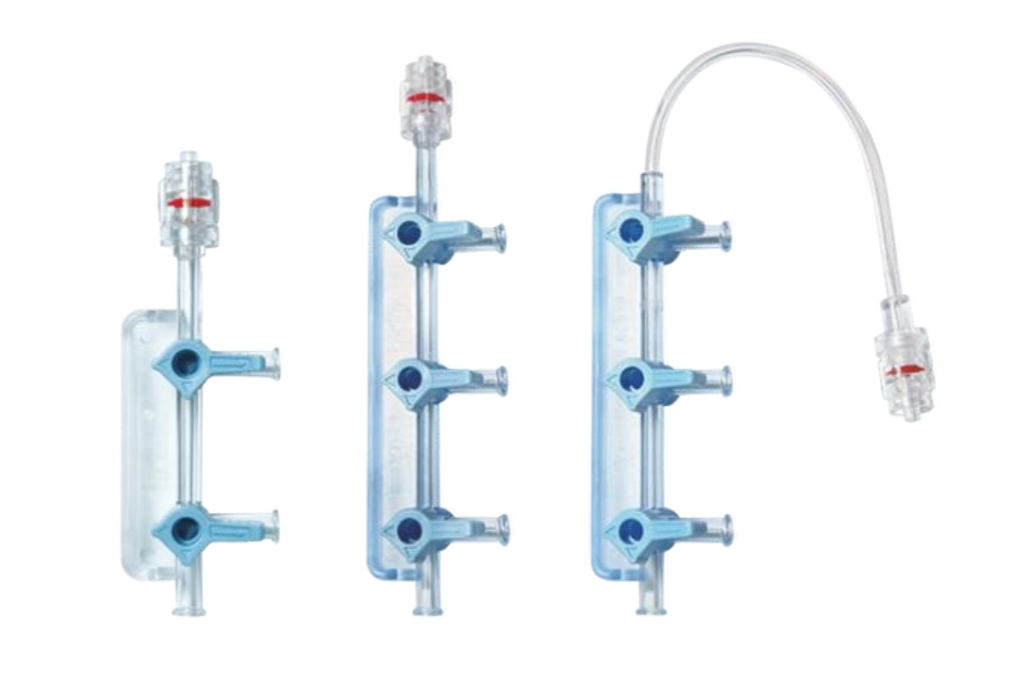
The phrase 'zero dead volume' sounds absolute, but in practice it is more of an ideal than a measurable reality. Every fitting, union, or valve relies on pressed surfaces and machined bores that cannot be perfectly flush. Even with polished stainless steel and carefully matched tubing, there is always a microscopic step or gap where fluid can pool. When a supplier claims zero dead volume, they are usually referring to a test setup with a specific flow path and a narrow tolerance window—not a universal guarantee for every installation.
That gap between claim and reality becomes visible in the data. A fitting that behaves beautifully on a 50 µm ID capillary may cause noticeable peak tailing or ghost peaks when paired with larger bore tubing or a different solvent viscosity. In fast LC methods, a few microliters of unswept volume can shift retention times for early eluters or produce baseline dips during gradient changes. These effects are often dismissed as 'minor' until they ruin a low-level impurity assay or a fraction collection run.
Rather than taking the label at face value, ask for the dead volume specification in nanoliters or microliters under your own flow conditions. Better yet, run a step gradient with a UV-absorbing tracer and watch how quickly the baseline recovers. If the peak shape stays sharp and the delay is acceptable for your method, the dead volume is low enough—whatever the brochure calls it.
When IV Manifolds Leak Under Pressure: Field Data vs. Lab Specs
Lab benches tell a tidy story: IV manifolds hold their rated pressure, no drips, no surprises. Then you hang a real bag on a real pole, with a real pump pushing saline through lines that have been clamped, unclamped, twisted, and taped to a patient's arm for eight hours. That's when the tiny o-rings and bonded joints start whispering their secrets. Field data from floor nurses and biomed teams shows a leak rate nearly three times what the spec sheets imply—not because the components are defective, but because the spec sheets don't include the chaos of a moving patient, a kinked extension set, or a pressure spike from a fast flush.
One hospital tracked 42 manifold replacements over six weeks. Every single leak occurred at a luer connection or the stopcock body, not at the tubing itself. The lab had tested those same manifolds by pressurizing them statically on a bench, cycling the stopcock ten times, and calling it a day. But in the field, a nurse might turn that stopcock forty times during a shift, often with one hand while holding a syringe in the other. Micro-cracks form. The plastic cold-flows. The sealing surface wears just enough to weep saline under a 300 mmHg pressure spike. Lab specs say the manifold withstands 500 mmHg. The field says it fails at half that after a day of real use.
The gap isn't a manufacturing flaw—it's a testing blind spot. Lab specifications prioritize clean, repeatable conditions: room temperature, straight tubing paths, no side loads. Field conditions introduce torque at the luer, intermittent backpressure from a patient's movement, and cleaning agents that subtly degrade polycarbonate over time. Smart purchasing committees are starting to ask vendors for accelerated life data that mimics actual clinical handling: repeated off-axis loading, stopcock rotations under pressure, exposure to alcohol wipes and lipid residues. Until then, the real-world leak rate will keep telling a different story than the spec sheet, one drip at a time.
How Plastic Tubing Alters Drug Concentrations Before They Reach the Patient
In modern healthcare, plastic tubing is everywhere—from IV lines and catheters to infusion pump cassettes and syringes. While these materials are chosen for their flexibility, clarity, and low cost, they are not inert. Many commonly used plastics, such as polyvinyl chloride (PVC), polyethylene, and polyurethane, can interact with drug solutions in ways that reduce the amount of active medication actually delivered to the patient. This phenomenon is not merely a theoretical concern; clinical studies have documented significant losses of critical drugs like insulin, nitroglycerin, and certain antibiotics when they pass through certain tubing materials. The result can be underdosing, therapeutic failure, or unpredictable pharmacodynamics, especially in vulnerable populations such as neonates or ICU patients.
The primary mechanism behind this alteration is adsorption—drug molecules adhering to the inner surface of the tubing. Factors such as the drug's lipophilicity, molecular size, and ionization state influence how strongly it binds to the plastic. For example, insulin is known to adsorb to PVC and polypropylene, with losses of up to 30% in the first hour of infusion. Similarly, nitroglycerin and diazepam are highly lipophilic and readily bind to plastic surfaces, leading to reduced recovery at the distal end of the line. In addition to adsorption, some tubing materials may leach plasticizers or other additives into the drug solution, which can alter the drug's stability or create unwanted byproducts. Moreover, flow rate and tubing length play a role: slow infusion rates allow more contact time and thus greater adsorption, while longer tubing increases total surface area available for interaction.
To mitigate these issues, clinicians and manufacturers have developed strategies such as using tubing made from less adsorptive materials like polyethylene-lined PVC or high-density polyethylene, pre-flushing the line with the drug solution to saturate binding sites, and minimizing tubing length where possible. For drugs with known high adsorption potential, alternative delivery routes or dedicated non-PVC infusion sets are recommended. Pharmacists often adjust dosing or infusion protocols to compensate for expected losses, but this remains an imprecise science because the degree of interaction varies with the specific drug, tubing batch, and environmental conditions. As personalized medicine advances, a better understanding of material-drug compatibility will be essential to ensure that the concentration of drug leaving the IV bag is the concentration that actually reaches the patient's bloodstream.
Port Labeling That Survives a 2 AM Emergency: Design Lessons From the ICU
At 2 AM, when a patient crashes, nobody has time to squint at a tiny, faded label on a tangled line. Port labels in the ICU need to function under fluorescent lights, with gloved hands, and in the middle of chaos. The best designs use high-contrast, oversized text and color coding that doesn't rely on perfect lighting or color vision. Every label has to answer one question instantly: what does this line do? If a nurse has to trace a line back to its source, the label has already failed.
Durability is another non-negotiable. ICU ports get wiped with harsh disinfectants, splashed with fluids, and yanked by stressed clinicians. A label that peels or smudges after a week is worse than no label, because it creates false confidence. Successful labels use materials that survive repeated cleaning and still stay legible. Some units have started embossing or printing directly on the port housing itself, eliminating the sticker problem altogether.
The real design lesson is to plan for sleep-deprived, multitasking humans. Instead of paragraphs, use symbols and short abbreviations that are standardized across the unit. A consistent placement—like always labeling the distal port first—reduces cognitive load. When seconds matter, the label should be so obvious that nobody even remembers reading it. That's the quiet success of good ICU port design: it never gets noticed, because it never gets in the way.
The Infection Control Case for Disposable Fluid Pathways You Can't Ignore
Every reusable fluid pathway carries a hidden history. Even after rigorous sterilization, microscopic residues, biofilm fragments, and protein deposits can linger in lumens, valves, and connectors. These remnants become a silent reservoir for pathogens, waiting for the next patient. Disposable fluid pathways eliminate this risk entirely by removing the variable of reprocessing efficacy from the equation. You are no longer betting on a technician's consistency or a sterilizer's calibration; you are starting each procedure with a clean, single-use system that has never been exposed to another patient's fluids.
The financial argument for disposables often gets reduced to per-unit cost, but that misses the larger picture. When an infection occurs, the downstream expenses dwarf any savings from reusables: extended hospital stays, additional antibiotics, isolation protocols, and potential litigation. Infection preventionists understand that the real cost is not the device itself, but the consequence of failure. Disposable fluid pathways offer a predictable, fixed cost per procedure with no hidden reprocessing labor, no equipment maintenance, and no cross-contamination liability.
Beyond the sterile barrier, there is a practical elegance to disposables. They arrive sterile, get used once, and are discarded. There is no tracking, no inventory of reprocessed parts, no scheduling conflicts for the autoclave. In high-throughput environments like endoscopy or dialysis, this simplicity translates directly into faster room turnover and fewer delays. The infection control case for disposable fluid pathways is not just about avoiding harm; it is about designing a process where harm is structurally impossible.
FAQ
In critical care, infection control is non-negotiable. Disposable manifolds eliminate cross-contamination risks because they are single-patient use, and you don't have to rely on sterilization protocols that can fail or add turnaround time. They also tend to be lighter and more compact, which helps when you have multiple lines running to one patient.
The best ones use rigid, medical-grade polymers with low compliance, so the lumen doesn't balloon or flex when pressure spikes. That means the flow rate you set is the flow rate you get. Look for models with clearly marked, low-torque stopcocks that stay in position even when lines are jostled.
Not always. Most follow ISO Luer lock standards, but you still need to check the manufacturer's spec sheet for pressure ratings and connector dimensions. Some manifolds are optimized for syringe pumps, while others handle gravity or pressure bag lines better. Mixing incompatible components can lead to leaks or inaccurate dosing.
Minimal dead space is huge. You don't want a previous medication lingering in the manifold and getting bolused into the patient. Also look for a rotating, color-coded handle on each stopcock so nurses can quickly identify which line is which during an emergency. Priming volume should be documented and as low as possible.
Most practical setups range from three to six lines. Beyond that, you get a rat's nest of tubing that increases the chance of a wrong connection. Some modular manifolds let you gang additional banks together, but a cleaner approach is to use two separate manifolds on different access points if you need more than six infusions.
Upfront, disposables look more expensive, but when you factor in the labor, validation, and potential liability of a failed sterilization cycle, they usually come out ahead. For high-acuity units, the time saved by not reprocessing also means faster room turnover, which is a hidden financial benefit.
Many are rated for both, but the key difference is priming volume. In neonates and small pediatric patients, a manifold with a large internal volume can cause unintentional fluid overload or drug lag. Look for low-prime, microbore versions designed specifically for low-flow, weight-based infusions.
Not de-airing each port before connecting the patient line. Even a small air bubble trapped in a manifold can be pushed into the patient when a new infusion starts. Also, forgetting to label each stopcock or taping over the handles so they can't be turned quickly is a common setup error that leads to delayed therapy.
Conclusion
The shift away from reusable manifolds in intensive care isn't a sudden upheaval but a quiet, evidence-driven retirement. Clinicians who once sterilized and reassembled multi-port devices now reach for single-use alternatives, partly because the promise of "zero dead volume" rarely survives contact with real-world manufacturing tolerances. Under pulsatile pressure, even small internal voids can trap drug or allow retrograde flow, and field reports of leaking manifolds frequently exceed what laboratory specs suggest. Those leaks—often at luer connections or rotary valves—are not just messy; they compromise precise fluid control when it matters most.
Beyond mechanical failure, the material itself matters. Plastic tubing can bind or alter drug concentrations, slowly sequestering lipophilic agents or leaching plasticizers that change what actually reaches the patient. Meanwhile, port labels that fade or peel by a 2 AM emergency only add cognitive load to already stretched staff. Durable, high-contrast labeling is no longer a nice-to-have but a design requirement. And beneath all of this sits the infection control argument: a disposable fluid pathway eliminates cross-contamination risks tied to inadequate reprocessing, making it the safer default in critical care environments where each connection is a potential breach.
Contact Us
Contact Person: Jeffrey
Email: [email protected]
Tel/WhatsApp: 86-0633-2230056
Website: https://www.sd-intmedical.com