

Top NS3304 Seamless Pipe: Your Guide to High-Quality Options
2026-11-16
Finding the right NS3304 seamless pipe isn’t just about matching a spec sheet—it’s about trusting the material when pressure, temperature, and corrosion all stack against it. Too many buyers learn that lesson the hard way. JILAIDA has built a name by taking the guesswork out of high-performance alloy sourcing, offering options that hold up when it counts. In this guide, we’ll break down what actually separates a top-tier NS3304 pipe from the rest, so you can skip the costly trial and error.
What Actually Changes When a Pipe Is Seamless
The most visible difference is the absence of a longitudinal weld seam. In a welded pipe, that seam is a line of interrupted grain structure, possible micro-voids, and residual stress from the joining process. Seamless pipe starts as a solid billet and is pierced and rolled into a hollow, so the metal's crystalline flow remains continuous around the entire circumference. This removes the obvious weak point that can initiate cracking under pressure cycling or thermal shock.
Beyond the missing weld, the manufacturing route changes how the material behaves in service. Hot rotary piercing and subsequent elongation processes align the grain structure along the pipe's length and circumference more consistently. A welded pipe, even with a high-quality electric resistance weld, still has a heat-affected zone where the base metal properties have been altered. That zone is often slightly harder, less ductile, and more prone to selective corrosion in aggressive environments. Seamless pipe avoids this entirely, which is why it is specified for high-pressure steam lines, subsea hydraulic systems, and sour gas handling.
There is also a practical difference in dimensional tolerance and internal surface finish. The OD and wall thickness of a seamless pipe are determined by rolling and drawing tools rather than by forming flat strip into a cylinder and welding it. This often gives a more uniform wall and a smoother ID without the internal flash or mismatch that can occur at a welded joint. For applications involving high-velocity fluid flow, that smooth bore reduces turbulence and erosion. And when the pipe needs to be bent, flared, or cold-worked, there is no weld line to split open under local strain.
Realistic Expectations for NS3304 Corrosion Resistance
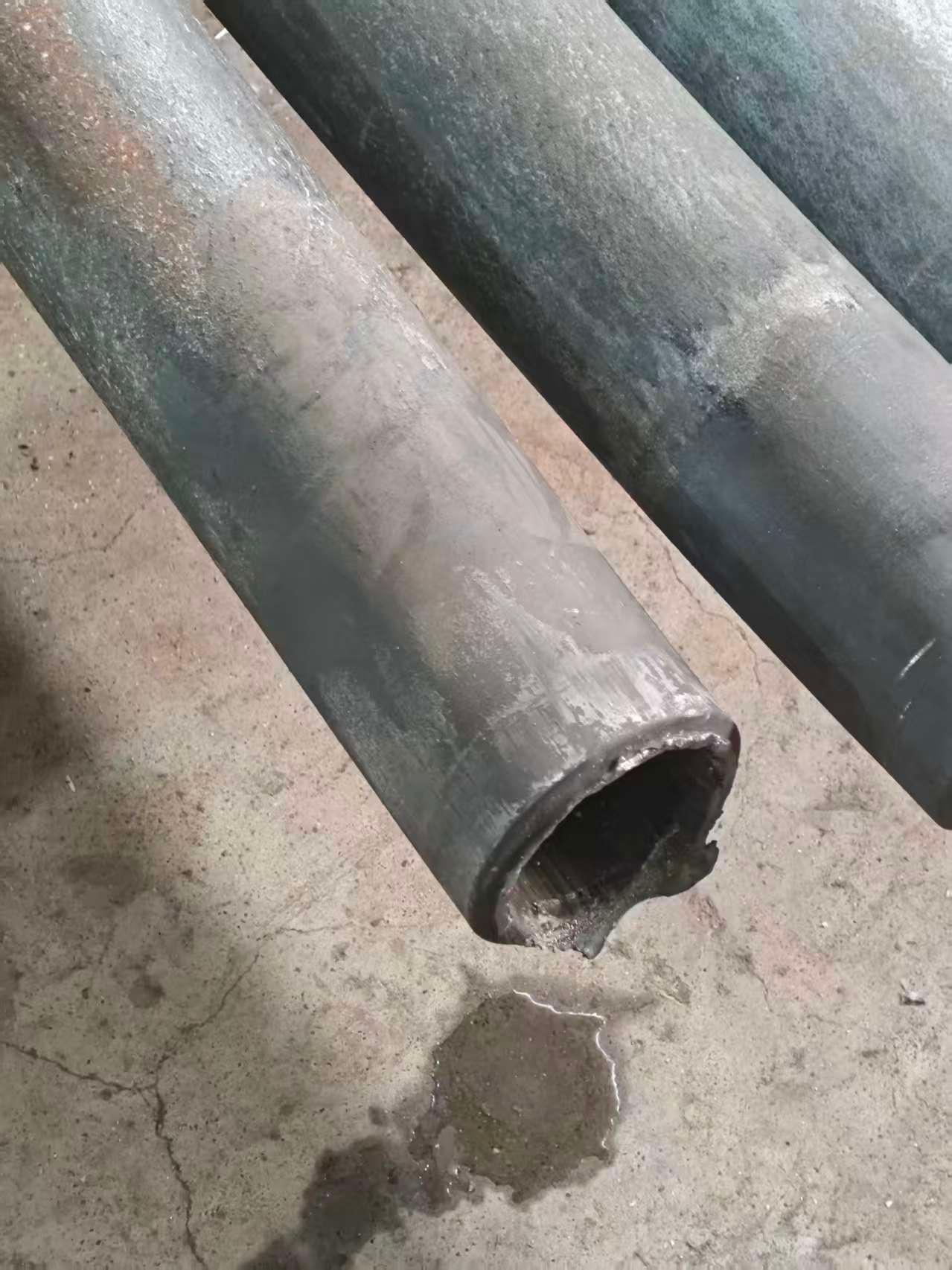
NS3304 resists a wide spectrum of corrosive media, but calling it universally immune would be misleading. Its molybdenum and tungsten content gives strong protection against pitting and crevice corrosion in many chloride solutions, and the low carbon level reduces sensitization during welding. Still, real service conditions rarely match laboratory immersion tests. Temperature, aeration, flow velocity, and the presence of minor contaminants can shift behavior enough to turn a “resistant” alloy into one that fails locally.
In reducing acids like hydrochloric or sulfuric at moderate concentrations and temperatures, NS3304 often performs well. However, stagnant zones, flanged joints, or under-deposit areas can become oxygen-depleted and acidic, creating conditions where crevice attack starts even if the bulk solution seems benign. Users should design to avoid tight crevices and dead legs rather than assuming the alloy will simply shrug off every chloride environment.
Strongly oxidizing media, particularly hot concentrated nitric acid, can exceed the alloy’s useful range, and mixed acids with oxidizing salts may accelerate corrosion in ways that single-acid data won't predict. For borderline applications, weight-loss coupons or electrochemical testing in the actual process stream provide a more realistic basis than extrapolating from generic charts.
Sorting Through Thickness and Diameter Tolerances
When you dig into a spec sheet, the fine print on thickness and diameter tolerances can feel like a wall of numbers. But those numbers are doing real work—they tell you how much a part can stray from the nominal size before it stops fitting or functioning the way it should. A tolerance of ±0.005 inches on a rod diameter isn't just a random guardrail; it reflects the limits of the manufacturing process and the demands of the mating components. Ignore it, and you might end up with shafts that bind, seals that leak, or assemblies that rattle loose after a few hundred cycles.
Sorting through these tolerances starts with asking what actually matters for your application. A thick-walled tube might tolerate a wider range on the outside diameter if the inside diameter is held tight, or vice versa. Sometimes the key isn't the individual dimension but the relationship between them—like concentricity or wall thickness variation. If you only look at the print's individual callouts, you can miss that a part with an acceptable OD and an acceptable ID still has a dangerously thin spot because both drifted in the same direction. Pull a few samples, measure them in the context of how they'll be used, and you'll quickly see which tolerance bands are worth fussing over.
One practical approach is to map your incoming material against the tolerance range before it hits the production line. No supplier delivers parts in a perfect bell curve, and a batch that clusters near the upper limit of a diameter tolerance might behave differently than one hovering near the lower limit—even if every piece is technically in spec. Keep a simple log of measured thickness or diameter values over time. It won't replace a formal capability study, but it will help you spot drift, compare suppliers, and decide whether a tighter incoming inspection is worth the trouble. At the end of the day, sorting through tolerances is less about chasing zero variation and more about knowing which variation you can live with.
Why Some Suppliers Charge Twice as Much for the Same Grade
When two suppliers quote wildly different prices for what looks like the same grade, the explanation usually sits in details that a basic spec sheet never shows. One lot might pass the minimum requirements for a grade while another sits comfortably above them, with tighter control over moisture, broken grains, or foreign matter. The pricier supplier often runs extra sorting passes, invests in better storage to prevent quality drift, and rejects batches that a budget seller would happily ship. That hidden labor and discipline shows up in the final invoice.
Beyond the physical product, higher-priced suppliers typically bundle in things like consistent documentation, on-time delivery, and a direct line to someone who can fix problems before they spiral. A cheap quote can come with delayed shipments, unpredictable packing, or a different origin mixed in without notice. For buyers who cannot afford a failed inspection or a production stoppage, paying twice as much is not about the grade itself—it is about buying the confidence that the grade will actually be what was promised, every single time.
Simple Field Checks Before Accepting a Delivery
Before signing for any shipment, take thirty seconds to walk around the vehicle and note anything that feels off. Check the tires for excessive wear or a sagging suspension—these often hint at overloaded cargo or a poorly maintained trailer. Look at the ground beneath the truck for fresh oil spots, coolant drips, or hydraulic fluid leaks. If the truck is idling, listen for irregular knocking or hissing sounds that don't belong. These small observations can save you from accepting goods that were already compromised in transit.
Next, verify the seal number against your paperwork while the driver is still present. A broken or mismatched seal isn't just a paperwork headache; it means the load may have been opened mid-route. Shine a flashlight into gaps between the trailer doors and the frame. If you see daylight or feel a draft, the seal isn't tight and humidity, dust, or pests could have entered. Don't accept a verbal promise that 'it's fine'—if the seal doesn't match, make a note on the delivery receipt and photograph the discrepancy before unloading.
Finally, open one or two cartons from different pallets before the driver leaves. Press down on the top of the stack; if boxes feel soft or damp, you may be looking at water damage from a roof leak. Check the shrink wrap for tears or re-wrapping signs. If the cargo is temperature-sensitive, use an infrared thermometer to spot-check the product surface—not just the trailer air. A driver's log might show proper reefer settings, but the actual load temperature tells the real story. Catching these issues at the door is far easier than filing a claim a week later.
Turning Long Lead Times into a Procurement Advantage
Long lead times are often framed as a constraint, but experienced procurement teams treat them as a planning asset. When a component takes months to arrive, it forces you to map demand earlier, lock in supplier capacity, and negotiate from a position of clarity rather than urgency. The key is converting that lag into a structured cadence: shared forecasts, phased releases, and buffer agreements that reward both sides for accuracy. Instead of reacting to shortages, you build a rhythm where the waiting period becomes a window for better cost control and fewer last-minute premiums.
One practical shift is to decouple commercial commitment from production timing. You can agree on pricing bands and volume thresholds well before the first unit ships, which lets suppliers optimize their raw material purchases and scheduling. In return, they are often willing to hold partial inventory or reserve capacity without demanding expediting fees. This turns a traditionally adversarial conversation into a joint capacity-planning exercise, and the long lead time becomes the reason you get preferential allocation when demand tightens across the industry.
Finally, use the extended horizon to redesign approval workflows. A procurement cycle that assumes short delivery often collapses into emergency buys and off-contract spending. If you align internal stakeholders around a slower, more deliberate approval path, the long lead time no longer feels like a missed deadline. It starts functioning as a built-in review stage, giving engineering, finance, and quality teams enough room to validate choices without paying for speed they do not actually need.
FAQ
NS3304 seamless pipe stands out because it offers exceptional resistance to both oxidizing and reducing environments. In practice, you'll often see it in chemical processing plants where exposure to mixed acids is routine. The absence of a weld seam also eliminates a common weak point, giving it a longer service life under fluctuating pressures and temperatures.
Ask for mill test certificates that list the actual chemical composition and mechanical properties, not just the nominal values. A trustworthy supplier will also provide results from hydrostatic or eddy current testing. If possible, request a sample for independent lab analysis—checking for trace elements like sulfur and phosphorus is a good way to spot substandard material.
Yes, that's one of its main strengths. NS3304 retains good tensile strength up to around 700°C while staying resistant to pitting and stress corrosion cracking in chloride-rich and acidic media. However, prolonged exposure above 800°C may cause sensitization, so it's better to confirm your exact operating range with the manufacturer.
Standard stock usually covers outside diameters from 6 mm to 219 mm with wall thicknesses ranging from 1 mm to 20 mm. For larger diameter requirements, some mills can produce up to 406 mm, but lead times increase. If your project needs non-standard sizes, ask about custom extrusion rather than relying on cold drawing alone.
Inconel 625 offers higher strength at elevated temperatures and better fatigue resistance, while Hastelloy C276 has superior resistance to localized corrosion in aggressive oxidizing media. NS3304 sits between them: it provides balanced performance at a often more predictable price point, making it a practical choice for less extreme but still demanding chemical environments.
The base material is the same, but seamless pipes have a uniform grain structure without a heat-affected zone. In welded pipes, the weld area may have slightly different corrosion behavior unless fully solution annealed. For critical applications where leaks or pitting could be catastrophic, seamless is the safer bet.
Many buyers focus only on price per meter and overlook the importance of proper heat treatment. Under-annealed pipes can fail early due to residual stress. Another mistake is ignoring the supplier's ability to provide full traceability—if the pipes come from different heats, record-keeping becomes a nightmare during audits.
Conclusion
A seamless pipe isn't just a buzzword—its grain structure stays uninterrupted, which removes the weak weld line that often becomes the first failure point under pressure or thermal cycling. For NS3304, that translates into more predictable performance in chloride-heavy environments, though it's a mistake to assume the alloy is invincible. Real-world corrosion resistance depends heavily on surface finish, heat treatment, and whether the pipe has been passivated correctly. In aggressive acids or stagnant seawater, even top-tier NS3304 can pit if the mill scale isn't removed or if the material was over-pickled. On the dimensional side, thickness and diameter tolerances vary more between suppliers than most buyers expect. A pipe advertised as 3 mm wall might arrive anywhere from 2.7 to 3.3 mm depending on the standard—ASTM B622, B829, or a proprietary spec—and that swing affects burst ratings and flow calculations. Reputable mills will state whether they hold to a half-tolerance or full-tolerance band, and that detail is far more useful than a generic 'high precision' claim.
The cost gap between two suppliers offering the same NS3304 grade often comes down to what isn't in the datasheet. One mill might use virgin nickel and molybdenum with strict traceability, while another blends revert scrap and skips the third-party ultrasonic test. Those shortcuts don't always show up in a chemistry report, but they surface later as micro-cracks or uneven wall thickness. Before accepting a delivery, do a few quick checks: verify heat numbers against the mill certificate, look for a uniform pickled surface without grey patches, and measure wall thickness at both ends and mid-length with a calibrated ultrasonic gauge. Also weigh a sample length—underweight pipe often signals under-tolerance material. Finally, long lead times for NS3304 seamless pipe aren't just a nuisance; they can be used to negotiate better terms, lock in pricing before alloy surcharges spike, or request staged deliveries that match your project schedule. Smart buyers treat the waiting period as a chance to audit the supplier's quality system rather than simply chasing the fastest quote.
Contact Us
Contact Person: Chenji Li
Email: 521 Zhonghui Road, Huishan Economic Development Zone
Tel/WhatsApp: +86 83112233
Website: https://www.jldnickelalloy.com/