

Wholesale Engraving Laminate from China: A Comprehensive Sourcing Guide
2026-06-24
Engraving laminate is rapidly becoming a staple in modern interior design, offering durability and aesthetic flexibility that few materials can match. Yet, sourcing high-quality options at competitive prices remains a challenge. This guide demystifies the process of procuring wholesale engraving laminate directly from China, revealing insider tips on vetting suppliers, navigating logistics, and securing the best deals. Whether you're an architect, contractor, or distributor, you'll discover why LYSHIRE stands out as a trusted partner in this dynamic market, blending craftsmanship with supply chain expertise to elevate your projects.
Why Engraving Laminate from China Makes Sense for Your Projects
When you're juggling tight deadlines and even tighter budgets, sourcing engraving laminate from China can feel like uncovering a hidden shortcut. The cost advantage isn't just about lower price tags—it's about being able to order larger quantities without flinching, so you always have stock on hand for last-minute client tweaks. Many suppliers have streamlined their export processes to a point where turnaround times rival domestic options, meaning you're not sacrificing speed for savings. It’s the kind of practical move that keeps a small workshop competitive without cutting corners on output quality.
Beyond the balance sheet, Chinese manufacturers have quietly become masters of customization in the engraving laminate space. Need a specific depth of engraving layer, an unusual color blend, or a sheet size that defies standard dimensions? You’re more likely to get a “yes, we can do that” than a rundown of minimum order limitations. This flexibility often comes from decades of honing production techniques for diverse global markets, so the material you receive performs consistently on both CO2 and diode laser machines. It’s less about copying what’s already out there and more about collaborating to create exactly what your project demands.
There’s also an underrated peace of mind that comes with tapping into a supply chain built on bulk experience. The best suppliers have already solved the headaches you’re about to encounter—warping in transit, inconsistent cap layers, adhesive failures during cutting. They’ll often send sample swatches with zero fuss, letting you test how a matte black finish actually behaves under your laser settings before you commit. In a niche where material quirks can make or break a finished piece, that kind of real-world proof is worth more than a glossy catalog promise.
Decoding Material Grades and Surface Finishes for Lasting Impressions
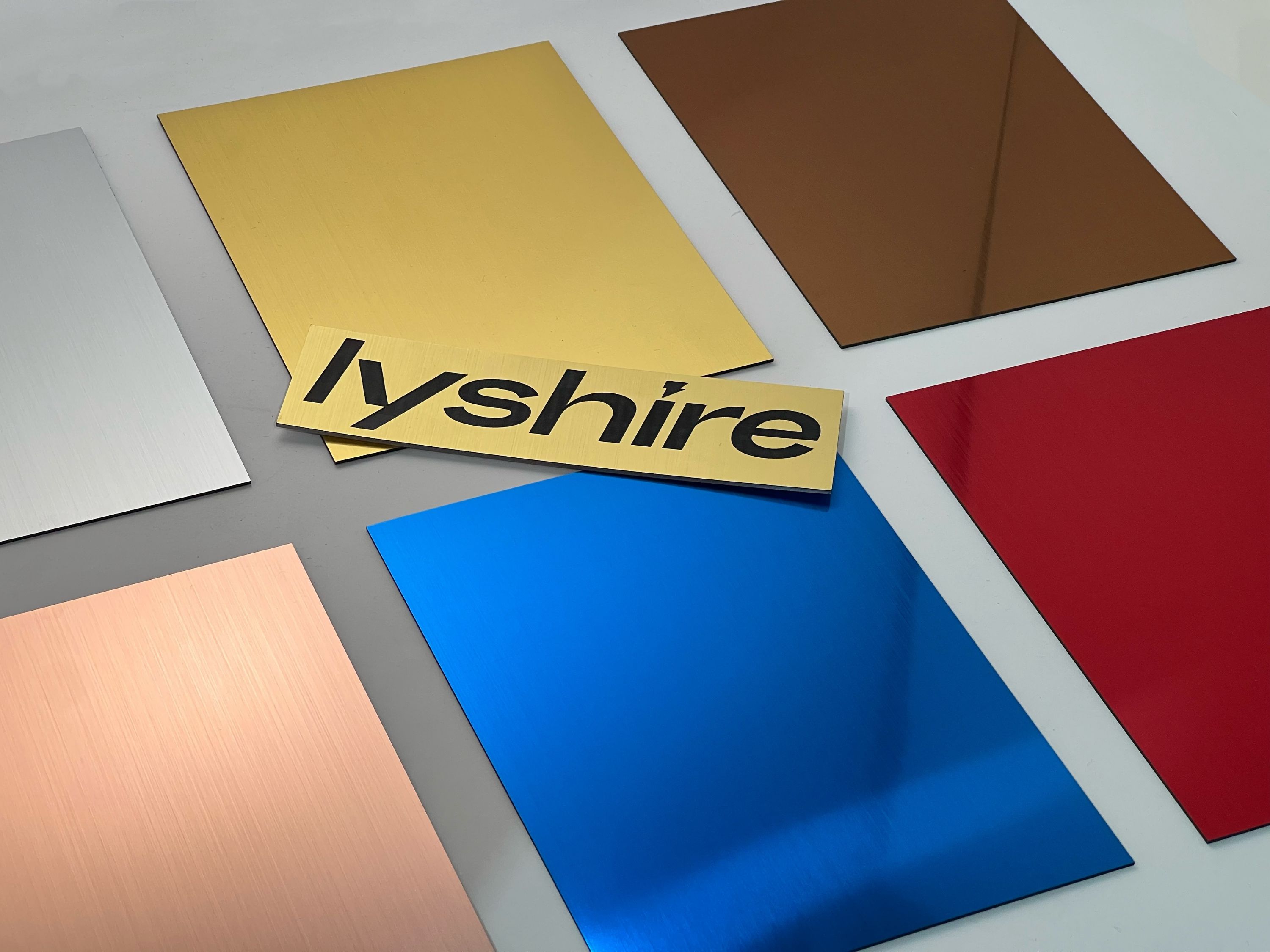
Material grades aren’t just numbers on a spec sheet—they’re the backbone of any project that demands longevity and character. Whether you’re selecting stainless steel for a coastal balcony or aluminium for a lightweight frame, the grade dictates how the material will behave under stress, weather, and time. A higher grade often means better resistance to corrosion or wear, but it’s not always the right choice if it complicates forming or joining processes. The trick is to match the grade to the real-world conditions the piece will face, not just to a theoretical ideal.
Surface finishes do more than catch the light. They shape how a material feels, how it ages, and how much maintenance it demands. A brushed finish might hide fingerprints on a handrail, while a polished surface can amplify every touch but also highlight sculptural forms. There’s a quiet art to knowing when a raw, mill-scale look works better than a refined coating—it can add authenticity that no paint can replicate. The finish isn’t an afterthought; it’s the final layer of protection that seals the material’s performance and defines its presence in a space.
When grades and finishes align, the result is something that doesn’t just last—it improves over time. Think of a copper roof that develops a patina only because the grade had enough purity, and the mill finish was allowed to react freely. This synergy avoids the common pitfall of mismatched components that age unevenly or fail prematurely. The impression left isn’t just visual; it’s tactile and even emotional, as people connect with surfaces that reveal their story through subtle changes. Getting these choices right means looking beyond catalogues and observing how materials actually live in the environments we create for them.
Sourcing Strategies to Find Reliable Manufacturers Without the Guesswork
Cutting through the noise starts with tapping into trade shows and industry events, but not in the way most people do. Instead of wandering the floor collecting brochures, show up with a clear shortlist of pre‑vetted companies and use face‑to‑face time to gauge their problem‑solving mindset. Engage buyers who source frequently from Vietnam, India, or Eastern Europe—they rarely share their real manufacturer lists, but a casual conversation can reveal patterns that lead to factories with a proven track record. This turns guesswork into a targeted, relationship‑first approach.
Online platforms and B2B directories are useful only when combined with manual verification that goes beyond star ratings. Order small sample batches not just to check quality, but to test communication styles, packaging care, and responsiveness to last‑minute changes. A manufacturer that truly values long‑term business will ask questions about your target market and suggest adjustments before you even sign a contract. Dismiss anyone who hides behind generic sales pitches or avoids direct video calls with the production floor.
Leverage cross‑referencing through shipping data and local consulting firms that operate inside manufacturing hubs. Firms that help with import/export compliance often maintain quiet relationships with mid‑size factories that don’t advertise online. Combine this with a look at the supplier’s labor certifications and existing client portfolio—placing a small “test order” for an unrelated product line can expose weaknesses you’d never see in a formal audit. Reliability emerges not from a single check, but from overlapping layers of verification that make guesswork obsolete.
Navigating Customization Options: Colors, Patterns, and Precision Engraving
Color isn't just about picking a shade that catches your eye—it's about what that shade says when it meets the light, how it shifts from morning to evening, and the way it makes you feel every time you reach for it. Some colors age into themselves over years, gaining a warmth that no catalog swatch could ever promise. Others hold their crispness, refusing to soften, which can be exactly what a design needs to keep its edge. The trick is knowing which family of tones will live well with the materials they're applied to, and that's where real-world testing beats any digital mockup.
Patterns bring a different kind of conversation to the table. A subtle, repeating motif might catch your eye only after you've owned the piece for a while, like a secret between you and the maker. Bold graphics, on the other hand, announce themselves and dare the rest of the room to keep up. The scale matters more than most folks realize—what looks balanced on a screen can overwhelm in person, or disappear entirely if the pattern's too fine. The best ones find a rhythm that lets your eye travel without ever feeling lost.
Precision engraving is where the hand of the craftsperson still holds sway, even with all the tech we have. It's not just about crisp lines or accurate depths; it's about how those cuts feel under your fingertip, the slight drag of texture that reminds you this isn't mass-produced. Whether it's a date, initials, or a sprawling illustration, the real skill lies in knowing when to let the machine do its thing and when to go back in by hand to sharpen a corner or soften a curve that just doesn't sit right. That sort of attention leaves marks you can't fake.
Quality Assurance Steps That Separate Top Suppliers from the Rest
Top-tier suppliers build quality into every stage, starting with how they vet raw materials. Instead of relying on certificates alone, they send their own engineers to audit upstream providers, test batches before acceptance, and maintain a reject log that feeds directly into supplier scorecards. This hands-on approach catches flaws that paper-based approvals miss.
During production, the best partners don’t just inspect finished goods. They embed checkpoints right on the line—using live data from calibrated sensors and CMMs to spot drift before it creates scrap. Operators are trained to interpret control charts, not just follow a checklist, so adjustments happen in real time, not after a batch fails.
Shipping a perfect order means testing beyond the spec sheet. Leaders in the field simulate real-world stress conditions, run lifecycle tests on random samples, and have clear protocols for borderline results. After delivery, they mine warranty and service data to tighten standards, turning every issue into a chance to raise the bar.
Logistics and Cost Breakdown: Getting Your Order Delivered Efficiently
When you place an order, the final delivery cost depends on a few key variables: shipping method, package dimensions, and destination. Air freight is the fastest but comes at a premium, often used for time-sensitive or high-value items. Sea freight remains the go-to for bulk shipments, offering significant savings per unit if you can accommodate longer transit times. We often recommend a hybrid approach—air for initial stock and sea for restocking—to balance speed and budget.
A typical logistics bill breaks down into several components beyond the base freight charge. Fuel surcharges fluctuate with market rates and can add 15–25% to your quote. Customs clearance and duties vary by country and product category, so it helps to classify your goods accurately to avoid delays and penalty fees. Don’t overlook insurance: it’s a small percentage that covers you against loss or damage in transit. Packing smartly—using the right carton sizes and minimizing empty space—can also reduce dimensional weight charges.
Getting your order delivered efficiently isn’t just about picking the cheapest carrier. Real-time tracking and a responsive support team make a noticeable difference when something goes off-script. We’ve found that scheduling shipments around major trade show seasons or holiday rushes can shave days off transit times and keep costs down. Consolidating multiple orders into a single container or using a trusted freight forwarder streamlines the process, cutting down on paperwork and fragmented communication.
FAQ
Engraving laminate is a multi-layer plastic sheet, typically with a colored core and a contrasting surface layer. When you engrave the top layer, the core color shows through, creating durable, high-contrast text and graphics. It's widely used for signage, nameplates, control panels, trophy plates, and industrial labels because it resists wear, chemicals, and weather.
China has developed a very strong manufacturing base for these materials, offering a wide range of colors, thicknesses, and finishes at competitive prices. Many Chinese factories use advanced production lines and strict quality controls, so you can often get products that match or exceed international standards without the premium cost.
Look beyond just the price. Evaluate their production capacity, quality certifications (like ISO), sample availability, and communication responsiveness. Ask about their raw material sources and whether they can customize sizes or colors. A factory visit or a third-party inspection can reveal a lot about their actual capabilities and working conditions.
Always request physical samples before placing a bulk order. Test them with your own engraving equipment for cutting smoothness, color consistency, and adhesive performance. Set clear specifications for thickness tolerance, surface hardness, and UV resistance. Have a detailed quality agreement in place, and consider independent lab testing for critical shipments.
One common issue is color mismatch between sample and production, so keep approved color swatches. Another is underestimating shipping costs, especially for bulky sheets. Customs clearance delays and unexpected tariffs can also eat into your margins. Building a relationship with a reliable freight forwarder and doing proper landed cost calculations beforehand will save you headaches.
Yes, most established manufacturers offer cut-to-size services and can produce sheets in custom dimensions. Private labeling, such as printing your logo on the protective film or packaging, is also widely available, but minimum order quantities usually apply. It's best to discuss these details early and get everything in writing.
It usually starts with you sending specifications and quantity. The supplier quotes and may send samples. After you approve, a proforma invoice is issued. You pay a deposit, and production begins. Once completed, you arrange inspection and final payment, then the goods are shipped. Depending on the volume, production can take 2–5 weeks, and sea freight adds another 2–6 weeks.
For full container loads, ocean freight is most economical. If your order is smaller, consider LCL (less than container load) or even air freight for urgent needs. Work closely with a freight forwarder who understands the paperwork for Chinese exports and your country's import regulations. Proper crating is essential to prevent damage, so confirm the packaging method with the supplier.
Conclusion
Sourcing engraving laminate from China isn’t just about cost savings—it’s about tapping into a mature supply chain that blends material science with decorative versatility. When you understand the range of phenolic and melamine-faced substrates available, along with gloss, matte, or textured finishes, you can specify products that stand up to heavy handling while maintaining visual depth. Early conversations with potential suppliers should go beyond price lists; ask about their raw material sources, press plate libraries, and how they handle batch-to-batch color consistency. The real differentiator often lies in the small details, like whether a factory can match a proprietary Pantone for a brand project or produce micro-engraved patterns that don’t wear off after repeated use. Chinese manufacturers that invest in CNC engraving and precision sandblasting can often replicate intricate designs at scale, but it’s critical to verify these capabilities through live video walk-throughs or targeted sample requests rather than relying on polished catalogs.
Establishing a reliable supplier pipeline means digging into quality protocols that separate serious operations from resellers. Request third-party test reports for scratch resistance, impact strength, and UV stability, and compare them against your project’s environmental exposure—laminate meant for indoor signage won’t hold up on outdoor wayfinding panels without the right formulation. Logistics can quickly erode your per-unit savings if you overlook packaging standards; moisture-sealed bundling and edge-protected pallets prevent transit damage that leads to high rejection rates. When calculating total landed cost, factor in consolidation services, local port handling, and last-mile delivery to your workshop, as these often eclipse the factory price difference between suppliers. The most successful buyers treat China sourcing as a partnership rather than a transaction, cultivating open dialogue about order forecasting and design iterations, which ultimately reduces lead times and fosters product innovation tailored to your market.
Contact Us
Contact Person: Tina Hou
Email: [email protected]
Tel/WhatsApp: +86 17816238685
Website: https://www.lyshire.com