

Wholesale IMS Core Network: Building the Foundation for Next-Gen Communication Services
2026-06-10
The wholesale telecom arena is undergoing a seismic shift as operators race to deliver next-generation communication services. At the heart of this transformation lies the IMS core—a linchpin for seamless voice, video, and messaging over IP. For service providers aiming to stay ahead, partnering with a visionary like IPLOOK isn’t just an option; it’s a strategic imperative. Their wholesale IMS core solutions are redefining scalability and interoperability, empowering carriers to launch innovative services with unmatched speed and efficiency. In this article, we explore how this foundation is reshaping the future of connectivity—and why those who build on it today will own the networks of tomorrow.
The Quiet Revolution of Wholesale IMS: Beyond Basic Connectivity
Wholesale IMS has quietly reshaped how telecom operators handle voice and multimedia services, but its impact reaches far beyond everyday connectivity. At its heart, this technology decouples service logic from underlying networks, giving carriers a flexible framework to manage sessions, routing, and media processing without being chained to legacy hardware. What used to take months of infrastructure planning can now be spun up in days, all while handling protocol interworking and transcoding behind the scenes. It’s not flashy, but it’s the reason cost-strapped operators can still launch rich communication services while sweating their existing assets.
Looking deeper, the real value lies in how IMS enables smarter traffic steering and real-time policy control at the wholesale level. Instead of blindly piping voice minutes, operators can now apply granular routing rules based on quality, cost, or commercial agreements—something that was painfully manual in the TDM era. This allows for dynamic least-cost routing with full visibility, turning wholesale voice from a low-margin commodity into a programmable asset. Add in the ability to orchestrate APIs for fraud detection, number portability, and emergency calling, and IMS suddenly becomes the invisible glue holding together modern telecom partnerships, all without the end user ever noticing.
Perhaps most overlooked is how wholesale IMS is becoming the launchpad for VoLTE roaming and future 5G voice architectures. As 2G and 3G sunsets accelerate, the ability to deliver consistent voice, video, and messaging across disparate networks no longer comes from circuit-switched fallbacks but from IMS-based interconnection. This shift is forcing a rethinking of peering models, settlement systems, and even how voice quality is measured. It’s a quiet, unglamorous evolution, but one that determines whether a call connects crisply across borders or drops into silence.
Economics of the Virtual Core: Cost, Scale, and Performance
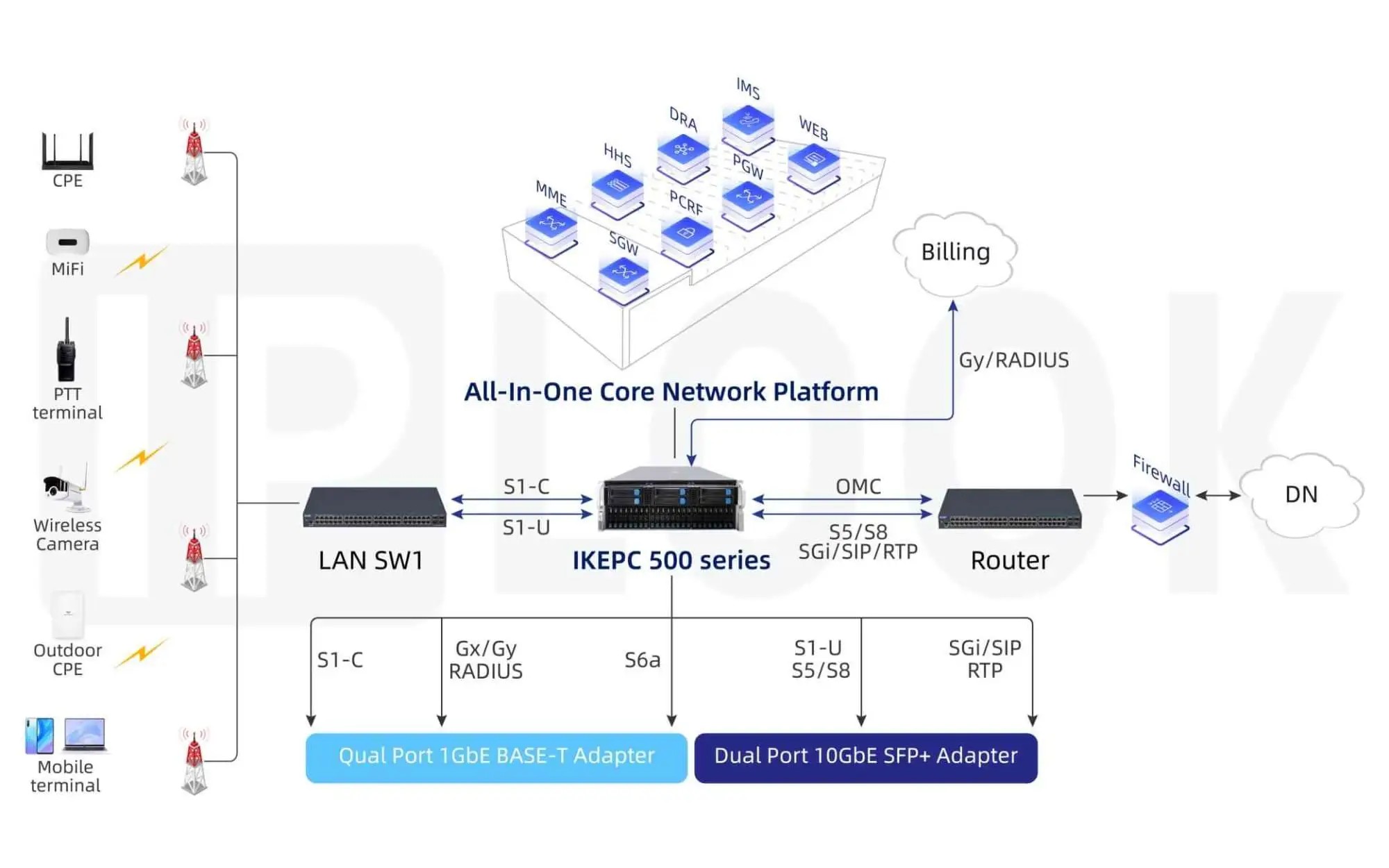
The shift toward virtualized environments has reshaped how organizations think about core infrastructure. The economics of the virtual core hinges on a delicate balance between cost outlay, the ability to scale on demand, and the performance delivered per unit of resource. Traditional physical cores lock you into fixed capital expenditure and often leave capacity stranded; virtual cores, by contrast, allow you to pay only for what you consume, turning fixed costs into variable ones. This flexibility can lower the barrier to entry for high-performance computing tasks, but it also demands a granular understanding of pricing tiers, instance types, and potential hidden charges. The real economic advantage appears when workloads are variable or unpredictable, letting you spin up hundreds of cores for a batch job and then spin them down, avoiding idle hardware costs that would otherwise eat into margins.
Scaling in a virtual context is not just about adding more cores; it’s about the agility to match compute power to workload demands in near real time. When demand spikes, the ability to instantly provision additional virtual cores means you can maintain performance and user experience without overprovisioning. This scale-on-demand model changes the calculus of capacity planning. Instead of buying for the peak, you can design for the average and rely on elastic scaling to handle bursts. However, true cost savings materialize only when you actively manage scaling policies—autoscaling rules that take into account not just CPU load but also memory pressure, network throughput, and application response times. Without that tuning, you risk scaling too slowly and sacrificing performance, or scaling too aggressively and negating the cost benefits.
Performance, from an economic standpoint, is not merely a technical metric but a lever that directly influences cost efficiency. Higher performance per virtual core means you may need fewer cores to accomplish the same task, reducing hourly charges. Yet raw clock speed or core count can be misleading; virtual core performance often varies due to noisy neighbor effects, hypervisor overhead, and storage I/O bottlenecks. To truly optimize, teams need to profile their workloads and select instance types that offer the best price-performance ratio for their specific patterns—CPU-bound, memory-bound, or I/O-intensive. This often means moving beyond generic instances and experimenting with specialized hardware exposures, including GPU-backed instances for parallel processing or high-memory configurations for in-memory databases. The end goal is a virtuous cycle where careful performance tuning lowers the number of core-hours consumed, which in turn drives down costs while maintaining or even improving end-user experience.
Connecting Network Islands: A Blueprint for IMS Interoperability
For years, telecom operators have built their IMS cores in relative isolation, each tuned to specific vendors and regional standards. This patchwork creates formidable barriers when services need to span networks—think VoLTE roaming or cross-carrier rich messaging. The real hurdle isn't the protocol stack itself but the subtle misalignments in SIP header interpretation, divergent feature tagging, and inconsistent handling of early media. Without a cohesive interoperability blueprint, these discrepancies turn simple call setups into negotiation nightmares, degrading user experience and stalling innovation.
A practical blueprint starts with a shared testing sandbox that goes beyond basic SIP compliance. It demands rigorous validation of end-to-end session flows under real-world impairment scenarios: jitter, packet loss, and unexpected redirects. More importantly, it codifies a minimal set of profile extensions—dubbed 'IMS Lite' by some architects—that strips away non-essential P-headers and enforces a common understanding of timers and error codes. When operators jointly agree on these guardrails, the actual integration work shifts from firefighting to a repeatable engineering process, often slashing deployment cycles by half.
The payoff extends far beyond reduced interconnection costs. An effectively bridged IMS ecosystem lets carriers launch rich services—like multi-party video calling with seamless handoff from VoLTE to Wi-Fi—without fearing compatibility black holes. It also opens the door for MVNOs and private network operators to plug into the fabric without building full cores from scratch. Ultimately, the blueprint isn't just a technical document; it's a commitment that transforms a fragile web of bilateral agreements into a resilient, scalable mesh where service innovation can actually flow.
Reimagining Service Delivery for a 5G World
The shift to 5G is forcing a fundamental rethink of how services are built and delivered. It's no longer just about faster speeds—it's about slicing networks to fit wildly different needs, from massive sensor deployments that barely whisper data to ultra-reliable factory robots that can't afford a millisecond of lag. This demands a delivery model that treats connectivity as programmable, on-demand fabric rather than a fixed pipe.
We're moving past the era of one-size-fits-all service catalogs. In a 5G world, delivering value means letting customers dial up and down capabilities in near real-time, often through simple APIs. Whether it's a venue needing a temporary private network or a logistics firm tracking thousands of assets with pinpoint accuracy, the service delivery engine has to be automated, intent-driven, and capable of stitching together edge compute and cloud resources on the fly. If you're still provisioning circuits manually, you've already lost the plot.
Customer expectations have quietly leapfrogged legacy operations. They assume connectivity will be invisible, bundled tightly with security, analytics, and application performance guarantees. Delivering on that means embedding intelligence throughout the service lifecycle—using telemetry to predict issues before they surface, and reshaping offerings based on actual usage patterns rather than guesswork. The reward for getting this right isn't just efficiency; it's the ability to unlock entirely new revenue streams that simply didn't exist in the 4G era.
Empowering Operators with API Control for Customized Services
Modern telecom networks demand agility that off-the-shelf solutions rarely provide. By exposing granular API control to operators, we unlock the ability to tailor services precisely to customer needs without waiting for vendor roadmaps. This hands-on access transforms the operator from a passive service reseller into an active innovator, capable of scripting unique combinations of network functions, adjusting quality-of-service parameters on the fly, and integrating third-party applications directly into the service chain. The result is a responsive ecosystem where customized offerings—from ultra-low-latency slices for industrial IoT to bandwidth-on-demand for live events—become not just possible, but routine.
The real power lies in the abstraction layer that translates operator intent into network configuration. Through a coherent set of RESTful APIs, operators can orchestrate resources across multiple domains, automate lifecycle management, and embed business logic into network operations. This means a marketing campaign can trigger an automatic QoS boost for a gaming service, or a healthcare provider can provision a secure, HIPAA-compliant slice with a single API call. The control plane becomes a canvas for differentiation, where the operator’s domain expertise meets the raw potential of programmable infrastructure.
Security and simplicity go hand in hand in this model. Role-based access, audit trails, and policy validation ensure that newfound freedom doesn’t compromise the network. Operators can experiment safely in sandbox environments before pushing changes to production, with API-driven guardrails preventing misconfigurations. This balance encourages a culture of continuous improvement: every successful customization becomes a reusable template, shrinking development cycles and enabling even non-technical stakeholders to shape services. In essence, API control doesn’t just empower operators—it democratizes innovation across the organization.
Building an Unbreakable Core from Redundant Systems
True resilience isn’t about preventing every failure—it’s about ensuring that no single point of failure can bring everything down. By designing the core infrastructure around multiple independent components that mirror each other’s functions, the system continues to operate even when parts of it collapse. This approach transforms fragility into a layered defense, where overlapping responsibilities and automatic failover become the norm rather than an afterthought. Think of it as a net woven from many threads: if one snaps, the load simply shifts, and the structure holds firm without anyone noticing.
The magic lies in making redundancy invisible to the user and effortless for the operator. Identical processes run in parallel, cross-checking each other’s output, while heartbeat signals constantly verify that every module is alive. When a component stutters, its duties are silently absorbed by a sibling that was already doing the same work, just waiting in the wings. This isn’t just about hardware duplication—it’s about designing software and decision-making flows that treat failure as a normal, expected event. The core becomes unbreakable because it no longer sees any individual piece as indispensable.
Over time, this design ethos seeps into every layer of the system. Data is mirrored across geographically distant nodes; network paths multiply so that a cut cable triggers sub-second rerouting; authority is distributed so that no single server gets to say “no” alone. The result is a core that doesn’t just survive chaos—it feeds on it, growing stronger with every incident because each recovery exercise sharpens the automated reflexes that keep the whole machine humming. Redundancy stops being a safety net and becomes the very fabric of reliability.
FAQ
A wholesale IMS core network is a shared, carrier-grade IP Multimedia Subsystem infrastructure that multiple service providers can use on a pay-as-you-grow basis, instead of each building their own standalone core. It centralizes session control, media handling, and application servers, allowing operators to launch voice, video, and messaging services without heavy upfront investment.
In a traditional model, each operator deploys a dedicated IMS core, which requires significant capital, spectrum, and expertise. A wholesale IMS flips that by pooling resources across multiple tenants, offering network functions as a service. This means operators can rent capacity, scale on demand, and focus on branding and customer experience rather than infrastructure maintenance.
It unifies IP-based connectivity across access networks—4G, 5G, Wi-Fi, fixed line—and provides the standardized service layer for features like VoLTE, VoNR, rich messaging, and API-driven programmable communications. By decoupling services from the underlying transport, it lets operators rapidly combine voice, video, and data into new, context-aware experiences that go beyond simple calls.
They gain immediate cost efficiency through shared infrastructure, faster time to market for advanced services, and the flexibility to trial offerings without massive commitments. It also simplifies interoperability between different networks and devices, easing the migration from legacy circuit-switched systems to all-IP while maintaining service continuity.
Beyond HD voice and video calling, it supports cloud-based unified communications, real-time language translation during calls, smart home integration that mixes voice control with visual feedback, and enterprise services like virtual receptionists. The common core also makes it simpler to embed communications into apps via APIs, spawning use cases such as in-ride driver-passenger chat with privacy masking.
Because the core is virtualized and multi-tenant, capacity can be dialed up or down in hours rather than months. Operators can add subscribers, introduce new features like enhanced emergency calling, or expand into new regions by tapping into the wholesale provider's points of presence. This elasticity extends to seasonal demand spikes and disaster recovery scenarios without over-provisioning.
Migrating existing subscribers without disruption is the biggest hurdle, requiring careful interworking with legacy circuit-switched networks and robust fallback mechanisms. There are also concerns around data sovereignty, customization limits, and vendor lock-in if the wholesale platform doesn't support open APIs or multi-vendor integration. Strong SLAs and clear security boundaries are non-negotiable.
Absolutely. The architecture treats access as agnostic, so a fixed-line operator can use the same wholesale IMS to deliver VoIP and IPTV services that complement its broadband, while a mobile virtual network operator can launch a nationwide voice service on 4G/5G with minimal core network build. This convergence opens up cross-selling opportunities like joint fixed-mobile bundles powered by a single, unified core.
Conclusion
Wholesale IMS core networks are quietly reshaping the telecommunications landscape, pushing far past simple call routing and SMS. By virtualizing the core, operators sidestep heavy hardware investments while tapping into elastic scale and improved performance. The real shift is in how these shared platforms stitch together fragmented networks—a blueprint for interoperability that turns regional silos into a cohesive, manageable fabric. This isn’t just about cost savings; it’s about laying a groundwork where basic connectivity evolves into a rich service ecosystem, all while removing the friction that has long plagued cross-network communication.
As 5G matures, wholesale IMS becomes the springboard for rethinking service delivery. Instead of rigid, one-size-fits-all offerings, operators gain fine-grained API control, allowing them to tailor voice, video, and messaging experiences to niche markets or enterprise needs. Paired with a design philosophy rooted in redundant systems, the core achieves carrier-grade resilience that can withstand infrastructure failures without missing a beat. The outcome is a platform that not only supports today’s communication demands but also adapts to whatever next-generation services emerge, empowering providers to experiment, customize, and grow without being handcuffed by legacy constraints.
Contact Us
Contact Person: Shimmy
Email: [email protected]
Tel/WhatsApp: 85253392231
Website: https://www.iplook.com