

Why Choose a Customized Manufacturer for Your Warehouse Ceiling Fans?
2026-07-16
Warehouse cooling isn't just about moving air—it's a strategic decision. Most off-the-shelf fans fail to address high ceilings, heat pockets, and unique layouts, leaving you with inefficient circulation and wasted energy. That's where customization changes the game. Imagine fans engineered precisely for your space, boosting airflow where you need it most, all while slashing operational costs. At VINDUSFAN, we don't believe in one-size-fits-all. Our tailored solutions are built from the ground up, tackling your specific challenges. Curious how a bespoke approach transforms warehouse comfort and your bottom line? Let's dive in.
Tailored Airflow for Massive Spaces
Large, open interiors like warehouses, atriums, and exhibition halls pose a real challenge for climate control. Standard HVAC systems often fall short, creating hot and cold pockets that leave occupants uncomfortable. The key lies in designing airflow patterns that move volumes of air efficiently without the roar of industrial fans. Customized solutions involve mapping the space's unique thermal loads, occupancy patterns, and architectural features to deliver air precisely where it's needed, using low-velocity, high-induction diffusers that blend air seamlessly.
One often overlooked factor is the impact of stratification — warmer air naturally rises to the ceiling, while cooler air settles near the floor. In massive spaces with high ceilings, this can result in significant energy waste if the system is constantly reheating the lower zone. By implementing displacement ventilation or underfloor air distribution, we can take advantage of natural buoyancy, delivering fresh air at floor level and letting it drift upward as it warms, gently sweeping contaminants out of the breathing zone. This approach not only enhances comfort but also dramatically reduces the amount of conditioned air required.
Flexibility is another non-negotiable aspect. A convention center might host a packed trade show one day and a sparse lecture the next. Smart airflow systems adapt in real time, using arrays of sensors to detect occupancy and adjust fan speeds, damper positions, and even the direction of supply air. By treating the building as a living, breathing entity, we create environments that feel naturally pleasant without the noticeable blast of mechanical intervention, ensuring that the architecture itself remains the star of the show.
Cutting Energy Costs Without Sacrificing Comfort
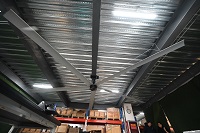
Most people assume using less energy means giving up the cozy warmth in winter or the crisp air conditioning in summer. That’s not the case. Small, strategic choices can reduce bills without turning your home into a fortress of discomfort. Start by replacing old incandescent bulbs with warm-toned LEDs—they use a fraction of the power and cast a similar glow. Next, consider a programmable thermostat. Setting it to ease back 7–10°F when you’re asleep or away can trim up to 10% off annual heating and cooling costs, and you won’t feel a thing if you schedule it to warm up before your alarm rings.
Your home’s envelope—the walls, windows, and doors—is often the silent culprit driving up bills. Adding weatherstripping around drafty frames and beefing up attic insulation costs surprisingly little and pays back fast. In sunny rooms, thermal-backed curtains keep heat out in August and trap it in January. Even the way you use appliances matters: running the dishwasher only when full and choosing air-dry cycles, or washing clothes in cold water, adds up to noticeable savings without changing your daily routine. A door snake to block that sliver of light under the kitchen door? It’s old-school, but it works.
Outdoors, a few tweaks stretch your dollars. Plant deciduous trees on the south and west sides—they’ll shade the house in high summer and let sunlight through bare branches in winter. Use ceiling fans year-round: counterclockwise in summer pushes cool air down, clockwise at low speed in winter recirculates warm air trapped near the ceiling. And when it’s time to replace older equipment, an energy-efficient heat pump or water heater often qualifies for utility rebates, making the upgrade more affordable. Comfort doesn’t have to clash with conservation; it’s about working with your home, not against it.
Built to Survive Warehouse Conditions
One look at the reinforced steel frame and you’ll know this unit isn’t here for a light workout. We’ve taken every beating a high-traffic storage floor can dish out—pallet strikes, forklift nudges, even the occasional midnight collision with an overzealous reach truck—and built the housing to laugh it off. The impact-absorbing bumpers wrap around the most vulnerable corners, while the internal dampeners cut vibration before it can rattle sensitive components. It’s the kind of toughness that comes from studying actual dent patterns in real warehouses, not just computer simulations.
Dust and temperature swings kill more equipment than collisions ever will, so we flipped the script on airborne debris. The sealed enclosure keeps fine particulates from infiltrating circuit boards, and a passive thermal design bleeds heat without noisy fans that clog and fail. From sub-zero loading docks to sweltering mezzanines, the internal climate stays within spec because the outer shell reflects radiant heat and the gasket system flexes instead of cracking when cold shrinks everything down. No fiddly filter swaps or seasonal adjustments needed.
Water doesn’t ask permission to find its way in—hose-downs, roof leaks, condensation from rapid humidity shifts—so we armored up with overlapping seams and inverted channels that force moisture to bead and roll off. The cabling exits downward with drain loops, never up, because gravity is the most reliable engineer. Even the label plate uses etched anodized aluminum because paper stickers would turn to mush. Every single design choice backs a simple promise: this thing wakes up ready, even after the roof springs a leak over aisle twelve.
Beyond One-Size-Fits-All: Design That Fits Your Layout
Design often falls into the trap of assuming every canvas is identical. Yet a sidebar-heavy blog, a sprawling e-commerce grid, and a text-focused article all demand fundamentally different spatial relationships. Truly considerate design tunes itself to the unique rhythm of your layout—embracing asymmetry where needed, scaling typography that breathes naturally within its container, and letting white space act as a quiet guide rather than an afterthought. It’s less about rigid templates and more about crafting a visual language that feels native to the structure it inhabits.
Imagine a modular system that flexes around your content instead of forcing content into predetermined boxes. A hero image might stretch luxuriously across a wide viewport but stack gracefully on a phone, while a testimonial carousel adapts its pacing to the surrounding negative space. This approach respects the inherent hierarchy of your information—headlines anchor the eye, pull quotes punctuate the reading flow, and interactive elements settle into positions that feel intuitive rather than arbitrarily placed. The result is an interface that appears almost self-organizing, anticipating the viewer’s needs based on the layout’s own logic.
When design stops competing with its environment and starts complementing it, something deeper emerges. Shadows, margins, and even animation triggers become context-aware—a hover effect that adjusts its direction based on where the element sits in the grid, or a menu that repositions itself depending on available screen real estate. This isn’t just cosmetic polish; it’s a conversation between form and framework. The outcome feels less like a generic installation and more like a bespoke solution woven into your content’s fabric, elevating the entire user experience without calling attention to the mechanics.
Expert Guidance from Concept to Installation
Turning a vision into reality requires more than just products—it demands a partner who listens, interprets, and refines ideas alongside you. Our team brings decades of hands-on experience to the table, ensuring that every suggestion we make is rooted in practical knowledge and a deep understanding of your unique space.
From the first sketch to the final bolt, we stay involved. There’s no handoff confusion or generic advice; you’ll work directly with the same dedicated specialists who take personal ownership of your project’s success. That continuity means fewer surprises and a final result that truly matches what you imagined.
Installation is where many great designs fall short, but our approach ensures flawless execution. We don’t just drop off materials—we oversee every detail, anticipate potential hiccups, and adjust in real time so that your completed space functions beautifully and endures for years.
Long-Term Value Over Cheap Imitations
Choosing quality over a budget-friendly price tag often feels like a leap of faith. Yet, the real cost of something extends far beyond the initial payment. When you opt for genuine craftsmanship, you’re not just buying an item—you’re securing years of reliable use, fewer replacements, and a sense of satisfaction that cheap knock-offs rarely deliver. The upfront investment pays itself back through reduced waste, timeless design, and performance that doesn’t degrade after a few uses.
Imitations might mimic the look, but they can’t replicate the essence. From the materials selected to the hands that shape them, authentic products carry a story of care and expertise. A well-made piece ages gracefully, developing character instead of falling apart. In contrast, a replica often leads to disappointment, hidden expenses, and a constant cycle of repurchasing. The difference becomes crystal clear the moment you hold both in your hands—one feels substantial, the other merely adequate.
Long-term value isn’t about luxury; it’s about intentional living. When you surround yourself with things built to last, you create an environment that reflects your priorities. It’s a quiet rebellion against a throwaway culture, a choice to invest in what truly serves you. Ultimately, the satisfaction of owning something genuine outweighs the fleeting thrill of a bargain, proving that real value is measured not in savings, but in the lasting comfort and pride of ownership.
FAQ
A custom fan is tailored to the exact dimensions, airflow needs, and environmental conditions of your space. Instead of a one-size-fits-all approach, you get a solution that addresses high ceilings, humidity, or unusual layouts directly.
They'll assess your building's height and width, heat sources, and airflow bottlenecks. Options like blade shape, motor power, control systems, and materials are then adjusted so the fan performs precisely where it's needed most.
Often yes, because they reduce energy waste, cut down on hot spots, and need fewer units to cover the area. The efficiency gains and lower long-term operating expenses typically outweigh the upfront difference.
Absolutely. A specialized manufacturer can use sealed motors, corrosion-resistant coatings, and blades designed to resist dust buildup, ensuring reliable operation in tough conditions.
Lead times can be a bit longer due to the engineering phase, but a good partner integrates the design and installation process smoothly. The result is a system that fits your facility from day one, avoiding retrofits later.
Beyond the build, you typically get detailed airflow modeling, help with layout planning, and dedicated after-sales service. It's a partnership that continues well after the fans are spinning.
Conclusion
Warehouse environments demand more than just large-scale ventilation—they require a cooling solution engineered around the unique footprint, ceiling heights, and workflow patterns that define your operation. A customized manufacturer doesn’t force you into generic specs; instead, they assess how air moves through your aisles, loading zones, and mezzanine levels to deliver targeted airflow that eliminates hot spots and reduces stagnant air. By precisely matching blade diameters, motor torque, and mounting configurations to your layout, you gain a system that feels effortless, circulating massive volumes of air without wasteful turbulence. This focused design translates directly into energy savings, as the fans operate at optimal efficiency rather than overpowering the space or cycling on and off unnecessarily. The result is consistent comfort that keeps workers productive and inventory in better condition, all while trimming utility bills month after month.
Beyond immediate performance, a specialized manufacturer builds durability into every component, recognizing that warehouse fans face dust, humidity, frequent impact, and continuous operation. From sealed motors and corrosion-resistant finishes to reinforced blades tested under extreme loads, the construction is anything but off-the-shelf. This rugged engineering extends the lifespan far beyond consumer-grade imitations, reducing unplanned downtime and maintenance headaches. What truly sets the custom route apart is the partnership: you receive expert support from first site survey through installation and commissioning, ensuring that mounting structures, electrical integration, and safety clearances are handled correctly. Over the long term, the value equation becomes clear—lower repair frequency, better coverage, and a fan system that adapts as your warehouse evolves, not a disposable unit you’ll replace in a few years. Investing in a tailored solution means cooling your facility on your terms, with technology that works as hard as you do.
Contact Us
Contact Person: Michael Danielsson
Email: [email protected]
Tel/WhatsApp: +1 951 565 7769
Website: https://www.vindusfans.com