

How Can the Scissor Type Hydraulic Lifting Table Series Improve Safer and More Efficient Material Handling?
2026-04-17
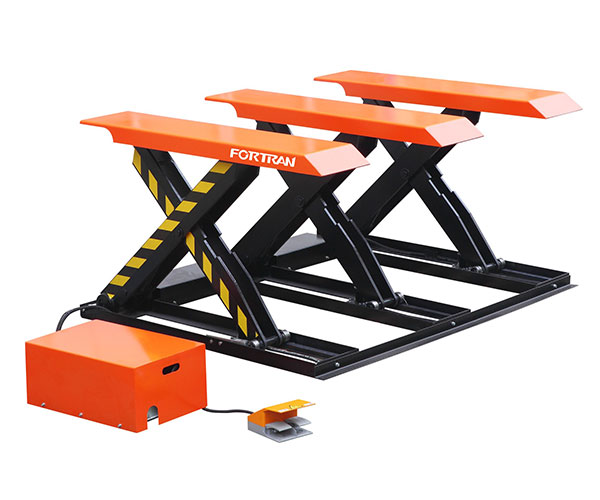
When I evaluate equipment for busy production lines, warehouses, and assembly areas, I always look first at the real bottlenecks people deal with every day such as awkward lifting, repeated manual handling, workflow delays, and avoidable safety risks. That is exactly why I think solutions from Guangdong Fortran Machinery Co.,ltd. deserve attention in modern factory planning. A well-designed Scissor Type Hydraulic Lifting Table Series is not just a lifting device. It is a practical way to create smoother movement between workstations, reduce physical strain, and keep operations consistent when loads need to be raised or positioned with control.
In many facilities, the problem is not a lack of machinery. The real issue is that the transition between one process and the next is often inefficient. Products may be produced quickly, but they still need to be lifted, aligned, transferred, packed, or staged. If that step remains manual or unstable, the entire line slows down. That is where a reliable Scissor Type Hydraulic Lifting Table Series becomes valuable because it supports workflow continuity instead of acting as a separate isolated tool.
What Problems Do Buyers Usually Face When Choosing a Lifting Platform?
I often see buyers focus too narrowly on load capacity while overlooking the daily operating environment. In practice, lifting equipment is judged by far more than a single technical number. It has to match the rhythm of production, the available floor space, the nature of the load, and the frequency of use. A mismatch in any of those areas can lead to downtime, safety issues, or unnecessary labor costs.
- I need a stable lifting platform for repetitive daily use rather than occasional lifting only.
- I want to reduce manual handling and improve workplace ergonomics.
- I need consistent height adjustment to connect separate workstations more smoothly.
- I want equipment that is easy to integrate into warehouse, packaging, or assembly operations.
- I need a solution that supports both productivity and operator safety.
These are the reasons why many industrial users start considering a Scissor Type Hydraulic Lifting Table Series instead of relying on improvised platforms, forklifts for non-forklift tasks, or labor-intensive handling methods.
Why Does a Scissor Type Hydraulic Lifting Table Series Fit Modern Production Needs So Well?
I like this type of lifting solution because it addresses a very specific operational gap. In real manufacturing or logistics environments, workers do not simply need to move goods from point A to point B. They need to bring goods to the correct working height, maintain balance during loading and unloading, and support repeated tasks without wasting motion. A lifting table based on a scissor structure is especially useful because it can provide strong vertical movement while maintaining a relatively compact footprint.
That combination matters in places where floor space is valuable and workflow timing is tight. A thoughtfully engineered Scissor Type Hydraulic Lifting Table Series can help operators handle components, cartons, pallets, and intermediate products with more accuracy and less physical effort. I also find it useful in operations where items need to be transferred between conveyors, feeding stations, packaging areas, or inspection points.
From a purchasing perspective, this kind of equipment also supports longer-term value. Instead of treating lifting as a temporary accessory, companies can build it into the production system and benefit from more reliable process flow over time.
How Can Better Lifting Equipment Reduce Operational Pressure on Workers?
One of the clearest benefits I notice is the ergonomic improvement. When teams repeatedly bend, reach, or manually adjust heavy items, fatigue builds up quickly. Over time, that affects both morale and output. A properly selected Scissor Type Hydraulic Lifting Table Series helps maintain a workable height for loading, sorting, assembling, and transferring materials. That means fewer awkward movements and a more consistent pace of work.
For employers, this is not only about comfort. It is about reducing unnecessary strain in jobs that require repetition. For supervisors, it often means easier line management because workers can perform tasks with fewer interruptions. For buyers, it means the investment supports both human efficiency and process control.
- I can improve operator posture during repetitive handling tasks.
- I can make loading and unloading more controlled and less physically demanding.
- I can reduce workflow interruptions caused by height mismatch between stations.
- I can support safer handling of heavier or bulkier items.
- I can improve consistency in packaging, assembly, and transfer operations.
Which Features Should I Compare Before Buying?
When I compare lifting platforms, I do not stop at the visible structure. I look at how the unit will actually be used across a shift, across a month, and across a full production cycle. Buyers who ask the right questions early usually make far better decisions.
| Feature | Why It Matters | What I Usually Look For |
|---|---|---|
| Load Capacity | Determines whether the platform can safely handle the intended materials | A suitable working margin instead of choosing only the bare minimum |
| Lifting Height | Affects workstation connection and ease of handling | A height range that matches actual production and transfer requirements |
| Platform Stability | Supports precise loading, unloading, and positioning | Smooth vertical movement with reliable structural support |
| Hydraulic Performance | Influences lifting efficiency and operational consistency | Steady action, dependable response, and low maintenance concerns |
| Application Compatibility | Ensures the machine fits the line rather than disrupting it | Flexibility for warehousing, assembly, packaging, and transfer tasks |
| Safety Design | Protects operators and materials during daily operation | Practical protective details and dependable operational control |
If I am buying for a production setting, I also think about usage frequency. A unit that works well for occasional lifting may not be ideal for a high-cycle environment. That is why the right Scissor Type Hydraulic Lifting Table Series should be judged in relation to the actual process, not just the catalog description.
How Does This Equipment Support Different Industrial Applications?
I find this kind of lifting platform especially useful because it adapts well to multiple working scenarios. In one facility, it may support loading and unloading near a conveyor. In another, it may serve as a height-adjustable workstation. Somewhere else, it may help stage products before packaging or final dispatch. That flexibility gives buyers a stronger reason to invest because the equipment can remain useful even as production arrangements evolve.
Typical application areas often include:
- Assembly lines where products need to be positioned at a comfortable operating height
- Packaging stations where cartons or finished goods require controlled elevation
- Warehousing operations that benefit from smoother pallet or item handling
- Inspection areas where stable positioning improves visibility and accuracy
- Material transfer points between machines, conveyors, or work tables
When I look at it this way, the Scissor Type Hydraulic Lifting Table Series becomes less of a standalone machine and more of an operational support system. It helps bridge the small but critical movement gaps that often slow down industrial work.
Is It Better to Choose a Standard Platform or a More Application-Focused Solution?
In my experience, many buyers initially consider only standard options because they seem easier to purchase. That can work for simple tasks, but industrial operations are rarely identical. Load dimensions, floor layout, product flow, and usage intensity vary from one company to another. Because of that, the smarter choice is often the solution that best aligns with the job rather than the one that simply appears most common.
This is also why working with an experienced supplier matters. A company that understands industrial handling scenarios can help buyers think beyond basic lifting and focus on process fit. That is an area where manufacturers with a practical understanding of production environments, including companies like Guangdong Fortran Machinery Co.,ltd., can offer more value through clearer application matching and equipment planning.
What Business Benefits Can I Expect Beyond the Lifting Function Itself?
I always remind buyers that the value of lifting equipment should not be measured only by whether it goes up and down. The broader return comes from how it improves the surrounding workflow. When lifting becomes smoother, several other things improve at the same time.
- I can reduce unnecessary manual handling time.
- I can improve process continuity between connected work areas.
- I can help lower physical strain in repetitive tasks.
- I can support more stable and orderly material flow.
- I can create a cleaner and more professional production setup.
Those gains may look small in isolation, but across repeated daily operations, they become meaningful. That is one reason a well-chosen Scissor Type Hydraulic Lifting Table Series often delivers value beyond its basic mechanical role.
How Should I Decide Whether This Series Is Right for My Facility?
If I were making the decision today, I would begin with a simple review of the real task. What materials need lifting? How often does that happen? What height range is actually required? Where does manual handling currently create delay or strain? Once those answers are clear, it becomes much easier to judge whether a lifting table solution is justified and what configuration will bring the best result.
I would also compare future needs, not just current ones. If production is likely to expand, if handling volume is increasing, or if the facility wants better coordination between workstations, investing in a durable Scissor Type Hydraulic Lifting Table Series can be a practical step toward a more efficient layout.
What Makes This Investment Worth Discussing Now?
Industrial buyers are under pressure to improve output without creating more complexity. In that environment, equipment that solves real handling problems has lasting value. I see lifting tables as one of those practical upgrades that can quietly improve safety, efficiency, and workflow discipline at the same time. When the equipment is chosen well, the benefits show up in daily operations rather than only in technical documents.
If you are currently comparing lifting solutions for your plant, warehouse, or production line, now is a good time to look more closely at the Scissor Type Hydraulic Lifting Table Series and how it can support your actual application. If you want a solution that fits your workflow more naturally and helps you improve material handling efficiency with confidence, contact us today to discuss your project, request more product details, and send your inquiry to Guangdong Fortran Machinery Co.,ltd..